Quranic Answer
The Holy Quran, revered as one of the most significant religious texts, offers an extensive discussion on moral and social virtues, guiding billions of followers towards a righteous life. Central to its teachings is the emphasis on avoiding extravagance and wastefulness in our daily lives. These concepts resonate deeply within the teachings of Islam, encouraging individuals to appreciate and utilize God's blessings wisely. This article aims to explore the Quranic perspective on extravagance and wastefulness, illustrating the importance of moderation in spending and the virtues that stem from understanding the value of divine bounties. Extravagance can be understood as the excessive and futile use of the blessings granted by the Almighty. It involves a disregard for the purpose and utility of what one possesses, leading to a lifestyle characterized by indulgence and surfeit. Wastefulness, on the other hand, encompasses the act of squandering these blessings, whether through careless spending or neglecting to make the most out of them. Both behaviors are discouraged in the Holy Quran, serving as a reminder of the need for mindfulness in the consumption of resources. In Surah Al-Isra, verse 27, Allah states, "And We had certainly made each one of them taste the burden of sin in their religion. Desiring to increase in what was given to him." This verse highlights the repercussions of one's choices, indicating that excessive desires can lead to an imbalanced life. Each individual is reminded of the burden of sin that stems from insatiable longing, encouraging a mindfulness approach that emphasizes gratitude and responsible stewardship over bounties. This message resonates throughout the Quran as a call for self-control and conscious living, turning attention to the idea that blessings should be cherished rather than taken for granted. Moreover, in Surah Al-Furqan, verse 67, it is stated: "And those who, when they spend, are neither extravagant nor stingy, but are middling between that." This verse provides a clear guideline for financial conduct, advocating for moderation and balance in spending habits. This approach to expenditure emphasizes that while it is essential to provide for oneself and others, doing so with wisdom and restraint is vital. It underscores the principle that neither extreme is commendable; extravagance leads to financial instability, while stinginess can hinder one's generosity and the ability to support those in need. The Quran reinforces the notion that excessive spending can precipitate poverty and a lack of resources, which serves to negate the blessings originally bestowed upon an individual. The teachings suggest that when one engages in wastefulness, they not only jeopardize their well-being but also risk losing the gratitude associated with divine provision. This establishes a cycle where gratitude and responsible use of bounties lead to a more fulfilling life, which ultimately attracts further blessings from above. Additionally, avoiding extravagance and wastefulness is not solely about economic factors; it also reflects larger societal implications. In a world where consumerism reigns supreme, the Quranic teachings serve as a beacon of hope and guidance. By advocating for moderation, individuals can contribute to societal wellbeing and communal stability. When people spend wisely and refrain from unnecessary waste, they contribute to a culture of sustainability and shared prosperity. The importance of moderation extends beyond financial transactions into everyday living. This principle encourages individuals to appreciate what they have at their disposal, be it time, energy, or resources. Living a balanced life honed through Quranic teachings fosters a sense of gratitude and mental tranquility, guiding one towards a holistic and fulfilling existence. Furthermore, moderation is intrinsically linked to the broader Islamic ethos that promotes communal responsibilities. By practicing moderation in wealth, individuals are more inclined to extend support to others, fostering a spirit of collaboration and empathy. The resultant environment nurtures bonds of kindness, mutual respect, and understanding, essential for any thriving society. Taking a closer look at the impact of wastefulness reveals a chain reaction that goes beyond the individual; it influences families, communities, and ultimately, nations. Social structures can be destabilized through patterns of excessive consumption or neglect. The teachings of the Holy Quran serve to remind us that waste, whether of resources or time, creates an imbalance that can further exacerbate societal issues including poverty, disenfranchisement, and inequity. This makes the Quranic emphasis on avoiding wastefulness both timely and essential, considering the global challenges we face today. In order to effectively incorporate these principles into our lives, it is crucial to cultivate a mindset rooted in gratitude and appreciation. Individuals can engage in practices such as mindfulness, reflecting on what blessings they possess, and recognizing their inherent value. Additionally, being conscious of one's spending choices and tending towards moderation not only brings order to personal lives but also uplifts the community as a whole. Whether through charitable contributions, shared resources, or simply sharing knowledge, individuals can actively contribute to a cycle of abundance that goes beyond mere material wealth. In conclusion, the teachings of the Holy Quran regarding extravagance and wastefulness serve as a vital guide to living a life defined by moral integrity, social responsibility, and gratitude. By understanding the importance of moderation and practicing it in our daily lives, we align ourselves with the divine message that underscores appreciation for God's blessings. Thus, following the Quranic principles fosters not only personal well-being but also contributes to a balanced society, creating a world where divine blessings are valued and shared generously. As we reflect on these teachings, may we strive to embody the essence of moderation, transforming our lives into a testament of gratitude, compassion, and shared prosperity.
Related Verses
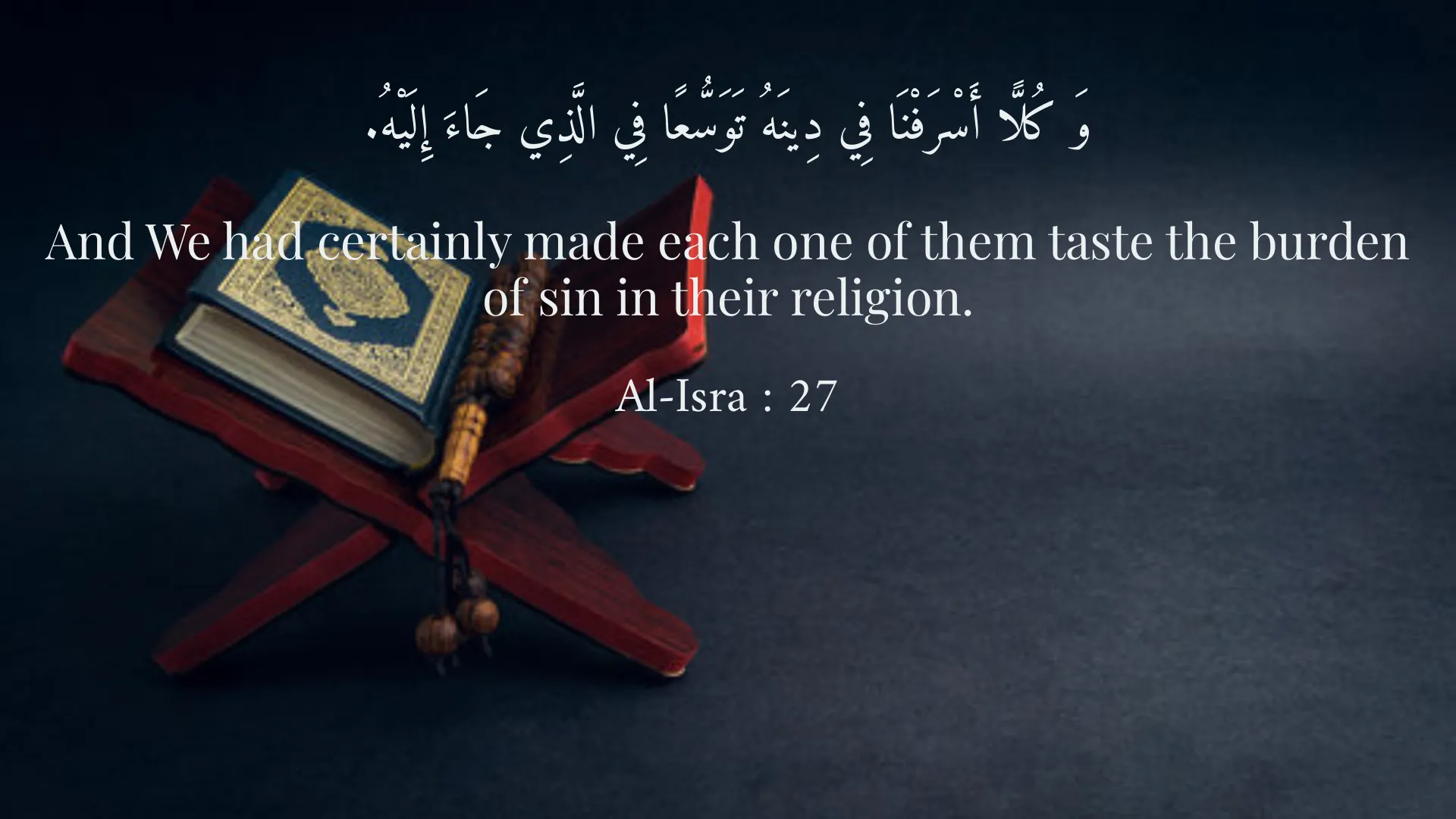
وَ كُلًّا أَسْرَفْنَا فِي دِينَهُ تَوَسُّعًا فِي الَّذِي جَاءَ إِلَيْهُ.
And We had certainly made each one of them taste the burden of sin in their religion.
Al-Isra : 27
و الَّذِينَ إِذا أَنفَقُوا لَمْ يُسْرِفُوا وَلَمْ يَقْتُرُوا وَكَانَ بَيْنَ ذَٰلِكَ قَوَامًا.
And those who, when they spend, are neither extravagant nor stingy, but are middling between that.
Al-Furqan : 67
Short Story
One beautiful day, a young man named Saeed decided to reflect on the quality of his life. He realized that he was often spending many of his possessions thoughtlessly and aimlessly. One day, during a break from work, he read a verse from the Quran that reminded him of avoiding extravagance and wastefulness. From that moment on, Saeed made an effort to be more mindful in all aspects of his life and approached his blessings daily with gratitude and appreciation. This small decision transformed his behavior significantly and led him towards a happier and more fulfilling life.