Quranic Answer
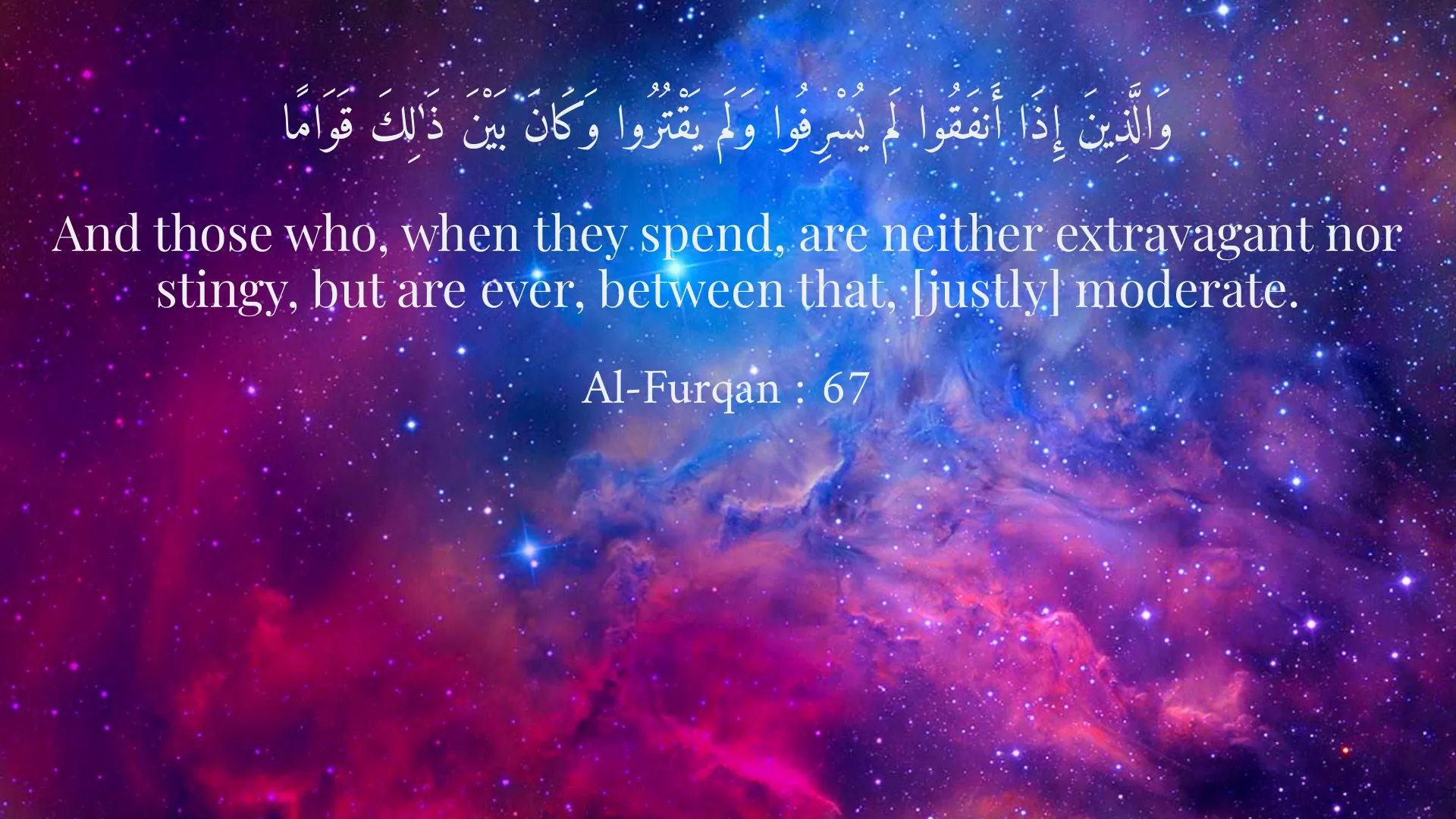
Title: The Call for Moderation in the Holy Quran: A Guiding Principle for Life The Holy Quran, revered as the last word of God in Islam, serves not only as a spiritual guide but also as a compendium of ethical and social principles that inform human conduct. One of the prominent themes encapsulated within its verses is the avoidance of extremism and excess. In an age where polarization and radicalism often capture societal narratives, the Quran's teachings on moderation resonate profoundly, advocating for a balanced approach in all facets of life, including financial transactions, beliefs, emotional responses, and social behavior. In Surah Al-Furqan, verse 67, Allah instructs believers on the importance of moderation in spending: "And those who, when they spend, are neither extravagant nor stingy, but are ever, between that, [justly] moderate." This verse serves as a strong reminder that financial management should neither lean towards squandering wealth nor toward excessive frugality. The balanced spending Allah speaks of illustrates a broader principle: that resources should be utilized wisely and responsibly. Spending habits are a direct reflection of an individual’s values and priorities. Wastefulness leads to depletion, not only of material wealth but also of human potential; it can also foster an environment of inequality and division. Conversely, extreme stinginess can inhibit growth and communal support, thereby affecting relationships and social cohesion. Thus, moderation becomes the pathway to ensuring that financial transactions contribute positively to both personal and communal well-being. Taking this concept a step further, the Quran comprehensively addresses human stewardship in verse 30 of Surah Al-Baqarah, where Allah declares, "And when your Lord said to the angels, 'Indeed, I will make upon the earth a successive authority.'" This divine statement positions humanity as caretakers of the Earth, entrusted with the responsibility of maintaining balance and ensuring sustainable practices. This stewardship entails an ethical obligation towards the environment, encouraging humans to use natural resources judiciously, respecting what has been given to them by God. Excessive exploitation of resources not only contradicts the call for moderation but also jeopardizes the delicate balance of our ecosystem. The Quran’s emphasis on avoiding extremes extends into various aspects of life beyond mere financial implications. It permeates beliefs, encouraging followers to adopt a balanced understanding of faith. Extremist ideologies that lead to radical behavior or violence starkly contrast with the Islamic teachings of peace, compassion, and communal harmony. As believers, Muslims are prompted to embrace a holistic approach to spirituality—aiming for a profound understanding of faith that guides them towards kindness and understanding, rather than division and discord. In social interactions, moderation reflects itself in behavior and emotional expressions. For instance, excessive anger or unchecked enthusiasm can lead to detrimental consequences, disrupting relationships and contributing to societal unrest. The Holy Quran advocates for emotional balance, encouraging individuals to regulate their feelings, respond with measured reactions, and uphold a sense of tranquility in even the most challenging circumstances. By fostering moderation in emotions, individuals can mitigate conflict, enhance personal well-being, and contribute positively to societal harmony. Moreover, the call for moderation encapsulates moral and ethical considerations within interpersonal relationships. Extremism can lead to harsh judgments, intolerance, and a lack of empathy for others. The Quran's insistence upon fairness, compassion, and understanding guides individuals away from overzealous reactions and toward a more gracious and humane disposition. Embracing moderation in moral reasoning fosters a community built on respect, where differences are navigated through dialogue rather than intolerance. In light of these encompassing teachings, the Quran articulates a worldview that prioritizes balance and moderation across all dimensions of human life. To avoid the traps of extremism, be it in finance, belief systems, emotions, or social conduct, believers are prompted to embody the principles of equity and responsibility. Adopting such moderate behaviors can lead to a fulfilling life, not just on a personal level but also within society, fostering connections grounded in understanding and cooperation. Conclusively, the Quran’s stance against extremism and excess positions moderation as a foundational principle for human interaction and personal growth. By practicing moderation, individuals can navigate life's complexities while contributing to peace and stability in their communities. The teachings of the Holy Quran urge us to embrace a balanced life, assuring that by avoiding extremes, both personal and social well-being can be achieved. In a world often shadowed by divisive ideologies, the call for moderation stands as a beacon of hope and guidance, encouraging an existence that is enriching, equitable, and deeply connected to the shared human experience.
Related Verses
وَالَّذِينَ إِذَا أَنفَقُوا لَم يُسْرِفُوا وَلَم يَقْتُرُوا وَكَانَ بَيْنَ ذَٰلِكَ قَوَامًا
And those who, when they spend, are neither extravagant nor stingy, but are ever, between that, [justly] moderate.
Al-Furqan : 67
وَإِذْ قَالَ رَبُّكَ لِلْمَلَائِكَةِ إِنِّي جَاعِلٌ في الْأَرْضِ خَلِيفَةً
And when your Lord said to the angels, 'Indeed, I will make upon the earth a successive authority.'
Al-Baqarah : 30
Short Story
Once upon a time, a man named Hassan was seeking peace in his life. He was always argumentative and couldn't refrain from extremism in his behaviors. One day, on his way home, he came across an old Quran and read its verses. He realized that moderation in life was the key to peace and happiness. He decided to apply moderation in all aspects of his life, and from that day on, he felt a greater sense of comfort in his life.