Quranic Answer
The Holy Quran serves as a divine guide for humanity, delineating clear principles that distinguish right from wrong, fairness from injustice, and virtue from vice. With over 6,000 verses, it addresses numerous aspects of life, prominently emphasizing justice as a fundamental tenet of Islamic ethics and moral conduct. In a world rife with inequality, the inequities which often lead to disarray and societal turbulence, the Quran unequivocally cautions against various manifestations of injustice in multiple verses. This article explores the multifaceted relationship between Quranic teachings on justice and the overarching theme of societal harmony. The Quran unveils its stance on injustice with clarity and purpose. Perhaps one of the most compelling verses highlighting this perspective is found in Surah Al-Imran, verse 112: "And they will not be overpowered, except by the injustice of the oppressor." This statement encapsulates the ramifications of injustice, illustrating how oppression breeds vulnerability. Here, the Quran portrays injustice not merely as a personal failing but as a communal affliction that invites the domination of enemies and ultimately divine retribution. The implication is stark: injustice acts as a catalyst for societal dissolution, where those in power exploit the innocent. In light of these warnings, the Quran provides guidance on fostering a fair and just community. Surah An-Nahl, verse 90, commands justice and good conduct while categorically labeling injustice as one of the most grievous sins. The directive to practice justice extends beyond mere words; it translates into actionable responsibilities that each individual must uphold. This divine injunction reflects a broader understanding of justice rooted in social responsibility, urging individuals to act in ways that promote equity and fairness. One of the most significant contributions of the Quran toward preventing societal injustice is the establishment of zakat and charity as obligatory practices for believers. The practice of zakat, or almsgiving, is not merely a benevolent act but a moral obligation designed to mitigate poverty and reduce inequality. This financial mechanism serves as a protective shield for the less fortunate, ensuring that wealth circulates rather than stagnates within the affluent echelons of society. The solemn importance accorded to charitable acts underscores a collective responsibility to alleviate suffering and foster communal well-being. Moreover, in Surah Al-Baqarah, verse 188, Allah warns against the illicit consumption of wealth, stating, "And do not consume one another's wealth unjustly or send it [in bribery] to the rulers in order that [they might aid] you [to] consume a portion of the wealth of the people in sin." This admonition clearly articulates the consequences of injustice, highlighting that such transgressions harm not just the individual but threaten the very fabric of the community. The Quran notably emphasizes moral integrity in economic transactions, advocating for honesty and transparency, and condemns corrupt practices that could exacerbate social divides. In recognizing the chain of injustice and its repercussions, the Quran illuminates the pervasive impact of unfair practices on social, economic, and moral dimensions. Injustice cascades into a series of problems that reverberate throughout society, undermining trust and cooperation among its members. Disparities created by systemic injustice can lead to discord, strife, and ultimately chaos. Individuals caught in the cycle of oppression may resort to rebellion, creating a hostile environment where peace becomes untenable. Furthermore, the Quran's teachings extend to areas such as social interaction and personal conduct. Justice is not merely a legal principle; it is a lifestyle embraced within the heart of a believer. The promotion of virtuous character traits such as honesty, equity, and kindness is intrinsically linked to the overarching goal of justice. By nurturing these attributes, individuals contribute to the establishment of a just society, where disparities are minimized, and the well-being of all, especially the marginalized, is prioritized. In contemporary contexts, the Quranic advocacy for justice resonates even more profoundly, as we witness growing disparities across the world. Social justice movements, aimed at combating systemic inequities, find support in Islamic teachings as they seek to uplift disenfranchised communities and advocate for fair treatment. The Quran’s guidance inspires many to engage in activism that echoes its core principle—justice for all. As believers, the responsibility to advocate for justice extends beyond the personal realm into the societal sphere. Engaging in discussions on social justice and participating in community efforts embodies the Quran’s teachings. From volunteering time to charity work or promoting fair labor practices, every action geared toward enhancing justice fosters societal harmony. In conclusion, the Quran emphasizes the significance of justice not as an isolated principle but as an essential cornerstone for a peaceful and flourishing society. Through its myriad verses that address injustice, the Quran educates humanity about the dire consequences of inequity while providing practical solutions to foster fairness. As individuals and communities heed these teachings, the potential for creating a more just and harmonious world becomes not only a hope but a manifest possibility. Ultimately, the Quran serves as a timeless blueprint for social cohesion, advocating for justice as a means to sustain peace and prosperity for all.
Related Verses
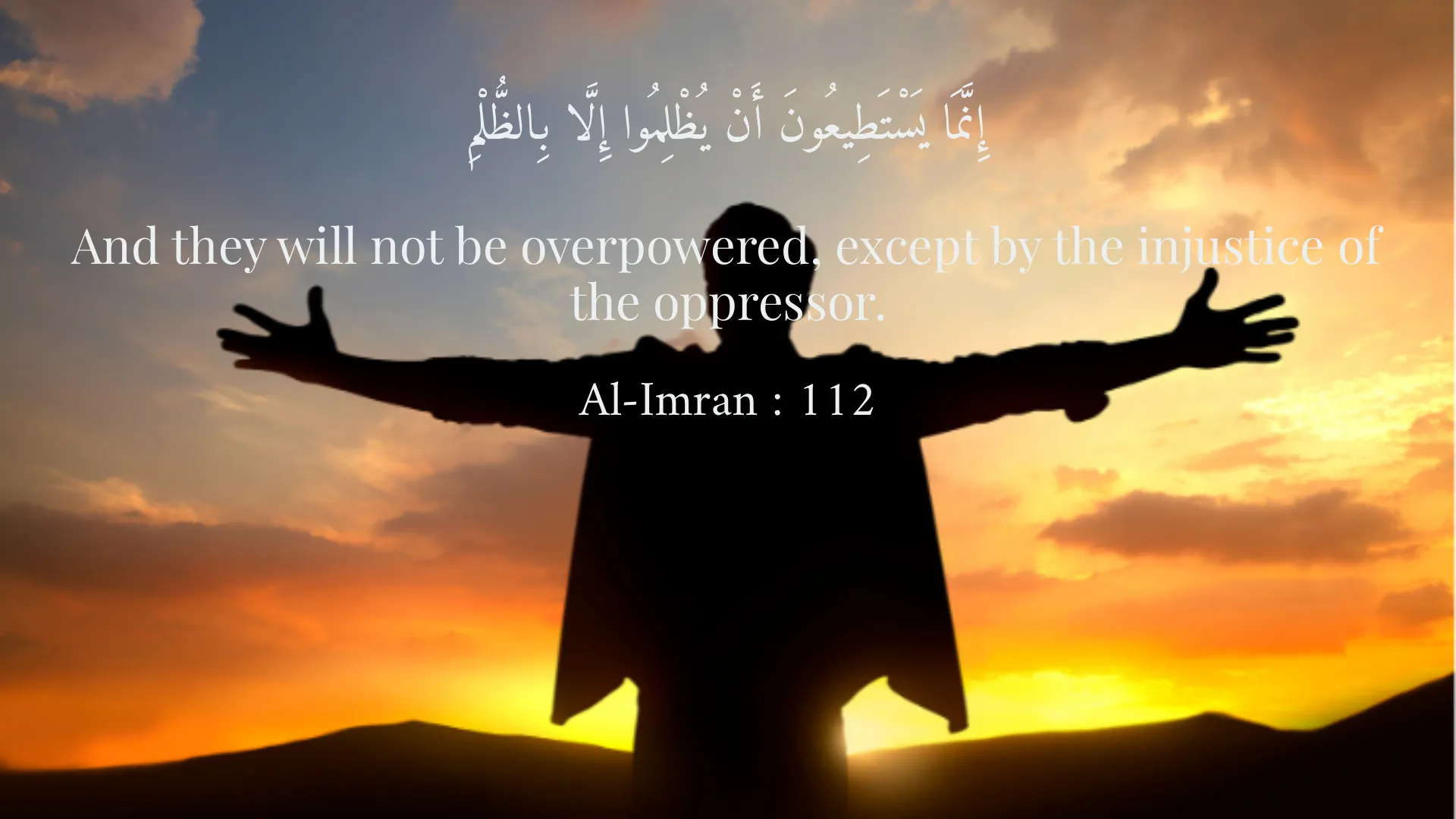
إِنَّمَا يَسْتَطِيعُونَ أَنْ يُظْلِمُوا إِلَّا بِالظُّلْمِ
And they will not be overpowered, except by the injustice of the oppressor.
Al-Imran : 112
إِنَّ اللَّهَ يَأْمُرُ بِالْعَدْلِ وَالْإِحْسَانِ
Indeed, Allah commands you to render trusts to whom they are due and when you judge between people to judge with justice.
An-Nahl : 90
وَلَا تَأْكُلُوا أَمْوَالاتِكُمْ بَيْنَكُمْ بِالْبَاطِلِ
And do not consume one another's wealth unjustly or send it [in bribery] to the rulers in order that [they might aid] you [to] consume a portion of the wealth of the people in sin.
Al-Baqarah : 188
Short Story
Once upon a time in a small town, there was a man named Hasan known for his sense of justice. He always tried to help the oppressed and never remained silent in the face of injustice. One day, he witnessed an injustice against a helpless woman and decided to fight for her. Hasan addressed the injustices of society and drew inspiration from the Quran. Through his efforts and dedication, he managed to restore her rights and save her from the clutches of the oppressor. Later, Hasan became known as a positive role model in the community.