Quranic Answer
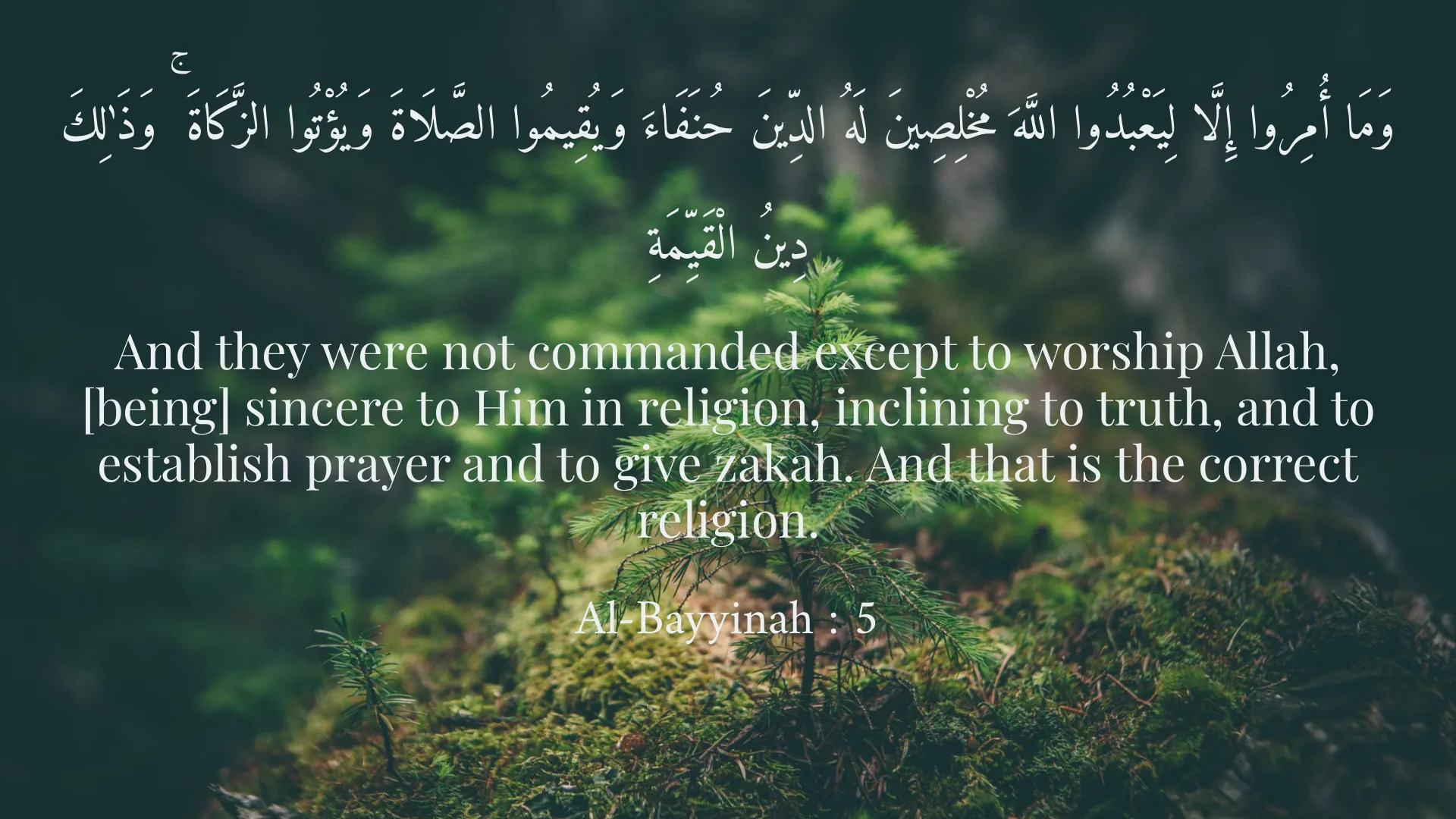
The experience of worship feeling dry and spiritless is a common challenge many believers encounter on their spiritual journey. This state signifies that acts of worship, such as prayer (Salah), Quran recitation, remembrance (Dhikr), and supplication (Du'a), no longer bring the joy, tranquility, or profound connection they once did. Instead, they transform into mechanical routines, devoid of spiritual nourishment. While the Holy Quran doesn't explicitly use the term 'dry worship,' it profoundly addresses the underlying factors that lead to the heart's heedlessness towards God, consequently stripping acts of worship of their spiritual essence. Understanding these Quranic factors is crucial for revitalizing and restoring vibrancy to one's devotion. The foremost and perhaps most critical factor is the 'absence of sincerity and pure intention.' The Quran places immense emphasis on sincerity (Ikhlas), stating: "And they were not commanded except to worship Allah, [being] sincere to Him in religion, inclining to truth, and to establish prayer and to give zakah. And that is the correct religion." (Surah Al-Bayyinah, 98:5). When an individual's intention in worship is not purely for the sake of Allah, but rather tainted by motives such as showing off (Riya), seeking praise, mere habit, or simply fulfilling an obligation, that worship becomes hollow and loses its true spiritual substance. Worship performed for the sake of people's admiration or social standing establishes no genuine connection with the individual's inner self and soul, resulting in nothing but fatigue and spiritual emptiness. The second factor is the 'heedlessness of the heart and lack of presence of mind.' The heart is the center of human spiritual connection. If the heart is preoccupied with worldly matters, satanic whispers, or scattered thoughts during worship, how can it possibly connect with the Creator of existence? The Quran describes true believers as those who are humble in their prayers: "Successful indeed are the believers who are humble in their prayers." (Surah Al-Mu'minun, 23:1-2). Humility (Khushu') is a state of profound reverence and presence of heart, where one perceives oneself in the presence of the Lord and turns to Him with their entire being. When this presence of heart is absent, words merely flow from the tongue, and movements become a series of meaningless gestures, leading to spiritual dryness and fruitlessness. The Quran also warns against those who are heedless of their prayers: "So woe to those who pray [but] who are heedless of their prayer - those who make show [of their deeds]." (Surah Al-Ma'un, 107:4-6). The term 'sahoon' refers to those who are neglectful and unaware of the spirit of their prayer, not necessarily those who don't pray at all. The third factor is the 'dearth of remembrance of Allah (Dhikr) throughout the day.' Worship is not merely confined to performing prescribed rituals; rather, it should transform into a way of life where every moment is imbued with the remembrance of Allah and connection to Him. The Quran states: "Those who have believed and whose hearts are assured by the remembrance of Allah. Unquestionably, by the remembrance of Allah hearts are assured." (Surah Ar-Ra'd, 13:28). If a person remains heedless of Allah's remembrance throughout the day, and their sole concern is worldly affairs and material pursuits, it is natural that they will find it difficult to establish a deep connection during formal acts of worship. The heart must be continuously nourished by Divine remembrance to be prepared for presence and humility during formal acts of worship. Furthermore, 'ignorance of the meanings and purposes of worship' can also lead to spiritual dryness. When an individual doesn't understand what they are saying or doing, or is unaware of the profound wisdom and objectives behind acts of worship, devotion becomes a mere repetition of movements and words. Understanding that prayer is the pillar of religion, Quran recitation is a light of guidance, and supplication is the key to Divine mercy can infuse worship with depth and meaning. The Quran constantly encourages reflection (Tadabbur) on its verses and contemplation of creation, which itself is a path to awakening the heart and preventing heedlessness. Additionally, an 'abundance of sins and transgressions' creates a veil between the servant and the Lord. Sins accumulate like rust on the heart, making it dark and heavy. A heart tainted by sin cannot taste the true joy of worship and may even feel burdened and sluggish during devotion. Repentance (Tawbah) and seeking forgiveness (Istighfar) are ways to remove this rust and restore clarity to the heart so it can once again absorb Divine light. Finally, 'excessive attachment to the worldly life and forgetfulness of the Hereafter' is a major impediment. When all of a person's attention and effort are directed towards worldly gains and fleeting pleasures, there is little room left for a deep connection with the Creator. The Quran strongly admonishes those who prioritize the worldly life over the Hereafter. For worship to be vibrant and spiritually alive, one's outlook on life must be balanced, viewing the world as a sowing ground for the Hereafter and never forgetting their ultimate purpose. In conclusion, to overcome the dryness in worship, one must focus on: strengthening sincerity through practicing pure intention, striving for presence of heart and reflection on the meanings of words and actions, increasing daily remembrance of Allah, acquiring knowledge of the philosophy and meanings of worship, repenting from sins and purifying the heart, and balancing one's perspective on this world and the Hereafter. By adhering to these Quranic principles, with Allah's help, one can restore spirit and freshness to acts of worship, taste the sweetness of connection once again, and transform them into a gateway for peace and salvation.
Related Verses
وَمَا أُمِرُوا إِلَّا لِيَعْبُدُوا اللَّهَ مُخْلِصِينَ لَهُ الدِّينَ حُنَفَاءَ وَيُقِيمُوا الصَّلَاةَ وَيُؤْتُوا الزَّكَاةَ ۚ وَذَٰلِكَ دِينُ الْقَيِّمَةِ
And they were not commanded except to worship Allah, [being] sincere to Him in religion, inclining to truth, and to establish prayer and to give zakah. And that is the correct religion.
Al-Bayyinah : 5
قَدْ أَفْلَحَ الْمُؤْمِنُونَ
Certainly will the believers prosper,
Al-Mu'minun : 1
الَّذِينَ هُمْ فِي صَلَاتِهِمْ خَاشِعُونَ
Those who are during their prayer humbly submissive.
Al-Mu'minun : 2
فَوَيْلٌ لِّلْمُصَلِّينَ
So woe to those who pray
Al-Ma'un : 4
الَّذِينَ هُمْ عَن صَلَاتِهِمْ سَاهُونَ
[But] who are heedless of their prayer -
Al-Ma'un : 5
الَّذِينَ هُمْ يُرَآءُونَ
Those who make show [of their deeds]
Al-Ma'un : 6
Short Story
It is narrated that in ancient times, there was a renowned worshiper who would pray and recite the Quran daily. However, his heart was always preoccupied with business and worldly affairs. His actions stemmed from habit and for the sake of appearances, not from fervor and presence of heart. One day, a wise Sheikh passed by him and observed the worshiper hastily reciting the Quran, but his gaze wandered to the walls and his ears were attentive to the market sounds. The Sheikh smiled and said, "O friend, if your heart is with the Beloved, why is your tongue engaged in another matter? And if the Beloved is not in your heart, what is the purpose of all this fruitless talk?" He then added, "One tear shed with one's whole being is better than thousands of rivers of words without presence." The worshiper understood the profound meaning of these words and realized that spiritless worship is like a lifeless body. From then on, he strived to bring his heart into his worship and distance himself from showing off and heedlessness, so that he might taste the sweet flavor of connection.