Quranic Answer
The question, "Why doesn't my worship change me?" is one of the most profound and fundamental inquiries that can occupy the mind of any Muslim. On the surface, this question might suggest frustration or dissatisfaction with the outcomes of one's acts of worship. However, at its core, it is an invitation to reflect upon and re-evaluate the quality and depth of our connection with Allah. The Holy Quran explicitly states that the primary purpose of worship is self-purification (tazkiyah al-nafs), spiritual growth, and the instigation of positive changes in one's character and behavior. Therefore, if this transformation isn't occurring, the issue lies not with worship itself, but with the manner in which it is performed and a potential misunderstanding of its true philosophy and purpose. This necessitates a deeper exploration into the various dimensions of our worship. 1. Sincerity and Pure Intention (Ikhlas): The Foundation of Transformation The Quran repeatedly emphasizes the paramount importance of sincerity (Ikhlas) in all actions, especially in acts of worship. In Surah Al-Bayyinah, verse 5, Allah says: "And they were not commanded except to worship Allah, [being] sincere to Him in religion, inclining to truth, and to establish prayer and to give zakah. And that is the correct religion." If worship is performed merely to be seen by others (riya'), out of habit, or simply to fulfill an obligation without a genuine, heartfelt desire for closeness to Allah, the seed of transformation cannot truly be planted. It is the sincere intention of the heart that breathes life into our actions, distinguishing them from mere physical movements and imbuing them with depth and meaning. Without this pure intention, worship becomes a lifeless shell, devoid of any spiritual efficacy. 2. Presence of Heart (Khushu') and Contemplation (Tadabbur): A Bridge to Divine Connection Prayer (Salah) is considered the pillar of Islam, and in Surah Al-Ankabut, verse 45, the Quran states: "Recite, [O Muhammad], what has been revealed to you of the Book and establish prayer. Indeed, prayer prohibits immorality and wrongdoing, and the remembrance of Allah is greater. And Allah knows that which you do." This verse clearly indicates that prayer is not merely an obligation but a powerful deterrent against indecency and evil. So, why does prayer sometimes fail to deter us from misdeeds? The answer lies in "Khushu'" (humble submission) and "Hudur al-Qalb" (presence of heart). If the mind is preoccupied with worldly thoughts during prayer, and one merely goes through the physical motions, a deep spiritual connection cannot be established. Khushu' means complete focus on Allah, understanding the meanings of the verses and invocations, and feeling His presence. It is this presence of heart that transforms prayer into a living conversation with the Creator, endowing it with its transformative power. Without this internal focus, prayer can become a routine exercise, failing to penetrate the depths of the soul and bring about inner change. 3. Linking Worship with Action: The Manifestation of Taqwa in Life Worship should not be confined to specific times and places; rather, it should act as a driving force for improving one's behavior and ethics in all aspects of life. Fasting (Sawm), as stated in Surah Al-Baqarah, verse 183, is prescribed "that you may become righteous (tattaqun)." The purpose of fasting is not merely hunger and thirst but a training in self-restraint, strengthening willpower, understanding the plight of the needy, and attaining a state of piety (Taqwa). If someone fasts but then engages in backbiting, lies, infringes upon the rights of others, or fails to control their anger, their fast has been nothing more than a fruitless physical exercise. Similarly, Zakat (charity) and Sadaqah (voluntary charity) not only purify wealth but also cleanse the soul, fostering empathy and social responsibility. Hajj, with all its rituals, is an exercise in detachment from worldly possessions, promoting equality and unity among believers. If, after Hajj, an individual becomes more arrogant or commits injustices, their Hajj has merely been a physical journey, failing to grasp its true spiritual essence. True worship manifests in improved character and ethical conduct, reflecting the values it aims to instill. 4. Consistency and Perseverance (Istiqamah): Patience on the Path of Transformation Profound personal changes do not happen overnight. They are the result of consistent effort, perseverance, and steadfastness on the spiritual path. The Quran in Surah Ar-Ra'd, verse 11, states: "Indeed, Allah will not change the condition of a people until they change what is in themselves." This verse is a universal principle applicable at both individual and societal levels. If we expect our worship to change us, we must also possess the continuous will and effort for this change. Sometimes, individuals become disheartened when they don't perceive immediate, tangible changes after a period of worship. However, this process is gradual and requires patience and commitment. The journey of spiritual growth is continuous, demanding enduring dedication and reliance on Allah's grace. It is through consistent striving, even when results are not immediately apparent, that true transformation gradually unfolds. 5. Knowledge and Contemplation: Deepening the Connection One reason why worship might seem ineffective is an insufficient understanding of the greatness of Allah and the wisdom behind His commandments. When we truly comprehend the majesty of the Creator, our prayers become infused with awe and humility. When we understand the philosophy behind fasting, charity, or Hajj, performing them is no longer a mechanical act but a conscious endeavor for growth and elevation. Contemplating the verses of the Quran, studying the life of the Prophet (PBUH) and the Ahlul Bayt, and gaining a deeper understanding of religious concepts, imbues our acts of worship with meaning and spirit. Knowledge transforms ritual into a profound spiritual experience, enabling us to connect with the divine purpose behind each act. This intellectual and spiritual engagement ensures that worship is not just a habit, but a conscious journey towards greater understanding and devotion. Conclusion: Therefore, if we feel that our acts of worship are not changing us, it is imperative to take a fresh look at their quality and depth. Is our intention pure? Do we pray with presence of heart? Is our fast merely abstaining from food and drink, or do we also abstain from sins? Does our worship reflect in our daily ethics and behavior? Worship in Islam is not merely an obligation; it is a powerful tool for achieving human perfection and closeness to Allah. It is we who, through the manner of our worship, either breathe life into these acts or render them lifeless forms. Change begins from within, and sincere worship serves as a guiding light for this inner transformation. By rectifying our intentions, increasing our presence of heart, maintaining consistency, and linking worship with practical deeds, we can witness profound transformations in our spiritual and worldly lives, and taste the sweet closeness to Allah. This path is an unending journey towards perfection, with every step illuminated by divine guidance and leading us towards our ultimate destination.
Related Verses
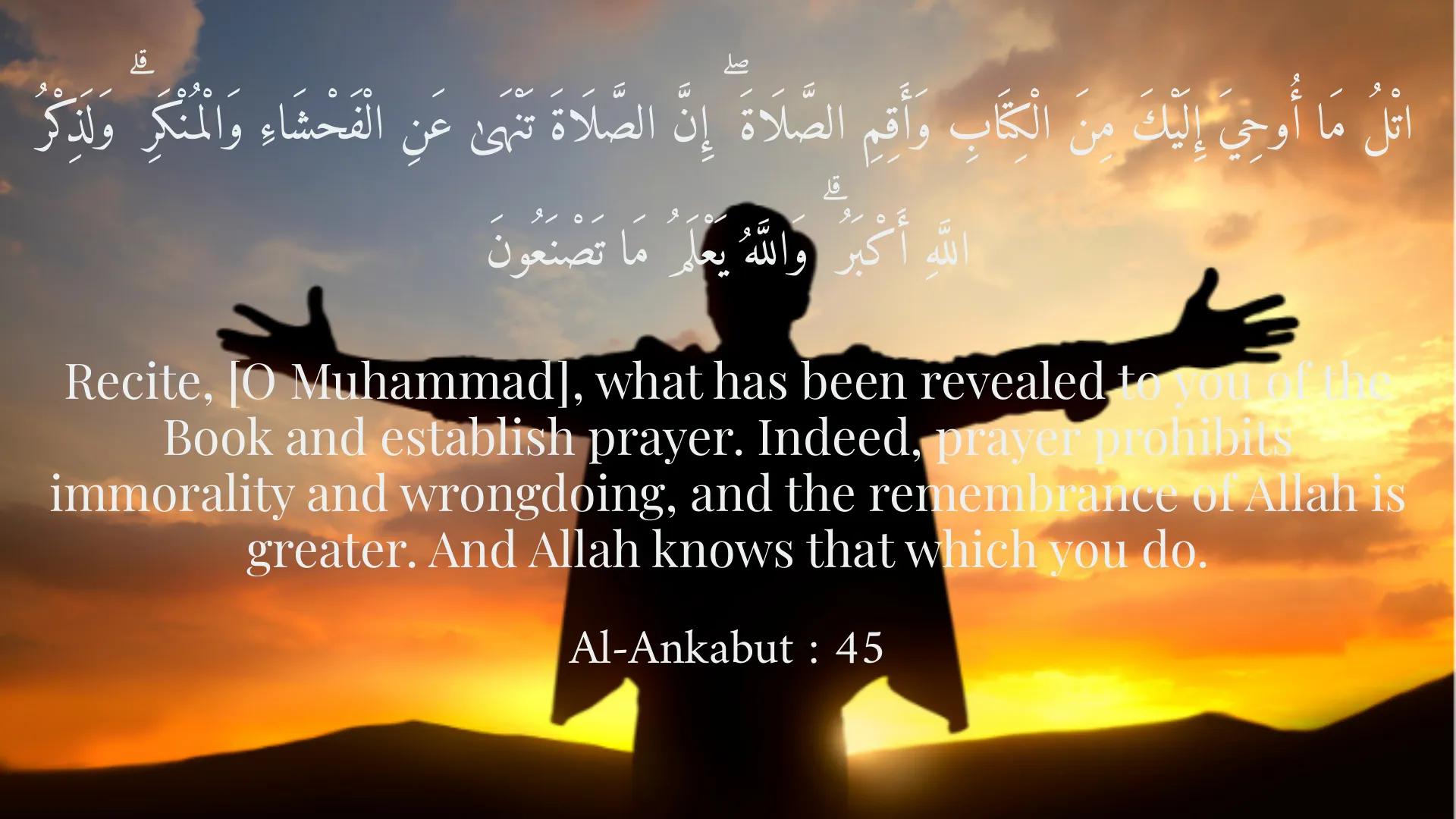
اتْلُ مَا أُوحِيَ إِلَيْكَ مِنَ الْكِتَابِ وَأَقِمِ الصَّلَاةَ ۖ إِنَّ الصَّلَاةَ تَنْهَىٰ عَنِ الْفَحْشَاءِ وَالْمُنْكَرِ ۗ وَلَذِكْرُ اللَّهِ أَكْبَرُ ۗ وَاللَّهُ يَعْلَمُ مَا تَصْنَعُونَ
Recite, [O Muhammad], what has been revealed to you of the Book and establish prayer. Indeed, prayer prohibits immorality and wrongdoing, and the remembrance of Allah is greater. And Allah knows that which you do.
Al-Ankabut : 45
لَهُ مُعَقِّبَاتٌ مِّن بَيْنِ يَدَيْهِ وَمِنْ خَلْفِهِ يَحْفَظُونَهُ مِنْ أَمْرِ اللَّهِ ۗ إِنَّ اللَّهَ لَا يُغَيِّرُ مَا بِقَوْمٍ حَتَّىٰ يُغَيِّرُوا مَا بِأَنفُسِهِمْ ۗ وَإِذَا أَرَادَ اللَّهُ بِقَوْمٍ سُوءًا فَلَا مَرَدَّ لَهُ ۚ وَمَا لَهُم مِّن دُونِهِ مِن وَالٍ
For him [i.e., each one] are successive [angels] before and behind him who guard him by the command of Allah. Indeed, Allah will not change the condition of a people until they change what is in themselves. And when Allah intends for a people ill, there is no repelling it. And there is not for them besides Him any patron.
Ar-Ra'd : 11
يَا أَيُّهَا الَّذِينَ آمَنُوا كُتِبَ عَلَيْكُمُ الصِّيَامُ كَمَا كُتِبَ عَلَى الَّذِينَ مِن قَبْلِكُمْ لَعَلَّكُمْ تَتَّقُونَ
O you who have believed, decreed upon you is fasting as it was decreed upon those before you that you may become righteous.
Al-Baqarah : 183
Short Story
It is narrated that in the city of Shiraz, there lived a man who appeared pious. Every morning and evening, he would go to the mosque, performing prayers with outward humility and reciting devotional litanies. People spoke highly of his piety. However, in his private life, he was ill-tempered with his family, neglected the rights of his neighbors, and employed subtle deceits in his dealings. One day, a wise scholar, who was aware of his true condition, saw him engrossed in prayer. After he finished, the scholar, with a warm and friendly tone, said to him: 'O Sheikh, your bowed posture and lips full of remembrance are good, but if your heart were also bowed towards God, and your tongue spoke nothing but truth, you would benefit more. What good is it if your body prostrates but your soul is steeped in arrogance? If fasting and prayer do not guide the inner self, they bring nothing but toil and hardship. Saadi wisely said: "Worship is naught but serving creation. Not by rosary, prayer rug, or patched cloak." This means, if worship does not lead to good character and service to humanity, it is merely an empty shell, devoid of substance. What truly transforms a person is not the quantity of deeds but the purity of intention and the depth of presence.' The seemingly pious man pondered the scholar's words and realized that true change begins from within, not from outward appearances.