Quranic Answer
The status of humanity within the framework of creation is a profoundly significant topic in the discourse of the Holy Quran. In numerous verses, the Quran emphasizes the dignity and honor bestowed upon human beings by their Creator. One of the most compelling references to this elevation of humanity is found in Surah Al-Isra, verse 70. It states: "And We have certainly honored the children of Adam and carried them on the land and sea, and provided for them of good things and preferred them over many of those We created." This profound assertion not only acknowledges the honor of human beings but also reflects the multifaceted responsibilities that accompany this privilege. The term "the best of creation" conferred upon humans serves as a criterion for comparing the essence and worth of human beings with that of other beings. What truly sets humanity apart is the divine endowment of intellect, self-awareness, and the power of choice—qualities that empower humans to navigate their existence with moral agency. Unlike creatures driven solely by instinct, humans possess the unique ability to distinguish between right and wrong, enabling them to make choices that either draw them closer to God or lead them astray. This moral compass is a fundamental element of the human experience, crafting the path upon which individuals must tread through life. Furthermore, the essential purpose of human existence is intricately woven into the fabric of worship. According to Islamic belief, God created humans with the intention that they recognize His sovereignty and engage in acts of worship that reflect their gratitude and reverence. This perspective on existence shows that worship is not merely a set of rituals performed, but rather a profound expression of human purpose and fulfillment. Through this lens, every act of goodness becomes a form of devotion, reinforcing the intimate relationship between the Creator and His creation. In this sense, humanity's worth goes beyond being based on mere existence; it is anchored in the pursuit of virtue and the alignment of one's actions with divine will. The Quran elaborates on the responsibilities that come with being honored as the best of creation. While humans are bestowed with divine gifts, such as reason and awareness, they are also burdened with the responsibility to use these gifts wisely. The ability to choose does not come without its challenges, as individuals are constantly faced with decisions that carry weighty moral implications. The Quran guides believers to strive for righteousness, advising them to seek knowledge, foster good character, and promote justice in all aspects of their lives. Moreover, the human journey is marked by trials and tribulations that test one's faith and resolve. These challenges serve as opportunities for growth and refinement of the soul. The Quran encourages believers to endure hardships with patience and resilience, assuring them that such tests are a means to bring them closer to God. In this light, the responsibilities of humanity are dual-fold: one must not only cultivate a strong relationship with God but also engage in responsible stewardship of the Earth and its inhabitants. It is crucial to recognize that the honor bestowed upon humans is not a carte blanche for arrogance or self-serving behaviors. Instead, it calls for humility and a profound sense of accountability. The Quran states, "Indeed, to Allah belong the best names, so invoke Him by them" (Surah Al-A'raf, 180), reminding humanity of its humble position in relation to the divine. This insistence on humility is particularly relevant in the contemporary world, where self-interest often overshadows communal responsibilities. As stewards of this Earth, humans are tasked with safeguarding the environment, protecting vulnerable populations, and fostering an inclusive society that values and champions diversity. The ethical teachings of the Quran implore believers to engage in acts of charity, stand for justice, and promote peace in their communities and the world at large. This emphasis on social responsibility aligns human excellence with communal well-being—reinforcing the idea that true dignity arises not only from individual achievements but also from contributions to the greater good. In conclusion, the esteemed position of humanity in the Holy Quran is a rich subject that interweaves themes of honor, responsibility, worship, and ethical conduct. The verse in Surah Al-Isra encapsulates these notions, serving as both a reminder and a charge for individuals to embrace their role as distinguished beings aware of their potential for goodness. As such, humanity must strive to uphold this dignity by engaging in righteous endeavors, fostering an environment of compassion, and nurturing their relationship with the Divine. Ultimately, the essence of being the "best of creation" lies not in pride, but in humility, virtue, and the unwavering commitment to the service of God and humanity.
Related Verses
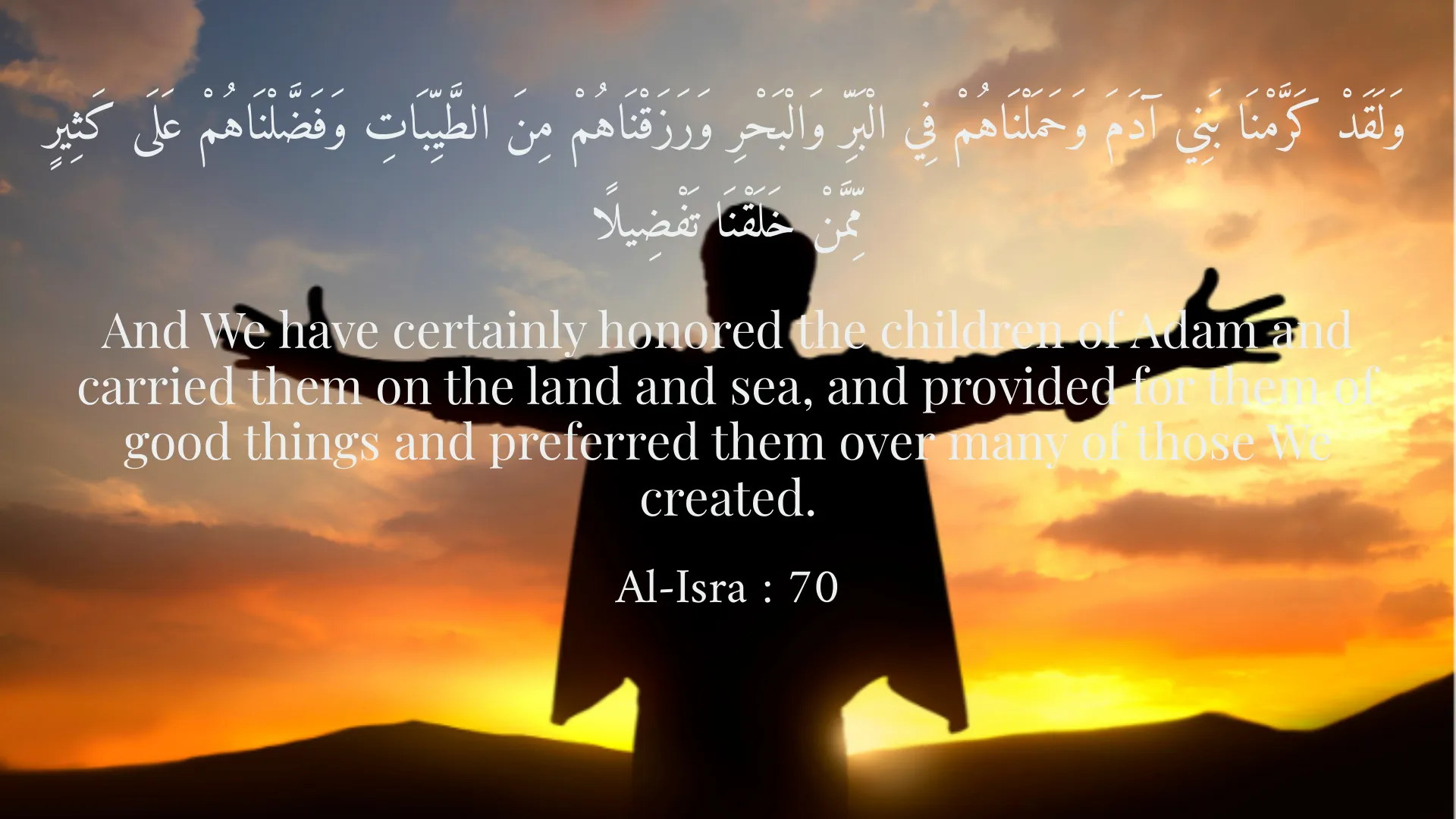
وَلَقَدْ كَرَّمْنَا بَنِي آدَمَ وَحَمَلْنَاهُمْ فِي الْبَرِّ وَالْبَحْرِ وَرَزَقْنَاهُمْ مِنَ الطَّيِّبَاتِ وَفَضَّلْنَاهُمْ عَلَى كَثِيرٍ مِّمَّنْ خَلَقْنَا تَفْضِيلًا
And We have certainly honored the children of Adam and carried them on the land and sea, and provided for them of good things and preferred them over many of those We created.
Al-Isra : 70
Short Story
One day, a man wandered in the forest seeking knowledge and wisdom. He encountered a scholar and asked, 'What makes humans the best of creation?' The scholar smiled and replied, 'Humans, with their intellect and will, can choose the right paths and move towards God. This characteristic distinguishes them from other creatures.' These words touched the man's heart, and he decided to use this gift wisely and teach others.