Quranic Answer
Human ingratitude, a deep-rooted flaw in human nature, stands as one of the most significant moral and spiritual challenges frequently addressed in the Holy Quran. Despite Allah's continuous showering of countless blessings upon His servants, it is observed that many individuals respond to this divine grace and generosity with kufr al-ni'mah, or denial of blessings, failing to be truly grateful. This phenomenon not only distances humanity from its Creator but also jeopardizes its worldly peace and ultimate salvation. The Quran, with a warning and sometimes reproachful tone, critiques this human trait and outlines its origins, guiding humanity to recognize these factors and choose the path of gratitude and divine pleasure. Roots of Ingratitude from a Quranic Perspective: 1. Forgetfulness and Heedlessness (Ghaflah): One of the primary reasons for ingratitude is humanity's forgetfulness and heedlessness concerning the source of blessings. When individuals find themselves in comfort and ease, they gradually forget that these blessings originate from Allah. They might attribute these bounties solely to their own efforts and intelligence, gradually developing arrogance and self-admiration. The Quran repeatedly urges humanity to remember divine blessings to escape the trap of heedlessness. A clear example is when a person faces hardship and turns intensely to God, but as soon as the problem is resolved, they revert to their former state, forgetting God. This forgetfulness prevents a deep appreciation of divine grace and leads them towards denial because their minds become engrossed in momentary pleasures, overlooking the true source. This ghaflah can act as a thick veil, obscuring the heart's vision and preventing one from seeing the truths around them. 2. Arrogance and Self-Admiration (Kibr): Humans naturally tend to seek recognition and value their achievements. If left unchecked, this tendency can escalate into arrogance. An arrogant individual attributes all their successes, wealth, health, and social status entirely to their personal abilities and efforts, neglecting or minimizing God's role. This self-admiration is a major obstacle to gratitude, as gratitude necessitates acknowledging the grace and generosity of another. The Holy Quran repeatedly reminds us that everything a person possesses comes from Allah, and without His will, no power exists in the universe. The arrogant person considers themselves independent of the Creator, and this perception leads them into the abyss of ingratitude. They forget that even their capacity for effort and thought is a blessing from the Lord, and without His permission, they can achieve nothing. 3. Love of Worldly Life and Material Attachments (Hubb al-Dunya): Excessive love for worldly life and the accumulation of wealth, status, and transient pleasures blind human insight. When a person dedicates all their concerns to material matters, they forget lofty spiritual values and their connection with the Creator. In this state, blessings, instead of being tools for drawing closer to Allah, become ends in themselves. A greedy person, no matter how many blessings they have, still feels a sense of lack and therefore cannot be grateful for what they possess. This greed and covetousness constantly push them towards new desires, never reaching a state of contentment, thus closing the doors of gratitude. This strong attachment to the fleeting world causes individuals to forget the true purpose of life and the temporary nature of blessings, leading them to accumulate more rather than using them rightfully and being grateful. 4. Ignorance and Lack of True Knowledge (Jahl): Many people, due to ignorance of Allah's greatness and power, and insufficient understanding of the philosophy of creation and the purpose of life, do not appreciate blessings. They fail to realize that every breath, every heartbeat, every moment of peace, and every drop of water they drink are all from the grace and generosity of Allah. This ignorance and lack of true knowledge prevent individuals from grasping the importance of gratitude and the consequences of ingratitude, leading them to disregard it. The Quran consistently invites humanity to reflect upon Allah's signs and the manifestations of His power in creation, thereby increasing their knowledge and leading them to true gratitude. A lack of awareness of the spiritual benefits of gratitude and the worldly and otherworldly consequences of ingratitude poses a significant barrier to human progress. 5. Whispers of Satan (Waswasah): Satan constantly strives to divert humanity from the straight path and tempt them towards ingratitude. By beautifying worldly life and diminishing the value of eternal blessings, he deceives people into denying blessings instead of being grateful. Satan instills a sense of deficiency and encourages comparing one's possessions with those of others, making people dissatisfied with what they have and fostering envy instead of gratitude. The Quran repeatedly warns that Satan is a clear enemy of humanity and that one must be wary of his temptations and seek refuge in God. His whispers can destroy contentment and keep a person in a perpetual state of wanting more and feeling dissatisfied. Consequences of Ingratitude: Ingratitude not only removes blessings but can also lead to divine punishment. The Quran states: "If you are grateful, I will surely increase you [in favor]; but if you deny, indeed, My punishment is severe" (Surah Ibrahim, 14:7). This verse clearly illustrates the dire consequences of ingratitude. Distance from God, a sense of emptiness, perpetual dissatisfaction, and spiritual unrest are other consequences of ingratitude. An ungrateful person never achieves inner contentment because they are always seeking what they lack and do not enjoy what they have, getting caught in an endless cycle of greed and regret. Quranic Solutions for Gratitude: To combat ingratitude, the Quran offers solutions: constant remembrance of Allah (dhikr), reflection and contemplation on the majesty of creation and His countless blessings, comparing oneself with those less fortunate (to highlight the value of what one possesses), proper use of blessings in a way that pleases Allah, and repentance and seeking forgiveness (tawbah and istighfar) to cleanse the effects of ingratitude and return to the righteous path. These actions help individuals develop a grateful heart and a contented soul. Conclusion: Ingratitude in humanity is a complex phenomenon with spiritual, psychological, and satanic roots. By elucidating these origins, the Quran illuminates the path for humanity to cultivate gratitude, thereby not only increasing divine blessings but also achieving inner peace and contentment, and advancing towards eternal salvation. Gratitude is not a momentary act but a continuous state of the heart and a disposition that should permeate all aspects of human life to lead them to the truth of servitude and proximity to Allah. This choice between gratitude and denial is the test Allah has set for humanity, determining each individual's path. Gratitude is a bridge to prosperity and blessing, while ingratitude is a valley leading to deprivation and regret. Therefore, the Quran constantly reminds humanity to be vigilant and appreciate Allah's blessings so that their lives may be filled with peace and abundance. This underscores the immense importance of gratitude within the Islamic intellectual and educational framework, serving as a pathway to true and eternal happiness in this world and the hereafter. Gratitude is the key to contentment and the gateway to increased blessings.
Related Verses
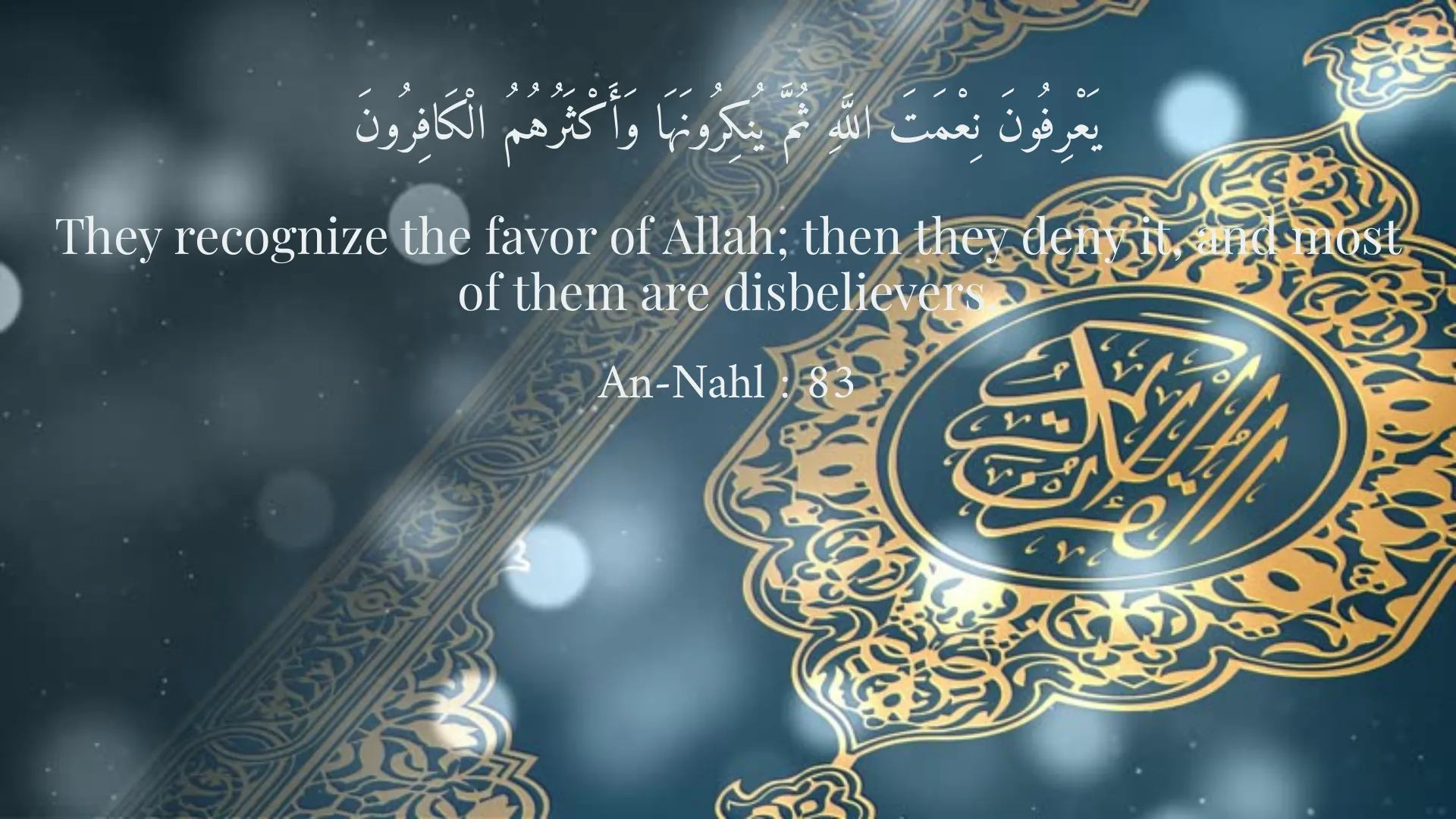
يَعْرِفُونَ نِعْمَتَ اللَّهِ ثُمَّ يُنكِرُونَهَا وَأَكْثَرُهُمُ الْكَافِرُونَ
They recognize the favor of Allah; then they deny it, and most of them are disbelievers.
An-Nahl : 83
وَإِذَا مَسَّ الْإِنسَانَ ضُرٌّ دَعَا رَبَّهُ مُنِيبًا إِلَيْهِ ثُمَّ إِذَا خَوَّلَهُ نِعْمَةً مِّنْهُ نَسِيَ مَا كَانَ يَدْعُو إِلَيْهِ مِن قَبْلُ وَجَعَلَ لِلَّهِ أَندَادًا لِّيُضِلَّ عَن سَبِيلِهِ ۗ قُلْ تَمَتَّعْ بِكُفْرِكَ قَلِيلًا ۖ إِنَّكَ مِنْ أَصْحَابِ النَّارِ
And when adversity touches man, he calls upon his Lord, turning to Him in repentance. But when He bestows on him a favor from Himself, he forgets that for which he cried to Him before, and he sets up rivals to Allah, in order to mislead [others] from His Way. Say, 'Enjoy your disbelief for a little; indeed, you will be among the companions of the Fire.'
Az-Zumar : 8
إِنَّ الْإِنسَانَ لِرَبِّهِ لَكَنُودٌ
Indeed, mankind, to his Lord, is ungrateful.
Al-Adiyat : 6
Short Story
It is recounted that there was a wealthy man who lived in the pinnacle of blessings and luxury. He possessed a lush garden, a magnificent house, and countless riches. Yet, his face never showed joy or contentment. He constantly complained about fate, grumbling, "Why does so-and-so have this and I do not?" or "These blessings are meager compared to what others possess." One day, he sat by a stream, lamenting the transience of the world. At that very moment, a poor, weary man arrived, barefoot and clad in tattered clothes. Suffering from thirst, he reached the water, scooped a handful, and drank with indescribable pleasure. Then he looked up to the heavens and exclaimed with all his heart, "Praise be to Allah, Lord of the Worlds! What a great and refreshing blessing! I wish others could also quench their thirst with this pure water." The wealthy man gazed at him in astonishment. The poor man had neither worldly possessions nor prestige, yet his heart was full of gratitude. The wealthy man paused, reflecting on his own state, and felt ashamed. He understood that his ingratitude, despite all his blessings, stemmed from his discontented heart and greedy eyes, not from a lack of blessings. He realized that happiness lies in counting one's blessings and being grateful for them, not in yearning for what one lacks. From that day forward, he strove to accustom his heart to gratitude, for as Sa'di says: "Gratitude for blessings increases them; ingratitude removes them from your hand."