Quranic Answer
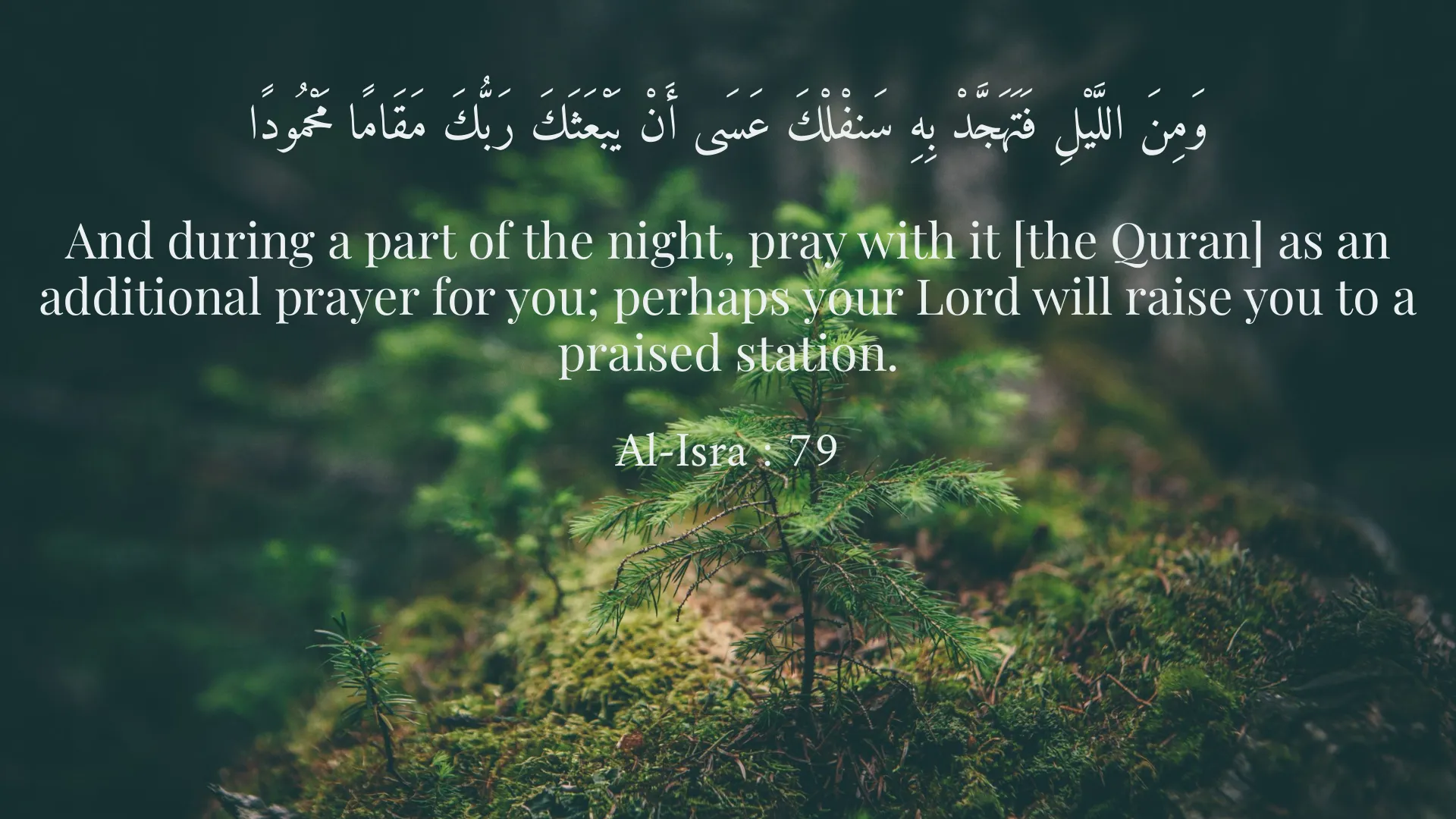
### The Spiritual Significance of Night Prayer (Tahajjud) in Islam Night prayer, known as Tahajjud, holds a revered place within Islamic practice, being a Sunnah of the Prophet Muhammad (peace be upon him). The significance of this nightly act of worship is not merely rooted in tradition, but also deeply embedded in the Quranic texts and prophetic traditions that highlight its virtues and benefits. This article endeavors to explore the profound significance of Tahajjud, examining its role in fostering spiritual closeness to Allah, enhancing emotional well-being, aiding personal development, and illustrating heartfelt devotion to the Creator. #### Understanding Tahajjud and Its Historical Context Tahajjud, derived from the Arabic word 'hajada,' which means to stay awake at night, has been practiced by believers since the early days of Islam. The Prophet Muhammad (peace be upon him) engaged in this form of prayer regularly, particularly during the last third of the night—a time known for its tranquility and divine proximity. It is widely acknowledged that the act of waking up at such a late hour to engage in sincere worship showcases utmost commitment and devotion, setting Tahajjud apart from other prayers obligatory in Islam. In various hadiths, the significance of Tahajjud is reiterated. One particularly powerful narration states that the Prophet (peace be upon him) mentioned: "The best prayer after the obligatory prayers is the night prayer." This statement highlights the elevated status of Tahajjud and its importance for Muslims seeking greater spiritual elevation. #### Closeness to Allah: A Primary Benefit of Night Prayer One of the primary reasons Tahajjud holds such significance is the closeness it brings between the worshipper and Allah. During the late hours of the night, when the world around us is enveloped in silence and stillness, believers have a unique opportunity to engage in intimate acts of worship, supplication, and reflection. This quietude provides a perfect backdrop for a deeper connection with the Divine. The Holy Quran emphasizes this connection in Surah Al-Isra, verse 79, which states: 'And during a part of the night, pray with it [the Quran] as an additional prayer for you; perhaps your Lord will raise you to a praised station.' This verse highlights the notion that nightly prayers can lead to elevated stations in the hereafter, reaffirming that engaging in such acts during the stillness of the night can lead to divine reward. #### Divine Mercy and Forgiveness Another critical aspect of Tahajjud is the opportunity it provides for seeking forgiveness and divine mercy. In the coolness of the night, believers often find themselves in a state of humility, beseeching Allah for forgiveness, guidance, and support in their lives. Islamic teachings emphasize that during the last part of the night, the doors of Allah's mercy are wide open, and supplications made during this time are especially accepted. The Prophet Muhammad (peace be upon him) stated, "In the last third of every night, our Lord descends to the lowest heaven and asks: 'Who is calling upon Me, that I may respond to him? Who is asking Me, that I may give him? Who is seeking forgiveness from Me, that I may forgive him?'" Such divine responsiveness reinforces the importance of nightly prayers, encouraging believers to seize this blessed opportunity to cleanse their hearts and renew their faith. #### Emotional and Spiritual Tranquility Tahajjud not only serves a spiritual purpose but also significantly contributes to emotional and mental well-being. In a world filled with chaos, stresses, and distractions, taking the time to pray during the night fosters a sense of peace and tranquility that is hard to attain during the day. As individuals disconnect from their daily routines and the surrounding noise, they can focus on their spiritual journey, allowing their thoughts to drift towards gratitude, humility, and reflection. Studies in psychology have shown that reflective practices, including prayer and meditation, can lead to reduced anxiety and enhanced emotional resilience. By engaging in Tahajjud, individuals can alleviate their worries and negative thoughts, finding solace in the quiet hours of the night when they communicate with their Creator, asking for strength and clarity in navigating life’s challenges. #### Overcoming Desires and Personal Development In addition to its benefits for emotional health, Tahajjud plays a vital role in personal development and self-improvement. The late-night prayers often prompt individuals to confront their desires, weaknesses, and shortcomings. In the depth of their prayers, believers are encouraged to seek forgiveness for their sins, repent for their wrongdoings, and strive to be better individuals. This process of self-assessment and repentance is crucial for personal and spiritual growth. The consistent practice of Tahajjud can help individuals cultivate discipline and perseverance, as it requires waking up at a time when the rest of the world is asleep. As such, practitioners develop a sense of accountability to themselves and their faith, paving the way for transformation and enhanced moral character. #### A Symbol of Devotion Ultimately, Tahajjud stands as a compelling symbol of love and devotion to Allah. The choice to engage in this nightly prayer, away from the gaze of society, reflects a sincere commitment to worship and appreciation for the boundless mercy of the Creator. It demonstrates that true faith often flourishes in moments of solitude, allowing both believers and their Creator to engage in a sincere and heartfelt exchange. In the stillness of the night, with only the whisper of their prayers ascending to the heavens, worshippers embrace solitude not as a barrier from others but as an opportunity for deeper communion with Allah. Each act of worship during these hours becomes not just a ritual but a meaningful expression of devotion and love. #### Conclusion As we conclude, it is important for Muslims to recognize the tremendous value of Tahajjud in their spiritual journey. The virtues of this night prayer extend beyond mere ritualistic practice, influencing emotional well-being, personal development, and the profound experience of revering the Divine. Embracing Tahajjud offers believers a chance to engage in a meaningful practice that can yield immense spiritual rewards and blessings, enriching their souls, and drawing them closer to Allah. Therefore, let us remember the significance of the night prayer and endeavor to incorporate it into our lives, finding solace and tranquility during the serene hours of the night.
Related Verses
وَمِنَ اللَّيْلِ فَتَهَجَّدْ بِهِ سَنفْلْكَ عَسَى أَنْ يَبْعَثَكَ رَبُّكَ مَقَامًا مَحْمُودًا
And during a part of the night, pray with it [the Quran] as an additional prayer for you; perhaps your Lord will raise you to a praised station.
Al-Isra : 79
كَانُوا قَلِيلًا مِّنَ اللَّيْلِ مَا يَهْجَعُونَ
They used to sleep but little of the night.
Adh-Dhariyat : 17
وَالَّذِينَ يَبِيتُونَ لِرَبِّهِمْ سُجَّدًا وَقِيَامًا
And those who spend the night before their Lord prostrating and standing.
Al-Furqan : 64
Short Story
One night, while everyone was asleep, Ali decided to wake up for night prayer and engage in heartfelt supplication to God. With a calm heart and sincere intention, he prayed two units of prayer and began to weep at the end of his supplications. Ali felt as if a weight had been lifted off his shoulders, and a strange tranquility settled in his heart. He thought to himself, 'This night prayer truly holds virtue, and I must pay more attention to it.'