Quranic Answer
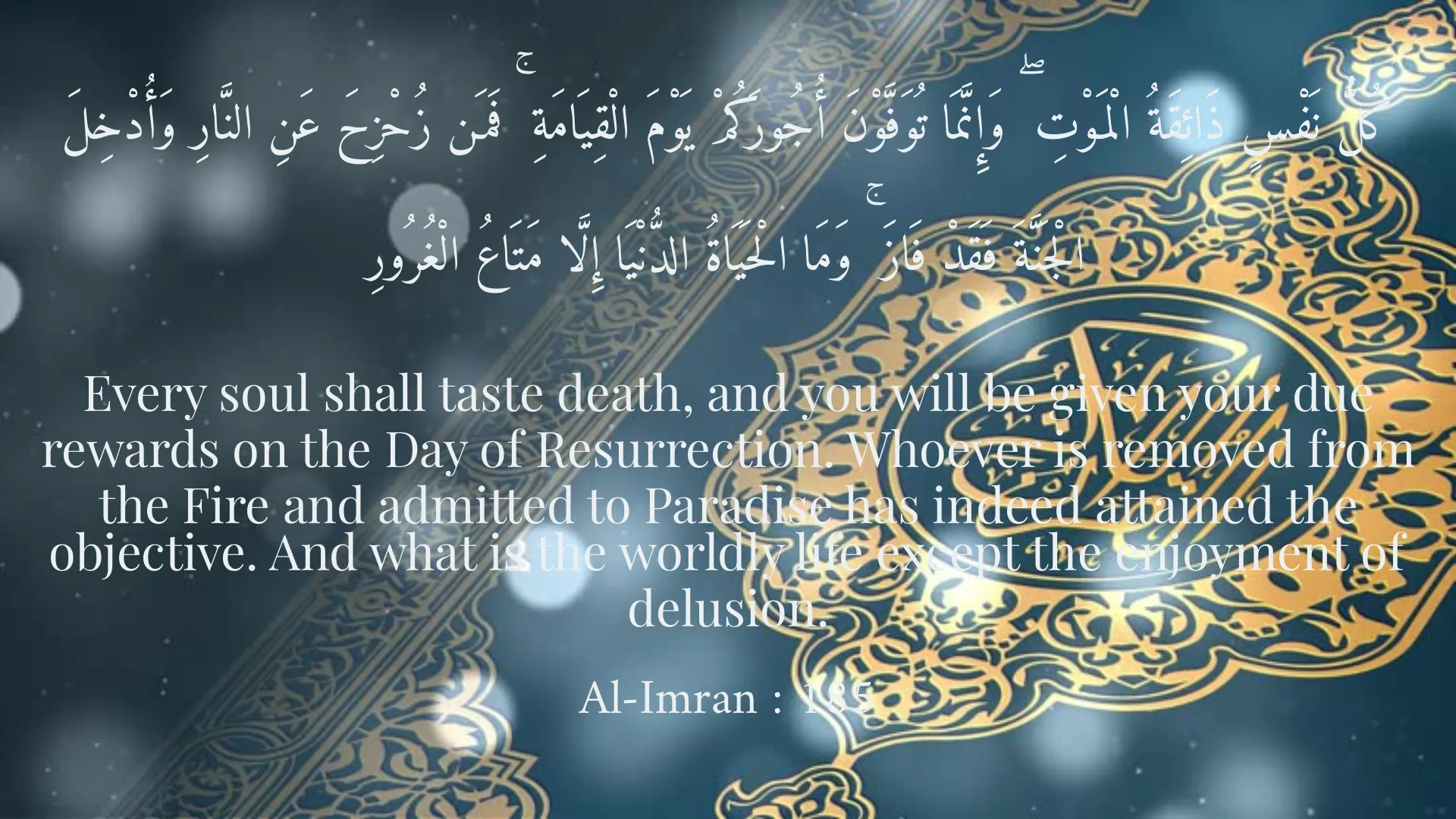
Remembering death is an essential theme in the Holy Quran that believers are advised to be constantly mindful of. This profound notion permeates various verses in the Quran, emphasizing that acknowledging mortality is not merely a somber reflection but a catalyst for living a life filled with purpose, righteousness, and self-awareness. The Quran serves as a guide for Muslims, not only in matters of ritual and belief but also in fostering a deep understanding of existence, ethics, and our eventual return to the Creator. This article elaborates on the significance of the remembrance of death as articulated in the Holy Quran, asserting that it is a critical component of a pious and fulfilling life. In Surah Al-Imran, Verse 185, it states, 'Every soul shall taste death.' This declaration serves as a profound reminder that worldly life and its pleasures are ephemeral, mere distractions that can lead individuals astray from their ultimate purpose. It is a call to awareness and an invitation to embrace the reality that death is an integral part of the human experience. Every moment spent in pursuit of fleeting desires diverts our attention from the eternal life that awaits us in the Hereafter. This awareness of mortality becomes even more critical when considering the value of the superficial pleasures that fill our lives. As such, we begin to recognize that our worldly possessions, our status, and our accomplishments are transient and do not hold infinite value. This sentiment is echoed in Surah Al-Anfal, Verse 28, which reads, 'And know that your properties and your children are but a trial, and that Allah has with Him a great reward.' By contemplating this verse, believers are reminded that our loved ones and material wealth are challenges that should spur growth and reflective thought rather than distractions. The Quran encourages believers to stay grounded, emphasizing that nothing in this life will be permanent and that the ultimate rewards lie in the Hereafter. The recollection of death fosters self-awareness and invites believers to contemplate their actions and intentions. This contemplation is vital; it ignites a sense of urgency to live righteously and focus on deeds that have lasting significance. As individuals confront the truth of their mortality, they are challenged to evaluate their lives and seek meaningful engagements rather than succumbing to the chase of worldly desires. Furthermore, the remembrance of death acts as a driving force to increase piety and encourage good deeds in one's life. A famous saying ascribed to the Prophet Muhammad states, "Reflect upon death abundantly. It is the destroyer of all pleasures." This reflection encourages believers to consider the temporary nature of life and prioritize deeds that will yield rewards beyond this earthly existence. When one is mindful of the eventuality of death, priorities often shift towards actions that foster goodness, kindness, charity, and other noble traits. The importance of this reminder is particularly elucidated in Surah Al-Mu’minun, Verse 99, which states: 'Until when death comes to one of them, he says: My Lord, send me back.' In this verse, we witness the lament of an individual who, at the brink of death, feels a deep sense of regret and yearning for a second chance to rectify their mistakes. This yearning serves as a poignant reminder of how crucial it is to seize the present and invest our time in good deeds. The regret felt by those facing death illustrates the human tendency to focus on the materialistic aspects of life, neglecting the spiritual and ethical dimensions that hold far greater value. Moreover, this reflection serves as a compelling argument for the transient nature of life. Each individual is called to recognize that the life we lead today may not be available to us tomorrow. This awareness shapes one’s attitude towards relationships, responsibilities, and the legacy they wish to leave behind. The acknowledgment of mortality encourages forgiveness, as holding onto grudges becomes trivial in the face of the ultimate reality. In this light, the believers are urged to cultivate virtues such as patience, gratitude, and compassion, which enrich both their own lives and the lives of those around them. Remembering death, therefore, is not an act steeped in gloom; rather, it is an empowering perspective that fosters a deeper connection to oneself and the Almighty. It inspires a life of virtue, propelling believers towards self-improvement and relentless pursuit of goodness. In recognizing that life is fleeting, individuals can develop a more extraordinary appreciation for the gift of life itself, motivating them to create memories through acts of kindness, wisdom, and love. The remembrance of death also serves to keep believers humble. In a world that often celebrates success and material achievement, reflected awareness of mortality ensures that one remains grounded and avoids arrogance. The Quran poignantly highlights this through its teachings, encouraging believers to approach life’s endeavors with a balance of ambition and humility, knowing that our time on earth is limited and should be treasured. In conclusion, the theme of remembering death in the Holy Quran is central to the spiritual and moral framework that Islam presents to its followers. It invites believers to engage in a continuous reflection on their lives, fostering mindfulness of actions and commitment to a journey toward righteousness. By recognizing the inevitability of death, individuals can lead lives of purpose and significance, creating a profound impact not only on their lives but also on the lives of others. Ultimately, the remembrance of death becomes a tool for personal growth, ethical living, and spiritual awareness, guiding believers toward a more profound connection with their faith and community. In embracing this concept, individuals can cultivate a life rich with meaningful pursuits, laying the foundation for an everlasting legacy that transcend the bounds of this mortal existence.
Related Verses
كُلُّ نَفْسٍ ذَائِقَةُ الْمَوْتِ ۖ وَإِنَّمَا تُوَفَّوْنَ أُجُورَكُمْ يَوْمَ الْقِيَامَةِ ۚ فَمَن زُحْزِحَ عَنِ النَّارِ وَأُدْخِلَ الْجَنَّةَ فَقَدْ فَازَ ۚ وَمَا الْحَيَاةُ الدُّنْيَا إِلَّا مَتَاعُ الْغُرُورِ
Every soul shall taste death, and you will be given your due rewards on the Day of Resurrection. Whoever is removed from the Fire and admitted to Paradise has indeed attained the objective. And what is the worldly life except the enjoyment of delusion.
Al-Imran : 185
وَاعْلَمُوا أَنَّمَا أَمْوَالُكُمْ وَأَوْلَادُكُمْ فِتْنَةٌ ۖ وَأَنَّ اللَّهَ عِندَهُ أَجْرٌ عَظِيمٌ
And know that your properties and your children are but a trial, and that Allah has with Him a great reward.
Al-Anfal : 28
حَتَّى إِذا جَاءَ أَحَدَهُمُ الْمَوْتُ قالَ رَبِّ ارْجِعُونِ
Until when death comes to one of them, he says: My Lord, send me back.
Al-Mu'minun : 99
Short Story
One day, a man named Hassan reflected on his life and came to realize that he needed to be more mindful of death and its truth. He decided to dedicate a day to remember death and do good deeds. His kindness led those around him to also reflect on the concept of death and good actions, creating a loving and peaceful community.