Quranic Answer
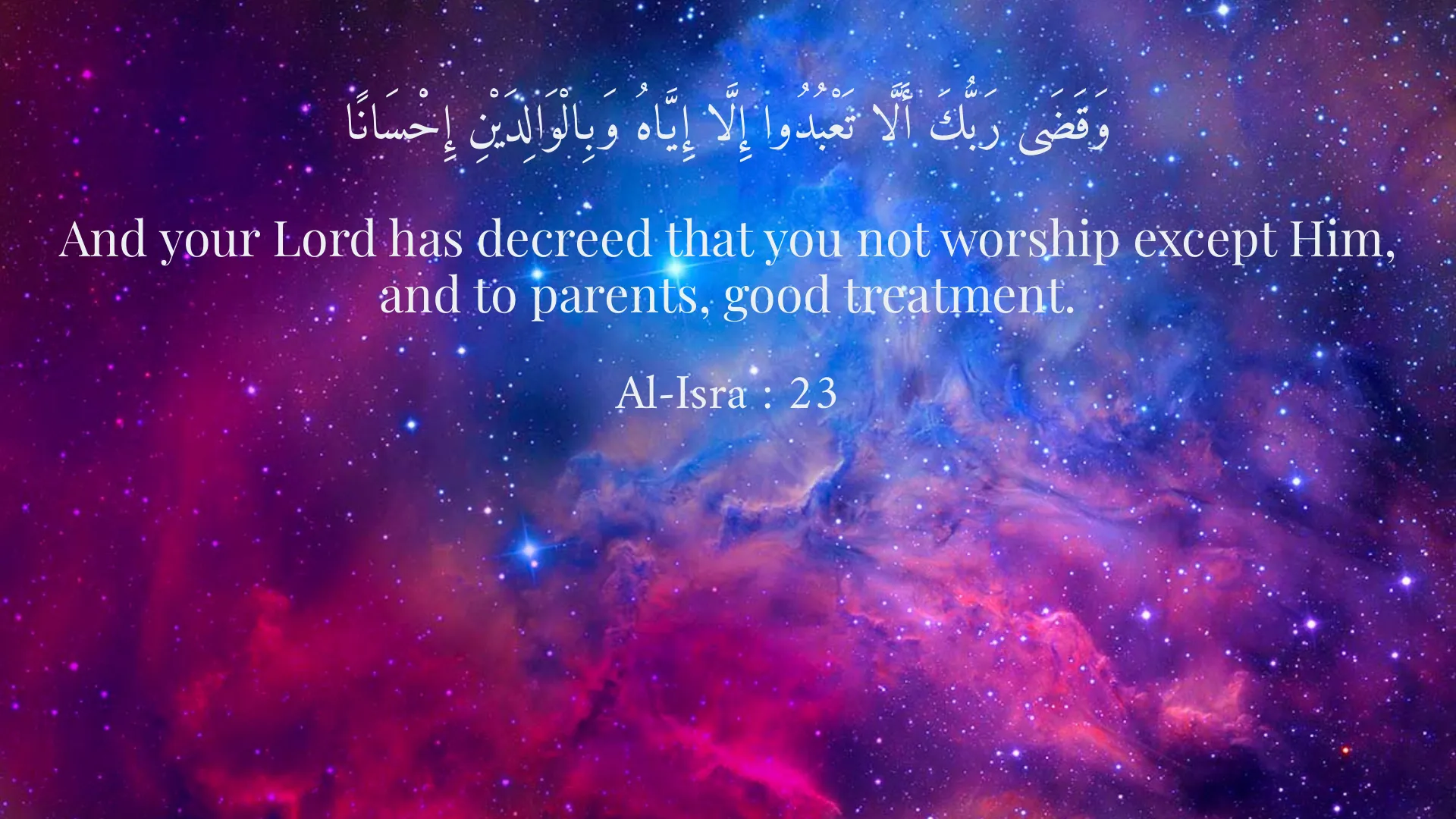
Respect for elders is a fundamental principle in Islam, deeply rooted in the teachings of the Quran and the traditions of the Prophet Muhammad (peace be upon him). In a world increasingly besieged by individualism and self-interest, the Islamic precept that encourages respect for elders stands out as a powerful reminder of the importance of honoring those who have come before us. This ideology is highlighted in various texts within the Quran, particularly in Surah Al-Isra, verse 23, which states, "And your Lord has decreed that you not worship except Him, and to parents, good treatment." This explicit commandment underscores the importance placed upon parents, establishing respect for them and, by extension, all elders, as a sacred obligation within the faith. The verse identified above clearly illustrates that honoring one’s parents is not merely a suggestion but a religious duty prescribed by Allah himself. It denotes the respect and veneration that elders deserve, given their role in shaping the lives of younger generations and guiding them through the challenges of life. Elders are the custodians of experience and wisdom; their insights, derived from a lifetime of trials and triumphs, are invaluable tools for navigating the complexities of human existence. Thus, by respecting our elders, we not only honor their contributions but also arm ourselves with lessons that can facilitate our personal growth and development. Furthermore, respecting elders significantly strengthens familial and social bonds. When younger generations demonstrate respect towards their elders, it nurtures an atmosphere of love, appreciation, and trust within families. This respect serves as a cornerstone for creating cohesive families that stand together in challenging times, supporting one another emotionally and psychologically. The family unit, being the foundational building block of society, is thus fortified through the respect and reverence shown to its elder members. In addition, fostering respect for elders cultivates a culture of peaceful coexistence within the broader community. Respect transcends familial lines; it flows into the interactions among community members. When respect for elders becomes a societal norm, it encourages individuals to embrace differing viewpoints, thereby promoting tolerance, understanding, and compassion. This groundwork of respect can reduce conflict and enable more harmonious living, creating a society where cooperation and empathy reign over disputes and discord. Moreover, the Prophet Muhammad (peace be upon him) impeccably exemplified the importance of respecting elders throughout his life. His interactions with various individuals showcase the profound level of respect he afforded to the elderly. He taught, through both words and actions, that the value of an individual does not diminish with age; instead, it is magnified due to the wealth of experiences and knowledge they possess. The Prophet (peace be upon him) stated, "He is not one of us who does not show mercy to our young and does not respect our elderly." This Hadith encapsulates the essence of intergenerational respect and compassion that is central in Islam. It is notable that the reverence for elders in Islam goes beyond mere acknowledgment of age. It is about rendering service and support to those who have spent their lives nurturing others. The act of caring for elders—whether by providing emotional support, seeking their counsel, or assisting them in daily tasks—is regarded as an honorable act in the Islamic faith. Engaging in such actions reflects the true essence of respect, which is grounded in love, care, and genuine concern for the well-being of others. In my view, the values imparted by respecting elders extend beyond religious observances; they encapsulate a universal truth that transcends cultural and religious boundaries. Every society stands to gain from the lessons that elders impart. They have observed societal changes, historical shifts, and evolving human behavior; their voices echo a deeper understanding and perspective that is often overlooked in today’s fast-paced modernity. Thus, fostering environments where elders feel valued enhances both individual lives and societal structures, creating a cycle of learning and appreciation. Additionally, in modern society, the trend often skews towards neglecting the elderly, treated as burdens rather than revered assets. This disconnection results in feelings of loneliness and despair among elders, which can lead to adverse mental health conditions. Therefore, cultivating respect for elders is essential not only for their well-being but also for our humanity as a whole. By reaffirming respect for elders, we remind ourselves and our communities that every phase of life carries its purpose and dignity. In Islam, the notion of respect for elders can be seen as a microcosm of the religion's broader commitment to social justice, compassion, and community harmony. The values of respect and empathy are tightly woven into the fabric of Islamic teachings, driving home the point that individual rights and duties are intertwined. Respect for elders is a reflection of the respect expected to be accorded to all individuals, forming the basis of interaction and relationships within the community. In conclusion, the principle of respect for elders in Islam is a multifaceted one. It draws on spiritual, familial, societal, and psychological dimensions, creating an environment where wisdom is celebrated, and social ties are strengthened. By treating our elders with the respect they deserve, we not only honor the teachings of Islam but also enhance our own lives and the lives of those around us. Recognizing the unique sanctity of our elders serves as a reminder of the values that define us as a community, highlighting the importance of creating and maintaining bonds of love and respect across generations. Engaging with this principle ultimately cultivates a thriving, harmonious society, wherein every member feels appreciated and valued.
Related Verses
وَقَضَى رَبُّكَ أَلَّا تَعْبُدُوا إِلَّا إِيَّاهُ وَبِالْوَالِدَيْنِ إِحْسَانًا
And your Lord has decreed that you not worship except Him, and to parents, good treatment.
Al-Isra : 23
وَوَصَّيْنَا الْإِنْسَانَ بِوَالِدَيْهِ ۚ أَنِ اشْكُرْ لِي وَلِوالِدَيْكَ إِلَيَّ الْمَصِيرُ
And We have enjoined upon man [care] for his parents. But if they endeavor to make you associate with Me that of which you have no knowledge, do not obey them. To Me is your return, and I will inform you about what you used to do.
Luqman : 14
Short Story
Once upon a time, there lived a man named Hasan in his town. He always respected his elders and listened to their advice. One day, he visited his grandfather and shared his problems with him. The grandfather lovingly advised him, and Hasan decided to incorporate those lessons into his life. This respect for elders made Hasan successful in his life and strengthened his relationships with his family.