Quranic Answer
The Holy Quran, a central religious text for Muslims, contains profound discussions on human nature, morality, and the temptations that lead individuals astray from the path of righteousness. Among the many salient themes present in the Quran, the attractiveness of sin is particularly pronounced in Surah Al-Imran and Surah Al-An'am. These two chapters provide insights into the intrinsic desires of human beings and the seductive nature of worldly pleasures that often lead to sin. A critical examination of the verses within these chapters illustrates the complexities of human desire, the immediate gratification that sin provides, and the potential spiritual repercussions that accompany transgressions. The allure of sin can be traced to the innate human nature that is predisposed to seek pleasure and personal gratification. This theme is vividly encapsulated in Surah Al-Imran (3:14), where it states: 'Beautified for people is the love of that which they desire - of women and children, heaped-up sums of gold and silver, fine branded horses, and cattle and tilled land. That is the enjoyment of worldly life, but Allah has with Him the best return.' Here, the verse paints a picture of the myriad attractions that entice individuals, ranging from material wealth to familial attachments. Each of these elements represents a different facet of human desire, underscoring that the seduction of sin often arises from things that are tangible and readily available. Surah Al-Imran (3:14) goes a step further by not only listing the types of attractions that beckon to humanity but also juxtaposing them with the implications of the spiritual journey. While these worldly pleasures may provide temporary satisfaction, the verse poignantly reminds believers that true and lasting rewards lie with Allah. This aspect of the verse serves as a crucial reminder of the temporary nature of worldly joys compared to the eternal nature of spiritual fulfillment. Thus, it urges individuals to rethink the way they prioritize their desires and to reflect upon the ultimate consequences of indulging in sin. Moreover, the allure of sin is compounded by the immediate gratification it offers. Humans, by virtue of their biology and psychology, are often wired to seek quick rewards. This concept is further elaborated upon in Surah Al-An'am (6:122), which states: 'Is one who was dead and We gave him life and made for him a light by which to walk among the people like one who is in darkness never to emerge therefrom? Thus it has been made pleasing to the disbelievers that which they were doing.' This profound verse draws a compelling analogy between spiritual life and death, illustrating that disobedience to divine guidance leads to a metaphorical death - a state of soul-enveloped darkness. Sin may initially appear alluring, tempting the individual with promises of immediate happiness and satisfaction. However, as emphasized in Surah Al-An'am, it can ultimately facilitate a dangerous cycle of despair and spiritual blindness. Those engaged in sin may find their hearts hardened, blinding them to the potential enlightenment available through faith and righteous conduct. Therefore, the allure of sin is not merely a physical enticement but encompasses a profound spiritual danger that can lead individuals away from the path of truth and light. The thematic interplay between worldly attractions and spiritual consequences creates an urgent call for introspection and mindfulness among believers. The Quran does not merely present a condemnation of sin; it offers insight into the motivations and circumstances that lead individuals to transgress. Understanding one's own desires can be crucial in the fight against sin. Recognizing the pleasure-driven nature of carnal desires allows individuals to approach temptation more critically. It is vital to consider that spiritual and religious consequences of sin can lead to significant adverse effects on an individual's life and on the lives of those around them. Many biblical texts reiterate the importance of cultivating mindfulness in daily decisions. Sin, too often trivialized, harbors the potential to destroy familial bonds, relationships, and ultimately one's connection to the Divine. Thus, the teachings of the Quran serve as prompts for believers to engage in self-evaluation and ethical consideration as they navigate the complexities of life. Despite the challenges posed by sin's allure, the Quran emphasizes the importance of seeking forgiveness and redemption. Allah's mercy is depicted as boundless, and individuals are encouraged to return to Him, repent for their transgressions, and rekindle their spiritual journey. This tenet of Islam reiterates that while human beings may falter and succumb to temptation, there is always a path back to righteousness - a path illuminated by sincere repentance and a commitment to change. In conclusion, the discussions on the attractiveness of sin found in Surah Al-Imran and Surah Al-An'am provide vital insights into the struggles faced by humanity in their continuous battle against temptation. The Quran serves as both a guide and a warning, urging individuals to recognize the transient allure of worldly pleasures while remaining vigilant of the deeper spiritual implications of sin. Through wisdom, self-awareness, and a commitment to righteousness, believers can transcend the darker aspects of human nature, aligning their desires with divine will. The teachings in these Surahs underline the importance of understanding human desires and the necessity of striving for spiritual enlightenment, ultimately leading individuals toward a life of purpose and fulfillment.
Related Verses
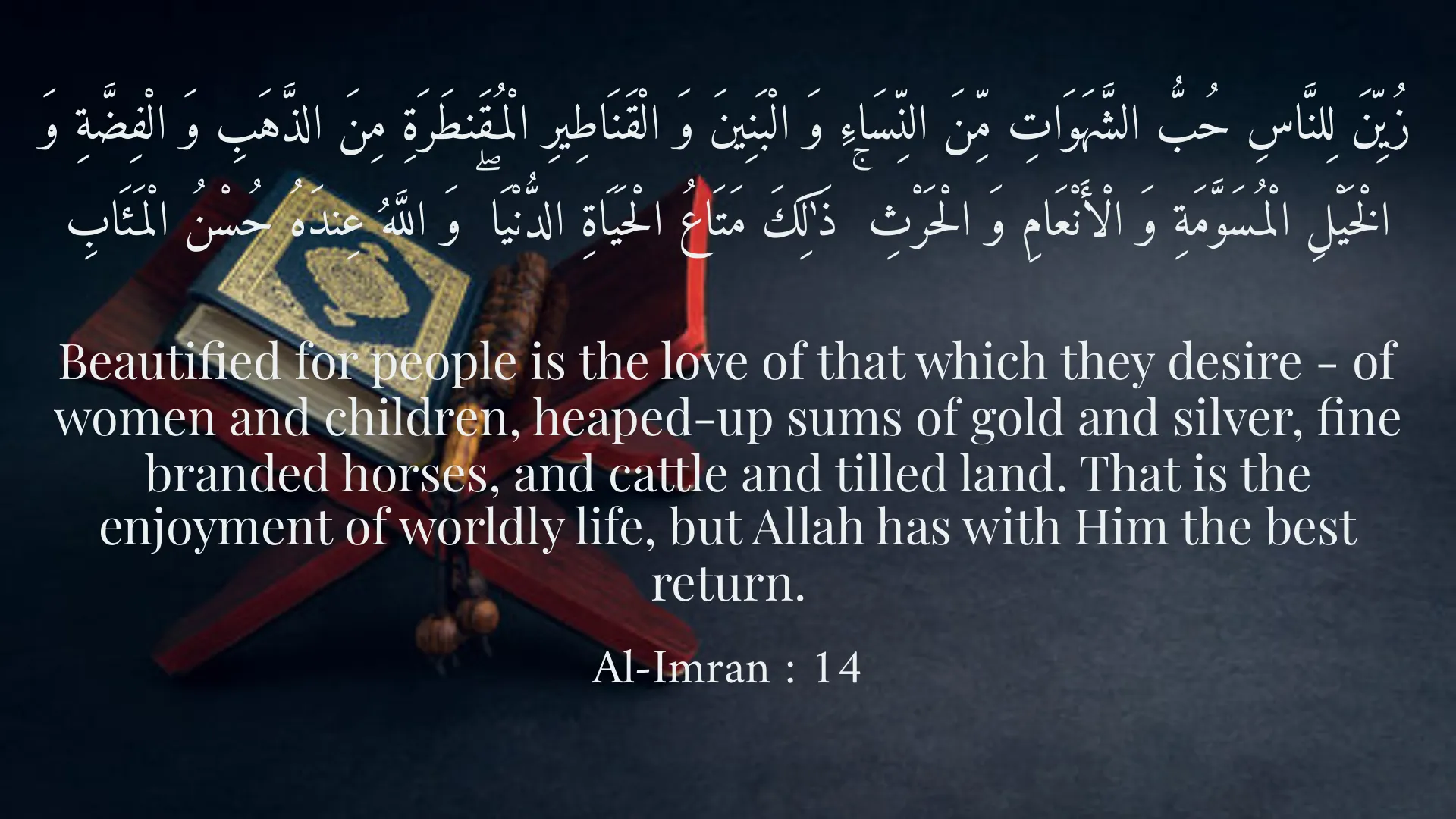
زُیِّنَ لِلنَّاسِ حُبُّ الشَّهَوَاتِ مِّنَ النِّسَاءِ وَ الْبَنِينَ وَ الْقَنَاطِیرِ الْمُقَنطَرَةِ مِنَ الذَّهَبِ وَ الْفِضَّةِ وَ الْخَیْلِ الْمُسَوَّمَةِ وَ الْأَنْعَامِ وَ الْحَرْثِ ۚ ذَٰلِکَ مَتَاعُ الْحَيَاةِ الدُّنْیَا ۖ وَ اللَّهُ عِندَهُ حُسْنُ الْمَئَابِ
Beautified for people is the love of that which they desire - of women and children, heaped-up sums of gold and silver, fine branded horses, and cattle and tilled land. That is the enjoyment of worldly life, but Allah has with Him the best return.
Al-Imran : 14
أَفَمَن کَانَ مَیْتًا فَأَحْیَیْنَاهُ وَ جَعَلْنَا لَهُ نُورًا یَمْشِی بِهِ فِی النَّاسِ کَمَن مَّثَلُهُ فِی الظُّلُمَاتِ لَیْسَ بِخَارِجٍ مِّنْهَا ۚ کَذَلِكَ زُیِّنَ لِلْکَافِرِینَ مَا کَانُوا یَعْمَلُونَ
Is one who was dead and We gave him life and made for him a light by which to walk among the people like one who is in darkness never to emerge therefrom? Thus it has been made pleasing to the disbelievers that which they were doing.
Al-An'am : 122
Short Story
One day, a person went to visit one of the great sages and asked a question just like this. The sage replied, "Humans tend to find what they lack valuable and attractive. The moral constraints in society lead individuals towards sin. When a person does not see sins and becomes familiar with them, they lose their allure, but at first, they only see the superficial beauty of it." After these words, that person realized it's better to distance himself from companions who indulge in sinful behavior.