Quranic Answer
The Significance of Nighttime Worship in the Holy Quran: A Comprehensive Analysis The Holy Quran, the sacred text of Islam, serves as a guide for Muslims in all aspects of life. Among its numerous teachings, one theme that stands out is the importance of staying awake at night for acts of worship and devotion. The Quran highlights the virtues of nighttime, emphasizing its potential for spiritual elevation and growth. In this article, we will delve deeper into the verses of the Quran that stress the significance of nighttime worship and explore the psychological and spiritual benefits it offers to believers. Through a careful examination of these concepts, we aim to illustrate how the Holy Quran prioritizes nighttime as a precious opportunity for individuals to strengthen their relationship with Allah and enrich their spiritual lives. One of the pivotal verses that emphasizes nighttime worship is found in Surah Al-Isra (17:79): "And during a part of the night, pray with it as additional (worship) for you." This directive from Allah to the Prophet Muhammad (peace be upon him) serves as an essential reminder of the critical role that nighttime plays in enhancing one's worship. By allocating time at night for prayer, believers can attain a sense of tranquility and serenity that may be challenging to experience during the hustle and bustle of daylight hours. The verse insinuates that engaging in prayer at night is not merely an additional act of worship, but rather, it is a profound opportunity for reflection, spiritual rejuvenation, and seeking divine closeness. Nighttime is often depicted in the Quran as a sacred time, conducive to deeper contemplation. The stillness of the night creates an atmosphere that allows individuals to immerse themselves in prayer and supplication without distractions. The serene environment fosters a sense of peace, allowing believers to express their innermost thoughts and yearnings to Allah. The night provides a sanctified setting for introspection and the sincere evaluation of one’s life choices and actions. This contemplative process can lead to personal growth, where individuals can seek forgiveness for past misdeeds and strive for improvement. In Surah Adh-Dhariyat (51:17-18), Allah further illustrates the commitment of His righteous servants: "They used to sleep but little of the night; And in the hours before dawn, they would seek forgiveness." This verse indicates the dedication of the faithful, who willingly sacrifice their sleep to engage in acts of devotion. Such behavior is not merely a reflection of their piety, but also a testament to their longing for divine mercy and guidance. The implication here is that those who prioritize nighttime worship and are willing to withstand fatigue are rewarded with greater spiritual clarity, insight, and enlightenment. The act of staying awake for worship can have profound effects on mental and emotional well-being. Research supports that engaging in nighttime devotions fosters a sense of coherence, allowing individuals to align their hearts and spirits with their faith. This alignment acts as a guiding principle in their lives, steering them towards a path of righteousness and moral integrity. The practice of night worship encourages a slower, more contemplative approach to spirituality that is increasingly difficult to find amid modern life’s distractions. In a world dominated by the demands of daily living, the nighttime offers a unique opportunity to step away from distractions and reconnect with the essence of spirituality. Believers may find solace in the act of night prayers (Tahajjud), using those moments to address their worries, seek guidance, and express gratitude toward Allah. The result is a fortified bond with the Creator and a rejuvenated spirit eager for growth. The Quran’s encouragement of nighttime worship transcends mere ritual; it serves as a pathway to establish authenticity in one’s relationship with Allah. By choosing to remain awake for prayer and reflection, individuals consciously exhibit their commitment to their faith and their desire for a deeper connection. This sacred practice nurtures a sense of belonging within the Muslim community and inspires others to enhance their spiritual practices. Furthermore, staying awake at night allows for opportunities to partake in additional acts of worship, such as reading the Quran and engaging in Dhikr (remembrance of Allah). These acts form a continuous cycle of devotion, creating a rich tapestry of spiritual activity that enhances overall faith. Muslims often recite verses from the Quran that resonate with them, contemplating their meanings and seeking deeper insights into their lives and relationships with others. The Quran also mentions the consequences of neglecting this nighttime worship. Those who shy away from these sacred hours risk losing the spiritual connection that is fostered during these quiet moments. They may find themselves more susceptible to the distractions and stresses of life, leading to a weaker bond with Allah. The temptation to prioritize sleep over worship can lead individuals to overlook the blessings and rewards associated with nighttime devotion. As we unravel the layers of the Quran's teachings on the importance of staying awake at night, it becomes clear that nighttime worship serves as a divine opportunity for spiritual upliftment. Muslims are encouraged to seize this precious time to pray, reflect, and seek forgiveness. In doing so, they strengthen their spiritual connection with Allah, rejuvenate their hearts and minds, and pave the way for personal transformation. In conclusion, the emphasis placed on staying awake at night in the Holy Quran illuminates its significance and virtues. By establishing a practice of nighttime worship, believers can take full advantage of this blessed time, nurturing their faith and fortifying their spiritual lives. The Quran guides its followers toward a deeper understanding of their relationship with Allah, encouraging them to embrace the tranquility and opportunities the night provides. Ultimately, the endeavor of reconnecting through nighttime worship can lead to a harmonious and fulfilling spiritual journey, filled with peace, purpose, and divine closeness.
Related Verses
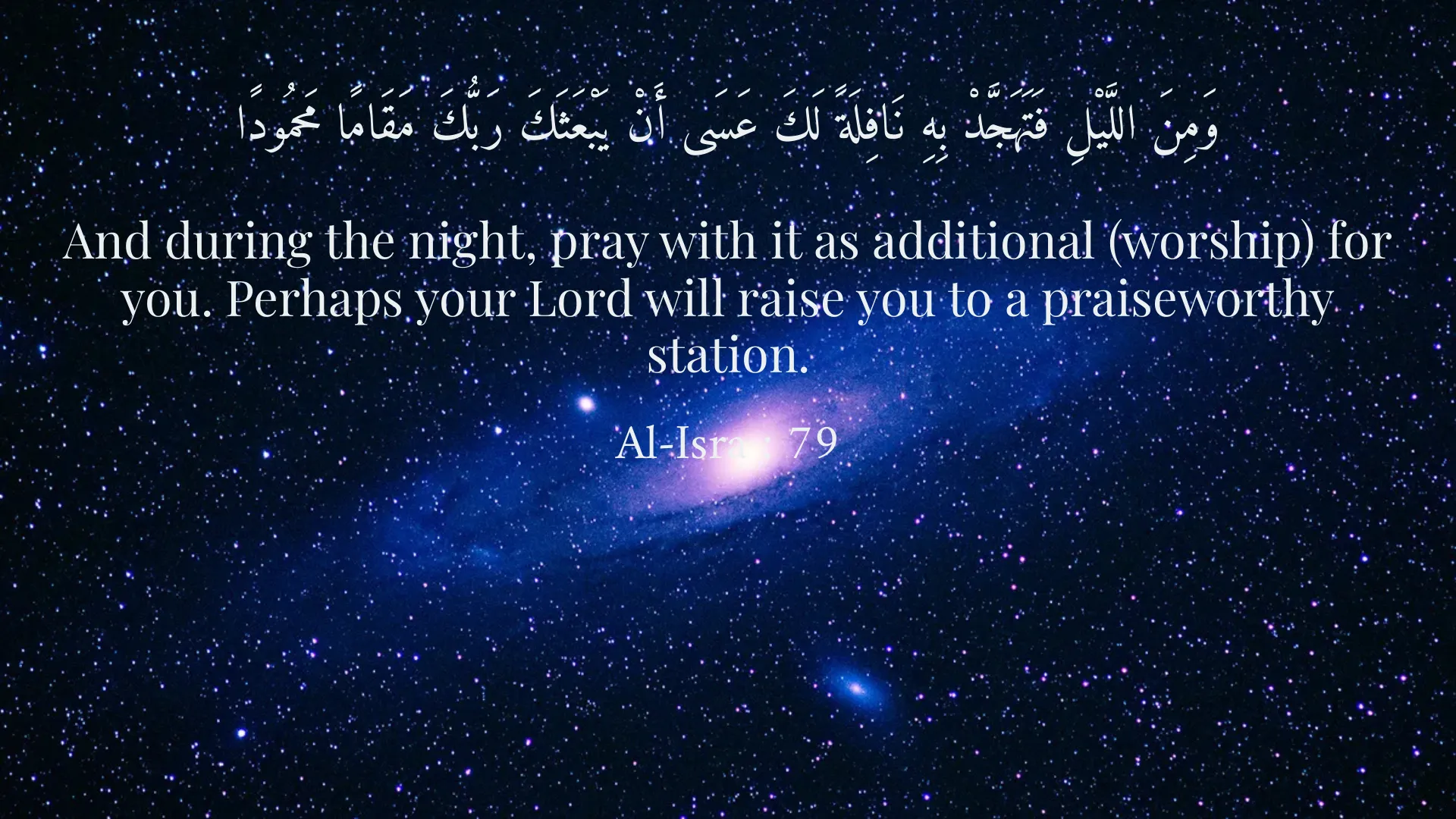
وَمِنَ اللَّيْلِ فَتَهَجَّدْ بِهِ نَافِلَةً لَكَ عَسَى أَنْ يَبْعَثَكَ رَبُّكَ مَقَامًا مَحمُودًا
And during the night, pray with it as additional (worship) for you. Perhaps your Lord will raise you to a praiseworthy station.
Al-Isra : 79
إِنَّ الْمُتَّقِينَ فِي جَنَّاتٍ وَنَهَرٍ
Indeed, the righteous are in gardens and rivers.
Adh-Dhariyat : 17
كَانُوا قَلِيلًا مِّنَ اللَّيْلِ مَا يَهْجَعُونَ
They used to sleep but little of the night.
Adh-Dhariyat : 18
Short Story
One day, a man named Sajjad, following the advice of a religious friend, decided to spend his nights in worship and prayer. He would stay awake at night, reciting surahs from the Quran by the light of a lamp. Over time, Sajjad felt his heart become increasingly calm and his life more illuminating. He exclaimed, 'These nights have become a time of peace for my soul.'