Quranic Answer
The remembrance of death, known as 'Dhikr al-Mawt' in Arabic, plays a pivotal role in the Islamic faith and is profoundly emphasized in both the Quran and Hadith literature. This practice is not merely a contemplation of the end of life but rather a comprehensive reflection on one's existence, purpose, and the eventual return to the Creator. In Islam, the importance of remembering death transcends mere acknowledgment; it is a form of worship that acts as a catalyst for spiritual growth and ethical living. Firstly, the Quran addresses the inevitability of death in several verses, reinforcing the understanding that life is transient. One of the prominent verses is found in Surah Al-Imran, verse 185, where it states, "Every soul will taste death." This verse serves as a constant reminder to believers that death is an integral part of the human experience and a step toward an eternal existence beyond the physical realm. The profound simplicity of this verse resonates with individuals, prompting them to engage in self-reflection and seek deeper meanings in their lives. The concept of death in Islam encourages Muslims to ponder their actions and live a life aligned with their values and faith. By recognizing the temporary nature of worldly possessions and ambitions, believers are motivated to focus on the afterlife and their standing before Allah. The reiteration of death in the Quran not only conveys its certainty but also emphasizes the importance of preparedness for the Day of Resurrection, when every individual will account for their deeds. In Surah Al-Munafiqun, verse 9, Allah states, "O you who have believed, do not let your wealth and your children divert you from the remembrance of Allah." This admonition highlights the potential distractions of material life that can steer individuals away from their spiritual responsibilities. The verse underscores that while wealth and family are important aspects of life, they should never take precedence over the remembrance of God. Here, the act of remembering death takes a central role, enabling Muslims to prioritize their devotion and maintain a connection with their Creator amidst life’s distractions. Furthermore, the remembrance of death cultivates stronger ethical values within individuals. When one is constantly aware that life is finite, the urgency to live a good and righteous life becomes more pronounced. This awareness encourages honesty, compassion, and integrity, as individuals strive to leave behind a legacy that reflects their faith and character. Islamic teachings posit that one’s actions and intentions will be evaluated in the Afterlife, thus creating an environment where mindfulness in behavior becomes a natural consequence of contemplating mortality. Moreover, the remembrance of death fosters empathy towards others. When individuals recognize the shared fate of mortality, they are more likely to connect with those around them on a human level, understanding that every being is navigating the same existential realities. This recognition enhances kindness and strengthens community ties, as people become more inclined to support one another during challenging times, knowing that life’s trials are fleeting. Additionally, engaging in the remembrance of death can provide psychological benefits. It helps alleviate the fear of the unknown that often accompanies the thought of dying. By approaching the concept of death as a natural and expected part of life, believers can find solace and comfort, transforming anxiety into a sense of tranquility. This process allows Muslims to cultivate a deeper appreciation for life as they strive to fulfill their spiritual and ethical obligations. The biographical accounts of various Islamic scholars and saints illustrate how deeply the remembrance of death influenced their lives and teachings. For instance, the well-known Islamic scholar Al-Ghazali emphasized the significance of reflecting on death as a means of purifying the heart and soul, noting that remembering death often leads to a life of intentionality and righteous deeds. His teachings and those of other scholars serve as reminders of the practical applications of this contemplation in achieving spiritual elevation and moral integrity. In conclusion, the remembrance of death is a fundamental aspect of Islamic spirituality, rooted in the teachings of the Quran and the practices of the Prophet Muhammad (peace be upon him). It goes beyond a passive acknowledgment; it serves as a transformative tool for self-reflection, ethical conduct, and deepened spirituality. The inevitability of death reminds Muslims to seek closeness to Allah, prioritize their faith over worldly distractions, and embody the virtues of honesty and kindness. Ultimately, the practice of remembering death not only enriches an individual’s spiritual journey but also contributes to a more compassionate and ethical society. By embracing this concept, Muslims can navigate the complexities of life with a greater sense of purpose, mindfulness, and hope for the eternal life that lies beyond.
Related Verses
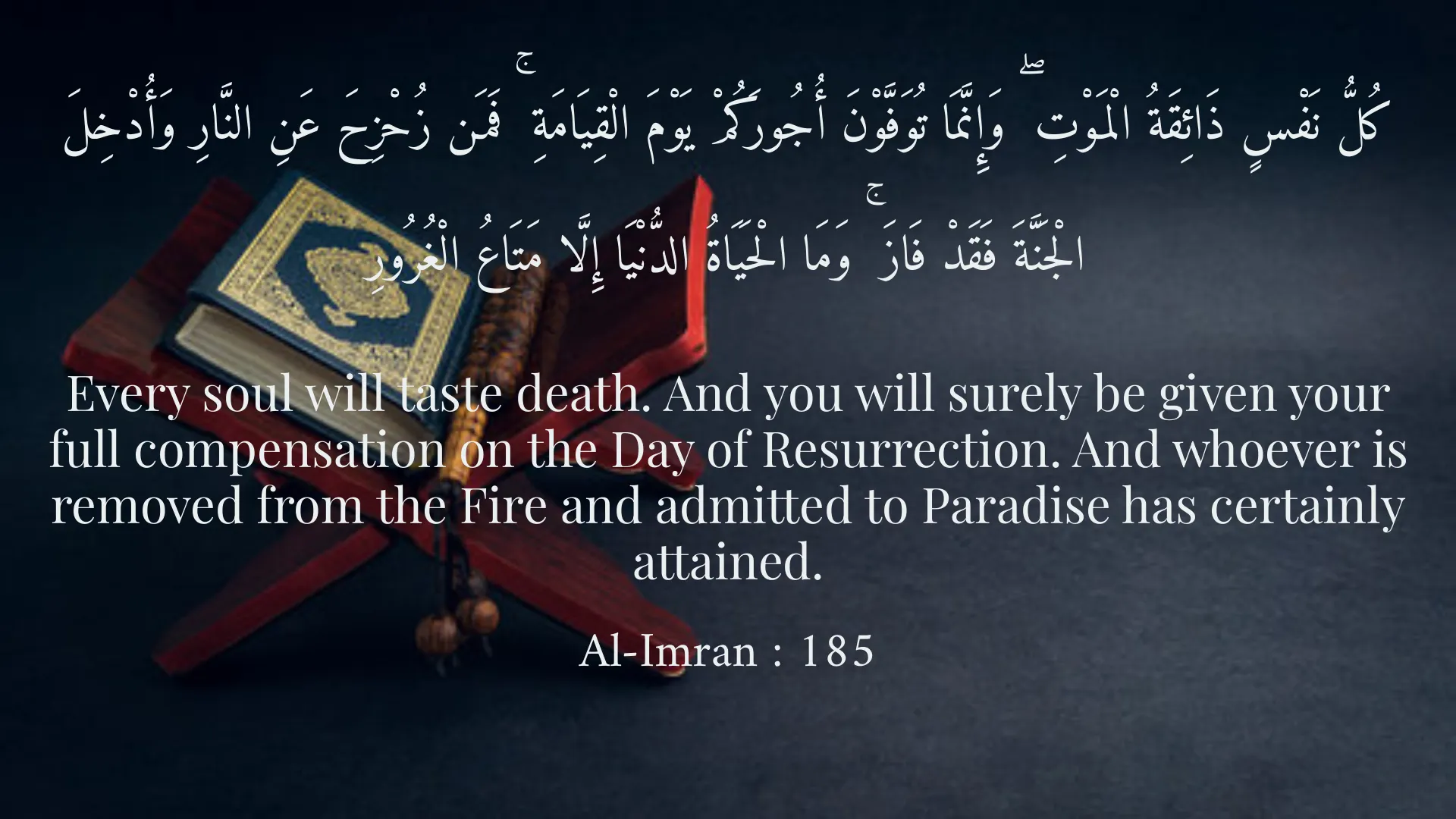
كُلُّ نَفْسٍ ذَائِقَةُ الْمَوْتِ ۖ وَإِنَّمَا تُوَفَّوْنَ أُجُورَكُمْ يَوْمَ الْقِيَامَةِ ۚ فَمَن زُحْزِحَ عَنِ النَّارِ وَأُدْخِلَ الْجَنَّةَ فَقَدْ فَازَ ۚ وَمَا الْحَيَاةُ الدُّنْيَا إِلَّا مَتَاعُ الْغُرُورِ
Every soul will taste death. And you will surely be given your full compensation on the Day of Resurrection. And whoever is removed from the Fire and admitted to Paradise has certainly attained.
Al-Imran : 185
يَاأَيُّهَا الَّذِينَ آمَنُوا لَا تُلهِكُمْ أَموالُكُمْ وَلَا أَولادُكُمْ عَنْ ذِكرِ اللَّهِ ۖ وَمَن يَفْعَلْ ذَٰلِكَ فَأُو۟لَـٰئكَ هُمُ الْخَاسِرُونَ
O you who have believed, do not let your wealth and your children divert you from the remembrance of Allah. And whoever does that – it is those who are the losers.
Al-Munafiqun : 9
Short Story
Once upon a time, a man named Hassan was deep in thought about his life. He noticed that due to daily distractions, he often forgot to remember death and did not pay enough attention to spirituality. Then he decided to set aside a few minutes each day to reflect on death. Over time, he found that this remembrance brought joy and peace to his life, helping him enjoy every moment more and assist others.