Quranic Answer
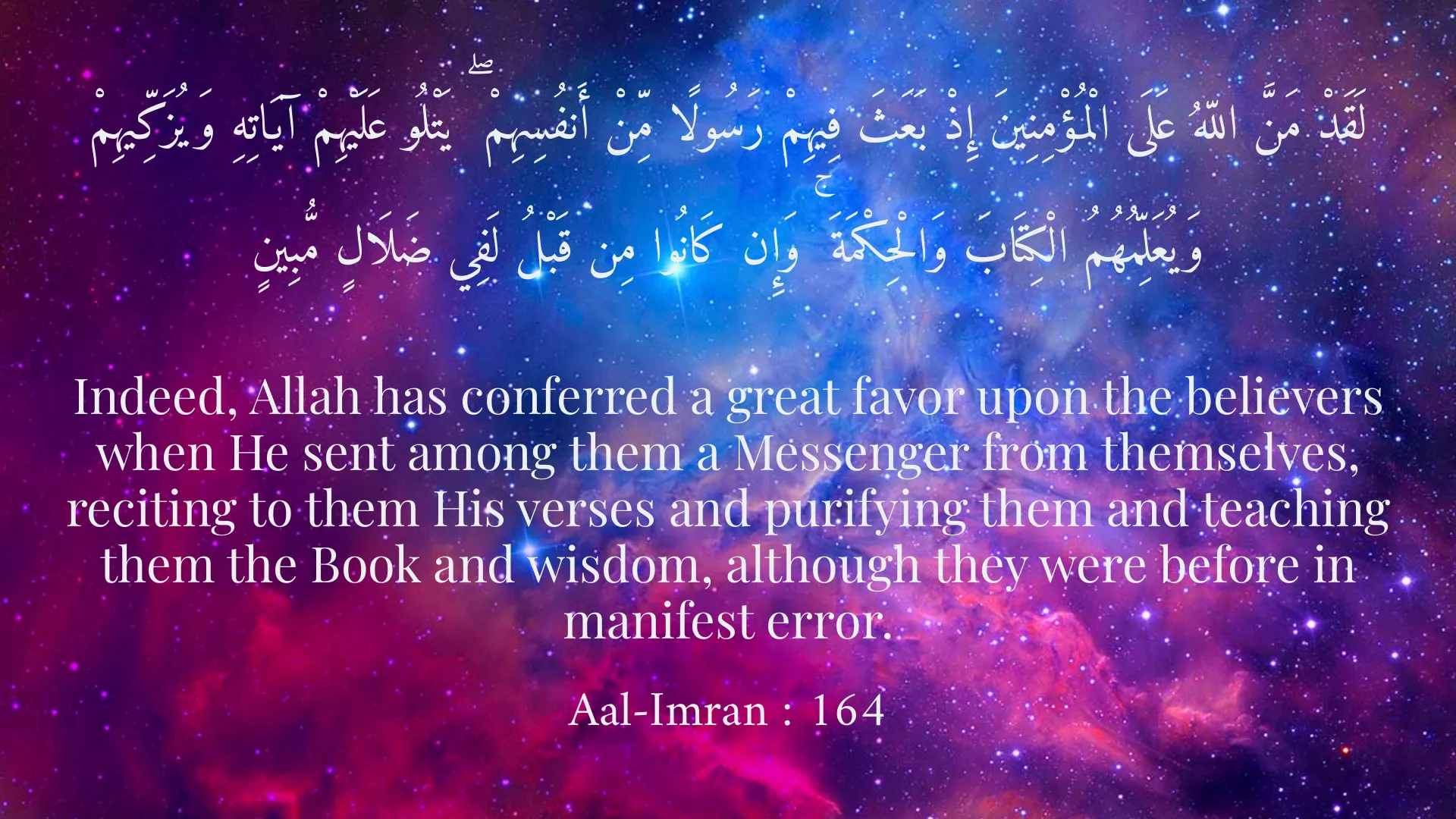
Conflict and disagreement are inherent aspects of human existence and societal interaction. These challenges arise from multifaceted life circumstances, intrinsic human differences, and the diverse choices individuals make. The Holy Quran acknowledges these complexities of life and frames them within a spiritual and moral context, suggesting that such differences are not merely hurdles but tests designed to lead humanity towards self-discovery, better understanding, and ultimately, growth. This article delves into the nature of conflict as outlined in the Quran, exploring the verses that elucidate the role of divine guidance in navigating disagreements and fosters a path towards reconciliation and harmony. In Surah Aal-Imran, verse 164, the Holy Quran states: "Indeed, Allah has conferred a great favor upon the believers when He sent among them a Messenger from themselves, reciting to them His verses and purifying them and teaching them the Book and wisdom, although they were before in manifest error." This verse serves as a reminder of humanity's innate flaws and the transformative power of divine wisdom. It reflects the idea that conflicts often stem from ignorance or a lack of awareness, where individuals or groups fail to see the broader perspective. Through the guidance of a Messenger, believers received clarity enabling them to navigate the complexities of life with wisdom. Similar to various life circumstances, individuals hold diverse aspirations and emotional needs that manifest in distinct behaviors and choices. It is natural for people to seek different goals, leading to clashes and disagreements within families, communities, and societies at large. For instance, in a professional setting, team members may have conflicting views on achieving a project's objective, resulting in disagreement on the path forward. However, it is crucial to recognize these differences as opportunities for collaboration rather than as reasons for division. The discourse on conflict, therefore, transitions into an exploration of shared objectives and a collective commitment to understanding one another’s perspectives. Moreover, the Quran emphasizes the importance of returning to divine principles when faced with disagreements. In Surah Ash-Shura, verse 10, it articulates: "And whatever you disagree over, its ruling is with Allah." This profound verse illustrates that, amid contention, believers are encouraged to look beyond their personal biases and interpretations. Instead, they are urged to seek resolution through reference to divine guidance and moral standards, which serve as a foundation for understanding right from wrong. This not only promotes peace amongst individuals but also reinforces a cohesive societal framework based on shared beliefs and values, allowing for collaboration and unity. Furthermore, the Quran underlines the significance of recognizing the inherent differences between individuals. In Surah Al-Hijr, verse 29, Allah states: "And when I have proportioned him and breathed into him of My [created] soul, then fall down to him in prostration." Such verses underscore that the essence of humanity is clothed in variation, suggesting that our differences should be appreciated as part of a grand design. Each person, endowed with unique gifts and perspectives, plays an essential role in the larger tapestry of society. Cognizance of this fundamental human structure can foster respect and acceptance rather than hostility or intolerance, particularly in times of disagreement. Conflicts may arise from a myriad of reasons, whether it be cultural differences, personal values, or diverging priorities. One of the significant factors contributing to conflict is the lack of effective communication. Oftentimes, disagreements escalate due to misunderstandings and misinterpretations. For instance, in interpersonal relationships, failure to communicate expectations can lead to disagreements about roles and responsibilities. Therefore, enhancing dialogue and active listening is essential in resolving conflicts. Emphasizing compassion, patience, and empathy in communications can lead to better understanding and pave the way towards resolution. Another dimension of conflict is the emotional aspect. Emotions can drive individuals to react defensively, further complicating the resolution process. Encouraging emotional intelligence—self-awareness and empathy—can help individuals manage their reactions during conflict, allowing them to engage more constructively. As highlighted in the Holy Quran, recognizing the divine wisdom in others’ perspectives fosters a culture of empathy and caring, which ultimately aids in mending rifts. Furthermore, it is essential to underline the broader implications of conflicts within society. When handled properly, disagreements can lead to important discussions that spur innovation and progress. Often, differing opinions stimulate critical analysis and ultimately lead to better and more inclusive solutions. The Quran provides a framework for handling conflicts that elevates the discourse from mere argumentation to collaboration, framing disagreements as stepping stones rather than stumbling blocks. In conclusion, conflict and disagreement are natural, even integral, components of human life. They present challenges that must be met with patience, understanding, and a commitment to listening and learning from one another. By drawing upon divine principles as illustrated in the Holy Quran, individuals can navigate the complexities of disagreement with a sense of purpose and moral grounding. As we strive toward harmonious living, it is imperative to embrace the diversity of thought and experience within our communities, recognizing that each person contributes uniquely to the shared journey of life. Rather than shying away from conflict, we should approach it as a necessary catalyst for growth and understanding—a vital opportunity to enrich our lives and the lives of those around us.
Related Verses
لَقَدْ مَنَّ اللّهُ عَلَى الْمُؤْمِنِينَ إِذْ بَعَثَ فِيهِمْ رَسُولًا مِّنْ أَنفُسِهِمْ ۖ يَتْلُو عَلَيْهِمْ آيَاتِهِ وَيُزَكِّيهِمْ وَيُعَلِّمُهُمُ الْكِتَابَ وَالْحِكْمَةَ ۚ وَإِن كَانُوا مِن قَبْلُ لَفِي ضَلَالٍ مُّبِينٍ
Indeed, Allah has conferred a great favor upon the believers when He sent among them a Messenger from themselves, reciting to them His verses and purifying them and teaching them the Book and wisdom, although they were before in manifest error.
Aal-Imran : 164
وَمَا اختلفتم فيه من شيء، فحكمه إلى الله.
And whatever you disagree over, its ruling is with Allah.
Ash-Shura : 10
وَإِذَا سَوَّيْتُهُ وَنَفَخْتُ فِيهِ مِن رُّوحِي فَقَعُوا لَهُ سَاجِدِينَ
And when I have proportioned him and breathed into him of My [created] soul, then fall down to him in prostration.
Al-Hijr : 29
Short Story
One day, Ali was pondering about his life and thought about how he could cope with the challenges and conflicts around him. He reflected on the verses of the Quran and decided that for every challenge, he would seek a solution through his faith. Over time, with acceptance of conflicts and striving to adhere to his religious principles, he found greater peace and contentment in his life.