Quranic Answer
In the Holy Quran, there is a profound encouragement to perform good deeds, coupled with a strong admonition against boasting about these actions. This fundamental principle is not merely a guideline but rather a profound ethical consideration that reflects the essence of Islamic teachings. Specifically, Allah communicates this message in Surah Al-Baqarah, verse 264, where He advises believers, "O you who have believed, do not invalidate your charities with reminders or injury." This verse highlights a critical aspect of charity and acts of kindness - the necessity of maintaining pure intentions, rooted solely in the desire to please Allah. The concept of good deeds extends beyond the act itself; it entails a framework of sincerity that permeates the intentions behind the action. When we render help to those in need, it is imperative that our motivation is not clouded by the desire for recognition from others or to elevate our prominence in society. This inherent desire for acknowledgment can dilute the purity of our good deeds, transforming them from acts of worship into displays of egoism. Furthermore, the Quran emphasizes the delicate balance between fulfilling our obligations toward others and maintaining humility in our actions. In continuing this exploration of humility, we turn our attention to Surah An-Nur, verse 31, where Allah implores, "And tell the believing women to reduce [some] of their vision and guard their chastity." The underlying message here resonates with the broader theme of modesty and humility in all aspects of life, including our good deeds. Just as women are encouraged to moderate their gaze and protect their dignity, so too must all believers exercise discretion in their charitable acts. The notion is clear: in preserving the essence of our good deeds, we must prioritize humility and discretion over public acknowledgment and praise. Boasting about one's charitable contributions or good deeds runs contrary to the very spirit of altruism espoused in Islamic teachings. It not only undermines the sincerity of the act but also places emphasis on the individual rather than the collective benefit of the action. When individuals draw attention to their generosity, they inadvertently shift the focus from the benevolence of their act to their own self-perception, and this transformation can detract significantly from the goodness intended to be uplifted in the community. Moreover, an important Hadith from Prophet Muhammad (peace be upon him) underlines this principle, stating, "The greatest among people on the Day of Judgment will be the one who keeps his good deeds hidden." This statement encapsulates the Islamic perspective on the merit of humility. The Prophet's words remind us that the true weight of our deeds lies not in their visibility but in their intention and sincerity. The virtue of acts performed in secret, without any expectation of recognition, signifies a profound level of devotion to Allah and a commitment to the welfare of others devoid of any ulterior motives. The significance of hidden acts of kindness cannot be overstated. They have the unparalleled potential to create ripples of positivity in the lives of others without the distractions that often accompany public acts of charity. When individuals engage in anonymous good deeds, they not only foster a culture of selflessness but also inspire others to follow suit. Such an environment nurtures mutual trust and strengthens the bonds within a community, as the true spirit of charity flourishes in the spaces where recognition is not sought. As believers, it is essential to cultivate an awareness of our motivations whenever we engage in charitable acts. This self-reflection can serve as a guiding principle in our spiritual journey, pushing us to consistently reevaluate our intentions. What motivates us to give? Is it the applause of others, or is it a desire to please Allah and serve His creation? When we genuinely strive to align our actions with the latter intention, we embark on a transformational journey that not only enhances our relationship with God but also amplifies the impact of our deeds. Furthermore, the Quran does not merely caution against ostentation; it encourages a heartfelt commitment to service. Engaging in acts of kindness should resonate with the core Islamic values of compassion and empathy. In prioritizing the welfare of others, we create an atmosphere rooted in solidarity, uplifting those who are struggling and enhancing the overall well-being of society. The essence of good deeds, therefore, is intricately woven into the fabric of community engagement, and it is through genuine service that we nurture a society where empathy thrives. In conclusion, the Islamic perspective on good deeds is multidimensional, encompassing the importance of intention, humility, and community welfare. Through verses in the Holy Quran and teachings from the Prophet Muhammad (peace be upon him), we are reminded of the profound weight purity of intention carries in our actions. Whether it is through financial contributions, acts of kindness, or simple gestures of compassion, good deeds should be conducted in a manner that prioritizes serving others and seeking Allah's pleasure. In a world increasingly driven by self-promotion and recognition, the challenge remains for believers to remain steadfast in their commitment to perform good deeds quietly and without boasting. Ultimately, this path leads us closer to Allah and allows us to foster a community founded on genuine goodwill, where the act of giving itself is the ultimate reward.
Related Verses
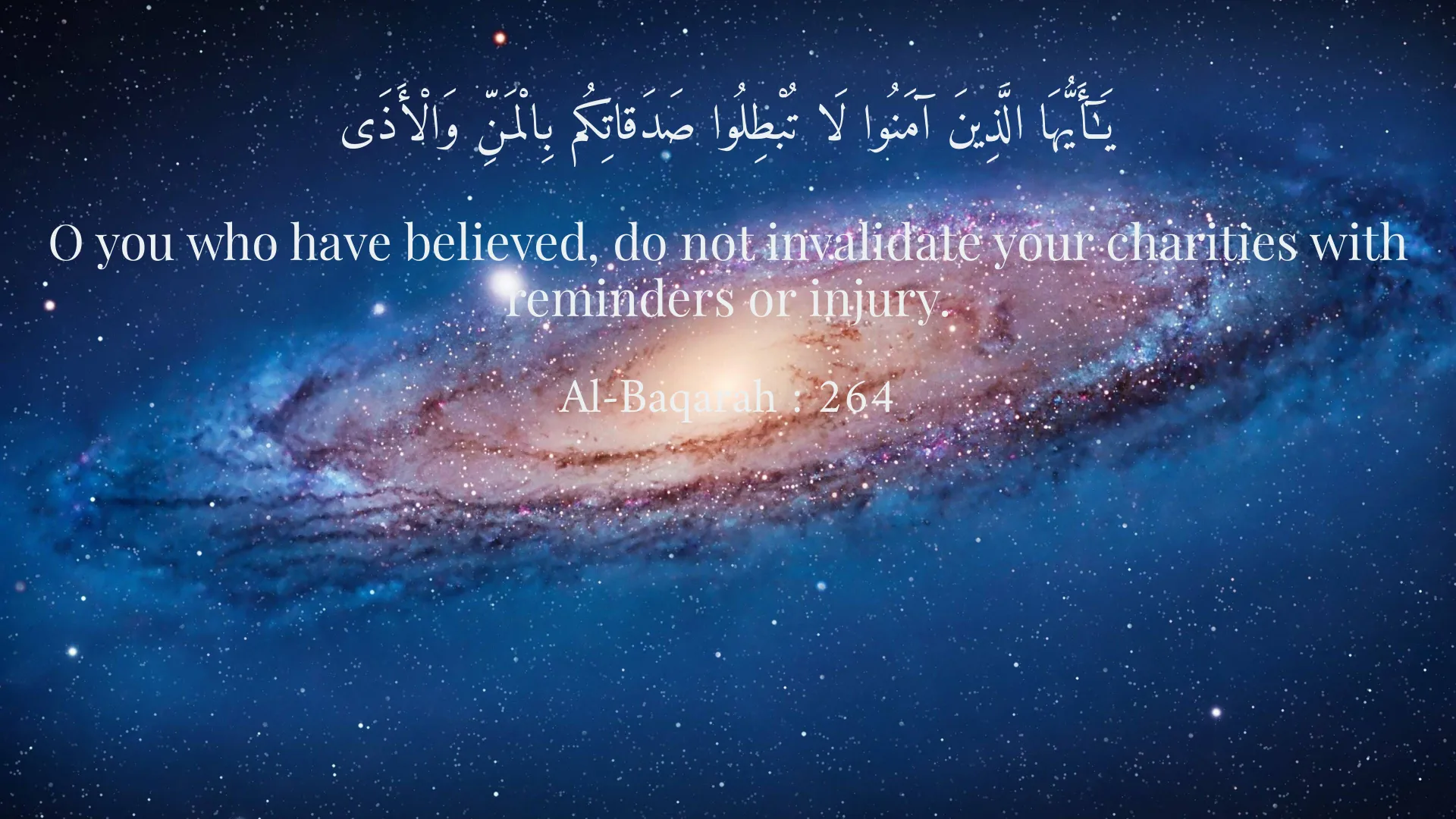
يَـٰٓأَيُّهَا الَّذِينَ آمَنُوا لَا تُبْطِلُوا صَدَقاتِكُم بِالْمَنِّ وَالْأَذَى
O you who have believed, do not invalidate your charities with reminders or injury.
Al-Baqarah : 264
وَقُل لِلْمُؤْمِنَاتِ يَغْضُضْنَ مِنْ أَبْصَارِهِنَّ وَيَحْفَظْنَ فُرُوجَهُنَّ
And tell the believing women to reduce [some] of their vision and guard their chastity.
An-Nur : 31
Short Story
Once upon a time, a man named Hassan decided to do good deeds and help others. However, he remembered that he should not flaunt these acts of kindness. So, every day he secretly helped the poor, believing he was doing the best act. Hassan realized that nothing in the world is more beautiful than the pleasure of Allah, and the good feeling in his heart was more important than anything else.