Quranic Answer
In the Holy Quran, profound emphasis is placed on the control of one's gaze and the mindfulness of what one observes. This notion underpins a significant moral and spiritual dimension that guides the behavior and character development of believers. Within the sacred text, particularly in Surah An-Nur, we find clear instructions that illuminate the importance of such discipline. In verse 30, Allah commands the believers to lower their gaze and guard their modesty, indicating the necessity of refraining from looking at individuals who are not permissible, especially those outside their immediate family. This command serves as a foundation for understanding the dynamics of human interactions and the potential repercussions that arise from our everyday choices regarding what we choose to look at. The act of gazing, when left unchecked, can lead to the emergence of undesirable thoughts and, consequentially, sins and transgressions in the heart. The heart is often viewed as the center of emotional and spiritual experience; thus, when our gaze is not controlled, it can lead to a cluttered heart, filled with negative thoughts and motives. Undoubtedly, this perspective echoes throughout religious and ethical teachings, signaling a universal understanding that our senses play a pivotal role in shaping our inner lives. Moreover, in the subsequent verse, verse 31, the Quran underscores the importance of controlling one’s gaze significantly for women. The advice to guard against unnecessary glances highlights an essential aspect of societal morality and the privileges associated with mutual respect between genders. This is crucial as the way we perceive and treat others can drastically alter depending on the direction of our gaze. Unchecked thoughts stemming from inappropriate looks can not only jeopardize personal relationships but also invoke conflicts that could spiral into deeper ethical dilemmas and sins. Now, let us delve deeper into the implications of these teachings and the broader ethical framework surrounding the concept of the gaze. Society today is saturated with imagery and visual stimuli that can easily distract or lead individuals astray. The accessibility of various types of media makes it imperative for individuals to be hyper-aware of what they are exposing themselves to. Therefore, controlling one’s gaze is no longer a subjective moral choice; it has evolved into a collective necessity for preserving the purity of social and spiritual environments. The connection between an individual’s gaze and their emotional reactions cannot be overstated. Cognitive studies have illustrated how visual input influences our emotions and thoughts. For instance, engaging in beneficial and positive visual experiences can elevate one’s mood and foster a sense of well-being, while exposure to immoral or negative stimuli can prompt feelings of sadness, discontent, and even anger. Hence, the Quranic injunctions that advocate for controlling one's gaze offer profound wisdom that resonates with contemporary understandings of psychology and social behavior. Integrating the aspects of spiritual mindfulness, ethical behavior, and the psychological implications of one’s gaze presents a holistic approach to living a righteous life. By directing our gaze towards the positive, the righteous, and the permissible, we cultivate a heart that thrives on purity and goodness. The act of lowering the gaze is not merely an external practice; it embodies an internal discipline that controls desires, fosters modesty, and enhances personal dignity. Furthermore, socially, these teachings can alleviate many interpersonal conflicts that arise from misunderstandings stemming from inappropriate looks or behaviors. By adhering to the principles set forth in the Quran regarding the gaze, individuals can help cultivate an environment of respect and dignity within their communities. This emphasis on mindfulness promotes a culture where individuals are judged not merely by appearances but by their character and intentions. Additionally, the importance of refraining from inappropriate glances extends to the concept of mutual respect between genders. When members of society adhere to these ethical guidelines, it lays the groundwork for healthier, more respectful interactions that transcend mere physical appearances. Such practices encourage individuals to seek deeper, more meaningful connections based on mutual respect and understanding, rather than superficial judgments. In today's fast-paced world where distractions abound and lines can become easily blurred, the teachings of the Quran regarding controlling the gaze hold increased relevance. The simplicity of lowering one’s gaze belies the profound impact that such a practice can have on individual hearts and broader societal dynamics. It emphasizes personal accountability and the role that each individual plays in shaping a more virtuous community. In conclusion, being mindful of one’s gaze is an essential ethical and spiritual undertaking that should be integrated into daily life. The Quran’s guidance is immensely beneficial in preserving the purity of the heart and spirit, simultaneously drawing a person closer to Allah. As humans, our spiritual and emotional reactions are intricately linked to what we view, perceive, and absorb. Therefore, maintaining vigilance over our gaze can serve as an effective measure to shield ourselves from immorality and maintain the sanctity of our hearts. Ultimately, the teachings present a timeless reminder of the powerful impact that our choices carry and encourage believers to foster a vigilant spirit, embracing the beauty of modesty and integrity in their everyday lives.
Related Verses
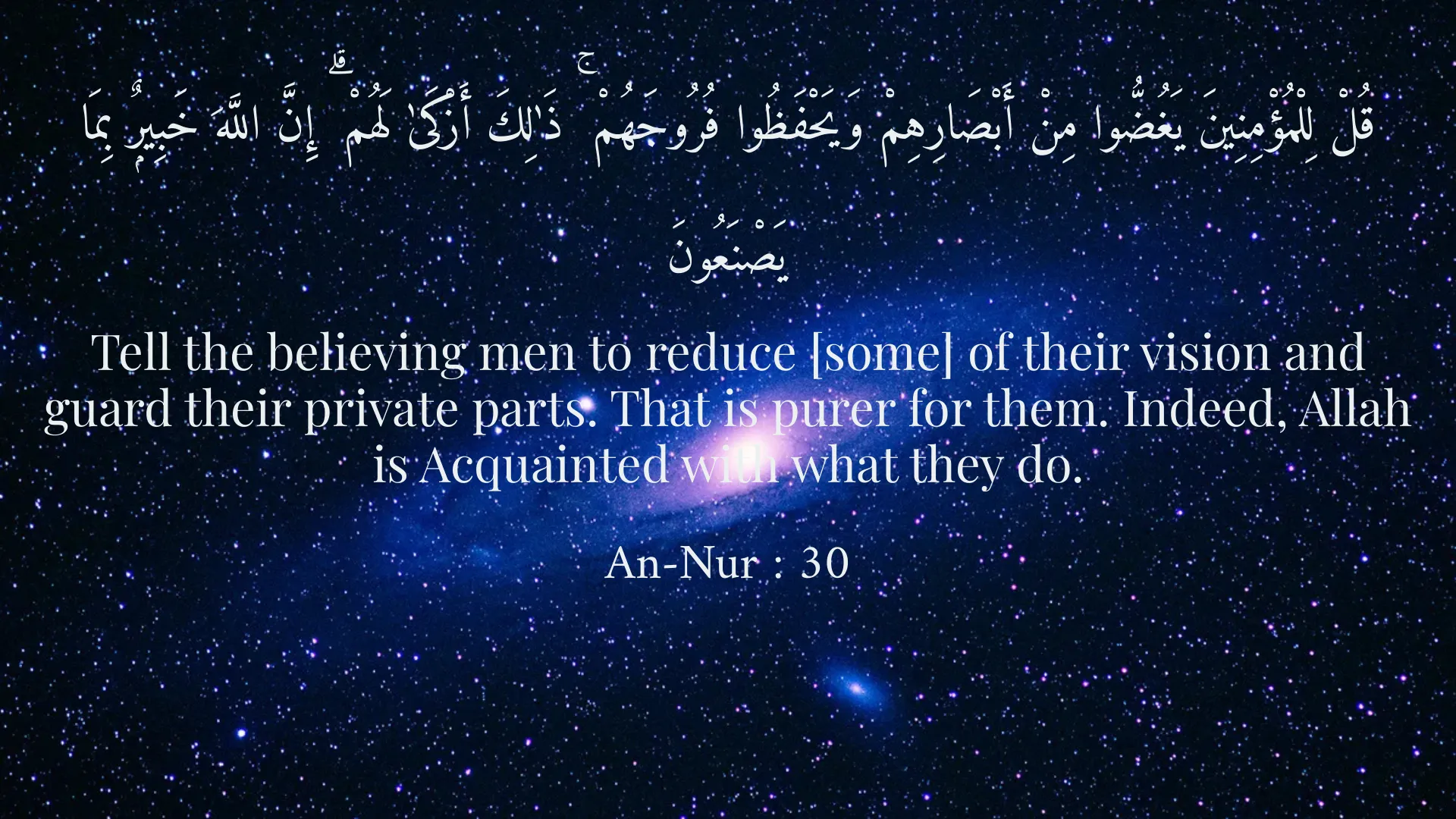
قُلْ لِلْمُؤْمِنِينَ يَغُضُّوا مِنْ أَبْصَارِهِمْ وَيَحْفَظُوا فُرُوجَهُمْ ۚ ذَٰلِكَ أَزْكَىٰ لَهُمْ ۗ إِنَّ اللَّهَ خَبِيرٌۭ بِمَا يَصْنَعُونَ
Tell the believing men to reduce [some] of their vision and guard their private parts. That is purer for them. Indeed, Allah is Acquainted with what they do.
An-Nur : 30
وَقُل لِلْمُؤْمِنَاتِ يَغْضُضْنَ مِنْ أَبْصَارِهِنَّ وَيَحْفَظْنَ فُرُوجَهُنَّ وَلَا يُبْدِينَ زِينَتَهُنَّ إِلَّا مَا ظَهَرَ مِنْهَا ۖ وَلْيَضْرِبْنَ بِخُمُرِهِنَّ عَلَىٰ جُيُوبِهِنَّ ۖ وَلَا يُبْدِينَ زِينَتَهُنَّ إِلَّا لِبُعُولَتِهِنَّ أَوْ آبَائِهِنَّ أَوْ آبَاءِ بُعُولَتِهِنَّ أَوْ أَبْنَائِهِنَّ أَوْ أَبْنَاءِ بُعُولَتِهِنَّ أَوْ إِخْوَانِهِنَّ أَوْ بَنِي إِخْوَانِهِنَّ أَوْ بَنِي أَخَوَاتِهِنَّ أَوْ نِسَائِهِنَّ أَوْ مَا مَلَكَتْ أَيْمَانُهُنَّ أَوْ التَّابِعِينَ غَيْرِ أُولِي الْإرْبَةِ مِنَ الرِّجَالِ أَوِ الْطِفْلِ الَّذِينَ لَمْ يَظْهَرُوا عَلَىٰ عَوْرَاتِ النِّسَاء ۚ وَلَا يَضْرِبْنَ بِأَرْجُلِهِنَّ لِيُعْلَمَ مَا يُخْفِينَ مِنْ زِينَتِهِنَّ ۚ وَتُوبُوا إِلَى اللَّهِ جَمِيعًا أَيُّهَ الْمُؤْمِنُونَ لَعَلَّكُمْ تُفْلِحُونَ
And tell the believing women to lower [some] of their vision and guard their private parts and not expose their adornment except that which [ordinarily] appears thereof. And to draw their coverings over their chests and not expose their adornment except to their husbands, their fathers, their father’s fathers, their sons, their husband’s sons, their brothers, their brother’s sons, their sister’s sons, their women, or those their right hands possess. And let them not stamp their feet to make known what they conceal of their adornment. And turn to Allah in repentance, O believers, that you might succeed.
An-Nur : 31
Short Story
One day, a wise man sat with his friends in a garden discussing the importance of ethics. One friend remarked that one must be cautious with their gaze, for an impure glance can harm a pure heart. The wise man took this matter to heart and resolved to always control his gaze. He felt that this control not only brought peace to his soul but also enhanced the gentleness of his relationships with others.