Quranic Answer
At times, life becomes so complex and challenging that it can plunge the human heart into darkness and despair. In such moments, it is natural for profound questions about the future and the meaning of hope to arise. However, the Holy Quran, a book of guidance and light, remains our beacon in all circumstances, offering a deep and comforting answer to this fundamental question. The first and foremost reason to be hopeful for the future is belief in the boundless power and eternal wisdom of Allah. In the Quran, Allah repeatedly emphasizes His absolute power and His vast mercy. He is the Creator of the heavens and the earth, the Administrator of all affairs, and not a single leaf falls without His permission. When we believe in this truth – that the management of all universal matters rests in an infinite power – we can perceive a ray of hope even in the deepest despair. The verses of the Quran remind us that Allah is the Most Merciful of those who show mercy and that He never abandons His servants. Every difficulty, according to divine wisdom, carries a hidden purpose, and every trial is an opportunity for growth and closeness to Him. This perspective is not merely a momentary solace but a firm foundation for sustainable hope. Believing that Allah is absolute goodness and that whatever He decrees for us, even if it appears difficult, is ultimately for our benefit, forms the cornerstone of any true hope. The second reason is the explicit divine promises in the Quran. One of the most beautiful and comforting verses in this regard is Allah’s statement in Surah Ash-Sharh (Al-Inshirah): "فَإِنَّ مَعَ الْعُسْرِ يُسْرًا * إِنَّ مَعَ الْعُسْرِ يُسْرًا" (So, verily, with hardship there is ease; Verily, with hardship there is ease). This verse is repeated twice to emphasize the truth that difficulties are temporary, and ease will certainly follow them. This promise is not a mere possibility but a divine certainty. It means that no matter how dark and hopeless current circumstances may seem, divine light is hidden behind this darkness and will soon emerge. Understanding this promise helps us change our perspective on problems; they are not dead ends but rather pathways to relief and breakthrough. This reassurance helps us to be more resilient in the face of adversity and to approach solutions with a better spirit. The third reason revolves around the concepts of "Sabr" (patience) and "Tawakkul" (reliance on God) in Islam. The Quran repeatedly urges believers to be patient and promises great rewards for those who endure. Patience here does not mean passivity or inaction, but rather steadfastness, continuous effort, and enduring difficulties with faith in Allah’s ultimate relief. Active patience means not giving up despite pain and hardship, and constantly seeking a way to improve. Tawakkul, on the other hand, means complete trust in Allah after expending all possible efforts. When a person strives with all their being and then entrusts the outcome to Allah, the heavy burden of worry is lifted from their shoulders, and a deep peace settles in their heart. The Quran states: "وَمَن يَتَوَكَّلْ عَلَى اللَّهِ فَهُوَ حَسْبُهُ" (And whoever relies upon Allah – then He is sufficient for him). This verse clearly illustrates that reliance on God is itself a great source of hope and strength; for the one who relies on God knows that a superior and merciful power supports them. The fourth key point is the Quran's explicit prohibition against despair. In Surah Yusuf, verse 87, Prophet Yaqub (Jacob) (peace be upon him) tells his sons: "وَلَا تَيْأَسُوا مِن رَّوْحِ اللَّهِ ۖ إِنَّهُ لَا يَيْأَسُ مِن رَّوْحِ اللَّهِ إِلَّا الْقَوْمُ الْكَافِرُونَ" (And do not despair of the relief of Allah. Indeed, no one despairs of the relief of Allah except the disbelieving people). This verse indicates that despair itself is a grave sin and contradicts faith in Allah, the Most Gracious, the Most Merciful. Hopefulness, therefore, is a sign of faith and assurance in Allah's power and grace. Furthermore, every hardship that befalls a person can be a divine test to gauge their patience and faith, and upon successful endurance, their rank with Allah is elevated. This perspective motivates us to seek strengths and opportunities for growth even in the midst of darkness, and not to view problems as insurmountable obstacles, but rather as bridges to greater goals. The fifth reason underscores the importance of self-improvement and inner change. In Surah Ar-Ra'd, verse 11, Allah says: "إِنَّ اللَّهَ لَا يُغَيِّرُ مَا بِقَوْمٍ حَتَّى يُغَيِّرُوا مَا بِأَنفُسِهِمْ" (Indeed, Allah will not change the condition of a people until they change what is in themselves). This verse teaches us that hope is not merely a passive expectation; it is accompanied by effort, a change in mindset, refinement of behavior, and self-improvement. When we alter our perspective on problems, enhance our skills, and move towards our goals with pure intentions, Allah too facilitates our path. This sense of responsibility for one's own state is an immense source of hope and empowerment. Feeling inner strength to create change, instead of feeling like a victim, energizes us to actively move towards a better future. Finally, life in this world is temporary and transient, and the ultimate goal is to achieve eternal bliss in the Hereafter. Even if we encounter countless challenges in this world, we must not forget that Allah's promise to believers is a better and everlasting life in Paradise. This eternal perspective diminishes any worldly hardship, making it bearable. Hope in Allah's mercy and satisfaction in this world and the Hereafter is the strongest force that can carry a person through any darkness and guide them towards light. Therefore, with faith in Allah, patience, and effort, one should always be hopeful for a brighter future, for the Most High fulfills His promises, and no one will ever despair of His mercy. Hope is not just an emotion, but an act of faith and a powerful tool for building a better tomorrow.
Related Verses
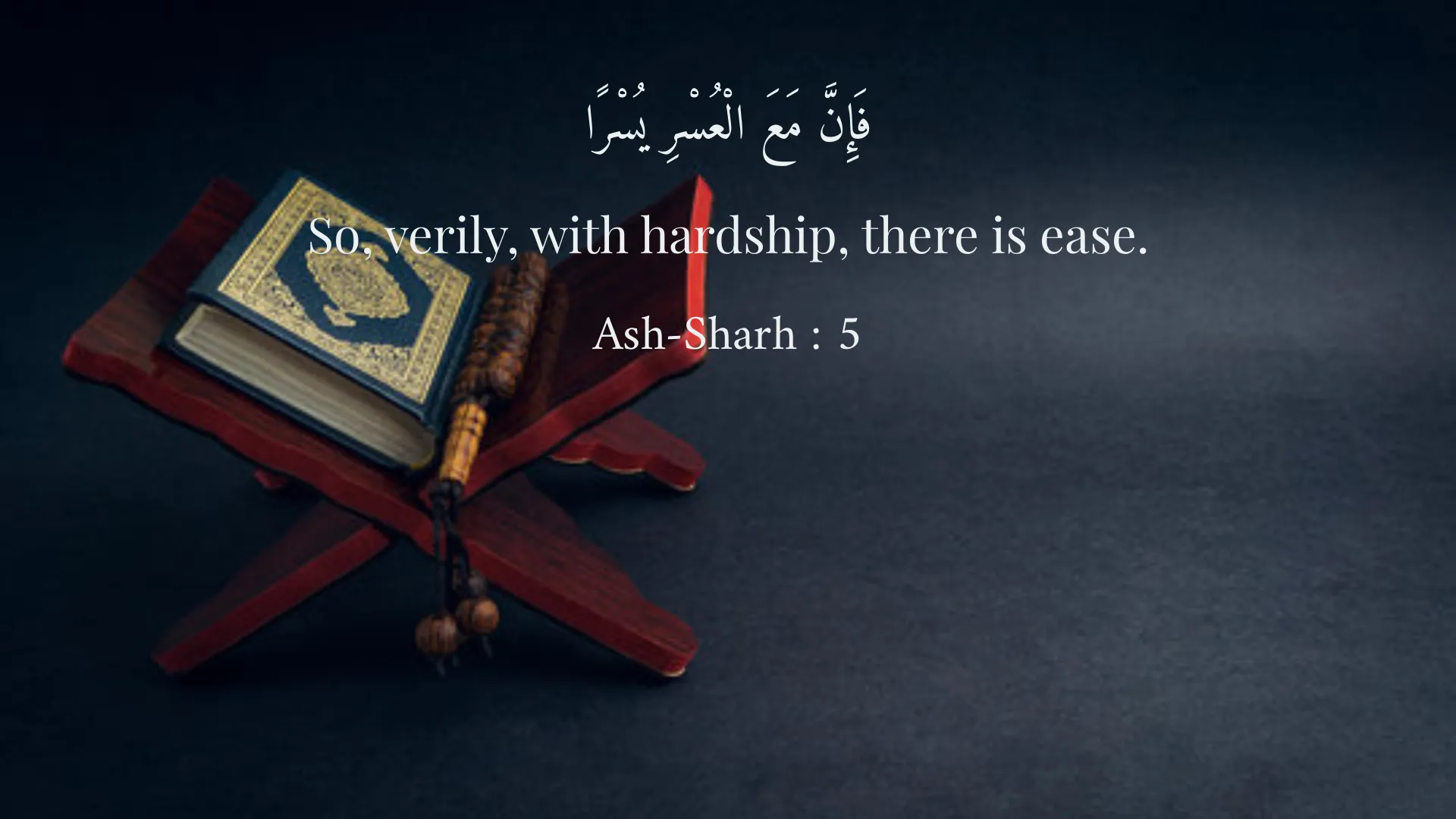
فَإِنَّ مَعَ الْعُسْرِ يُسْرًا
So, verily, with hardship, there is ease.
Ash-Sharh : 5
إِنَّ مَعَ الْعُسْرِ يُسْرًا
Verily, with hardship, there is ease.
Ash-Sharh : 6
يَا بَنِيَّ اذْهَبُوا فَتَحَسَّسُوا مِن يُوسُفَ وَأَخِيهِ وَلَا تَيْأَسُوا مِن رَّوْحِ اللَّهِ ۖ إِنَّهُ لَا يَيْأَسُ مِن رَّوْحِ اللَّهِ إِلَّا الْقَوْمُ الْكَافِرُونَ
O my sons, go and find out about Joseph and his brother and despair not of the relief of Allah. Indeed, no one despairs of the relief of Allah except the disbelieving people.
Yusuf : 87
إِنَّ اللَّهَ لَا يُغَيِّرُ مَا بِقَوْمٍ حَتَّى يُغَيِّرُوا مَا بِأَنفُسِهِمْ
Indeed, Allah will not change the condition of a people until they change what is in themselves.
Ar-Ra'd : 11
Short Story
In ancient times, there was a merchant whose ship, during a long and arduous journey, was caught in a fierce storm. He clung to a plank, adrift amidst the towering waves. The night was dark, rain poured down, and the threat of drowning loomed at every moment. The merchant thought to himself, "This is the end of my life! There is no hope left." But at the peak of his despair, he recalled a story from the wise elders who used to say, "In the depths of darkness, a hidden light resides." He clutched the plank with all his might and, in the heart of the dark night, prayed. Suddenly, with the rising sun, he found himself on an unknown shore. He had survived the storm! But his possessions were lost. With a broken heart, the merchant sat on the sands, feeling despair once more. Just then, a kind man appeared from a distance and invited him to his home. The man was a fisherman who had cast his net into the sea, and instead of fish, he had found a chest full of jewels that had drifted to shore from the merchant's sunken ship. The merchant realized that even in the darkest moments, divine mercy and providence are at work, and one should never lose hope. With a heart full of gratitude, he began a new life and never forgot the lesson that "verily, with every hardship, there is ease."