Quranic Answer
My dear friend, this is a profound and frequently asked question that arises for many individuals at critical junctures in life. At first glance, it might seem that lying is a quick way to achieve material gain or escape problems. Perhaps in a transaction, a small lie could yield more profit, or by concealing the truth, you might save yourself from an unpleasant situation. However, the Holy Quran, the book of divine guidance, offers us a much more comprehensive and profound perspective on the true meaning of profit and loss. From the Quranic perspective, true profit extends beyond fleeting worldly benefits, and genuine loss is the forfeiture of God's pleasure and inner peace. The Quran repeatedly emphasizes the importance of truthfulness and honesty, and strongly condemns falsehood. Almighty God commands believers to always be among the truthful. This is a clear and unequivocal command. Lying, even if it brings short-term benefits, ultimately destroys the foundations of trust. Trust is the cornerstone of any healthy society and any stable human relationship. When you lie, you not only damage others' trust in you, but more importantly, you cloud your connection with God. God dislikes those who resort to falsehood and promises to withhold His guidance from liars. This means losing divine guidance, which is the greatest loss for any human being. From an Islamic viewpoint, worldly life is a test, and the true profit in this test is the pleasure of God and the attainment of eternal bliss in the afterlife. Worldly benefits, no matter how great they seem, are transient and perishable. In contrast, the reward for truthfulness and honesty is everlasting. God states that through truthfulness, the doors of divine blessings and goodness are opened to a person. Truthfulness not only brings inner peace and a clear conscience but also bestows character and credibility upon an individual. People known for their truthfulness are respected and trusted in society and establish more stable relationships with others. This respect and trust are spiritual capital that no material gain can equal, and often pave the way for sustainable and lawful material successes as well. The Quran also teaches us that deceit and lying are characteristics of hypocrites. Hypocrites are those who outwardly believe but inwardly seek deception and pretense. God has promised the most severe punishments for hypocrites. Even if someone thinks they can escape the consequences of their actions by lying, they should know that nothing is hidden from God. God is aware of what is in the hearts and knows the hidden intentions and thoughts of people. Therefore, every lie told is recorded in a person's book of deeds and will be accounted for on the Day of Judgment. Even if it remains hidden from human eyes, it is not concealed from God, and any profit gained through falsehood will never be blessed and will sooner or later manifest its negative consequences in this world and the hereafter. Furthermore, lying has destructive psychological effects. A liar constantly lives in fear of the truth being exposed and loses their inner peace. This anxiety and worry endanger the individual's mental health. In contrast, truthfulness grants a person a sense of freedom and liberation. A truthful person does not need to maintain complex stories or fear exposure. This peace and freedom are the greatest spiritual gain that no material profit can replace. A society built on honesty is a healthy, dynamic, and stable society. Lying is like a poison that rots the roots of society, leading to distrust, corruption, and destruction. The Quran repeatedly emphasizes avoiding corrupt and harmful actions, and lying is one of the greatest manifestations of such actions. So, although lying might seem tempting in the short term and bring fleeting benefits, from the Quranic perspective, it is a losing transaction. You would be exchanging peace, trust, divine pleasure, and eternal bliss for unstable and worthless gains. God loves the truthful and helps them in this world and the hereafter. Let us remember that 'false statement' (Qawl az-Zur) is among the things God has forbidden believers from, and this prohibition is due to the countless harms that lying inflicts upon individuals and society. Choosing truthfulness is choosing lasting happiness and the pleasure of the Lord, even if at a specific moment it seemingly goes against our immediate benefit. This is the piety (Taqwa) that God demands of us, and its reward is goodness in both this world and the hereafter.
Related Verses
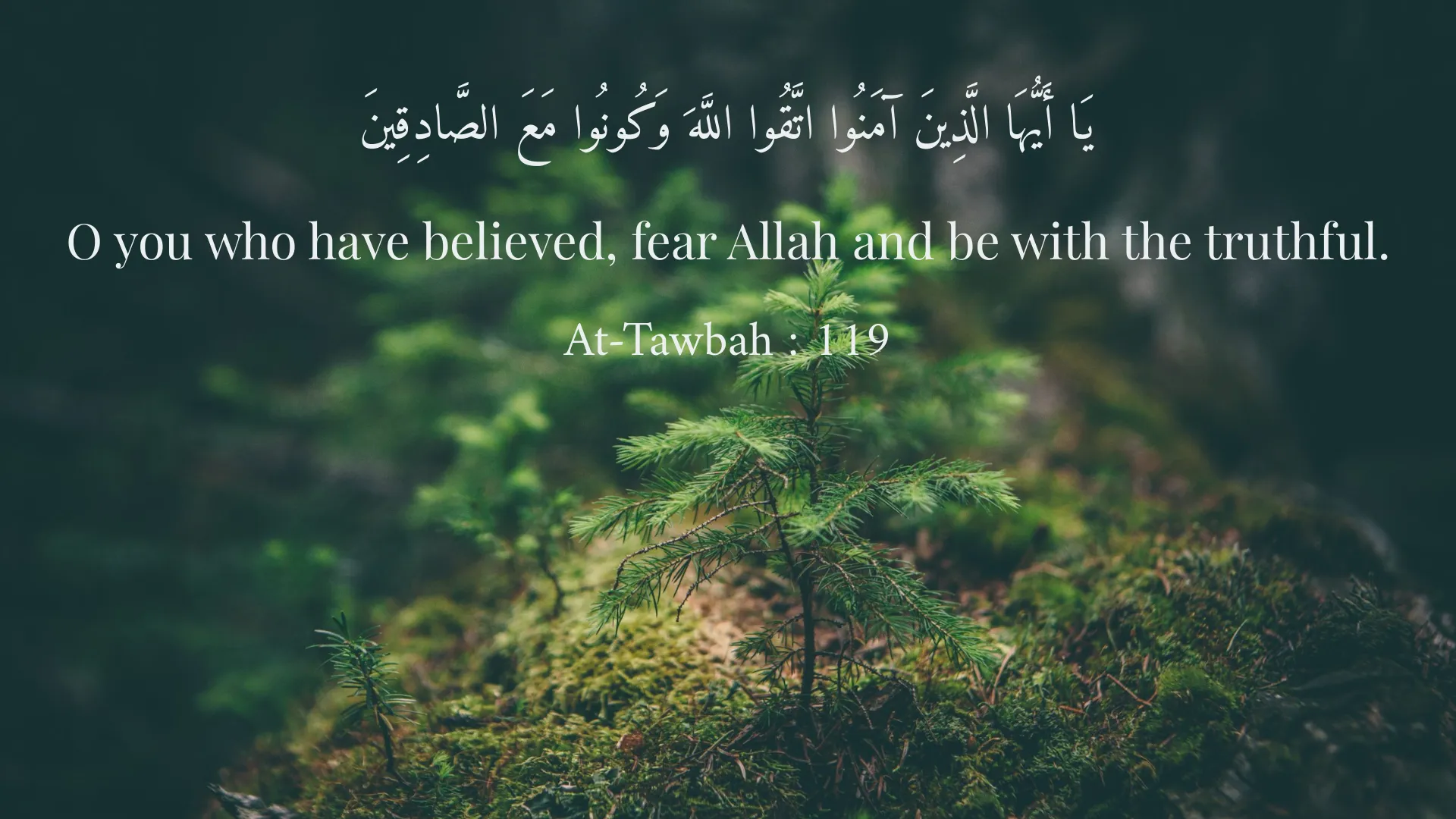
يَا أَيُّهَا الَّذِينَ آمَنُوا اتَّقُوا اللَّهَ وَكُونُوا مَعَ الصَّادِقِينَ
O you who have believed, fear Allah and be with the truthful.
At-Tawbah : 119
ذَٰلِكَ وَمَن يُعَظِّمْ حُرُمَاتِ اللَّهِ فَهُوَ خَيْرٌ لَّهُ عِندَ رَبِّهِ ۗ وَأُحِلَّتْ لَكُمُ الْأَنْعَامُ إِلَّا مَا يُتْلَىٰ عَلَيْكُمْ ۗ فَاجْتَنِبُوا الرِّجْسَ مِنَ الْأَوْثَانِ وَاجْتَنِبُوا قَوْلَ الزُّورِ
That [is so]. And whoever honors the sacred rites of Allah – it is best for him in the sight of his Lord. And lawful for you are livestock, except what is recited to you. So avoid the uncleanliness of idols and avoid false statement.
Al-Hajj : 30
وَقَالَ رَجُلٌ مُّؤْمِنٌ مِّنْ آلِ فِرْعَوْنَ يَكْتُمُ إِيمَانَهُ أَتَقْتُلُونَ رَجُلًا أَن يَقُولَ رَبِّيَ اللَّهُ وَقَدْ جَاءَكُم بِالْبَيِّنَاتِ مِن رَّبِّكُمْ ۖ وَإِن يَكُ كَاذِبًا فَعَلَيْهِ كَذِبُهُ ۖ وَإِن يَكُ صَادِقًا يُصِبْكُم بَعْضُ الَّذِي يَعِدُكُمْ ۖ إِنَّ اللَّهَ لَا يَهْدِي مَنْ هُوَ مُسْرِفٌ كَذَّابٌ
And a believing man from the family of Pharaoh who concealed his faith said, "Will you kill a man [merely] because he says, 'My Lord is Allah,' while he has brought you clear proofs from your Lord? And if he should be a liar, then upon him is [the consequence of] his lie; but if he should be truthful, there will strike you some of what he promises you. Indeed, Allah does not guide one who is a transgressor and a liar.
Ghafir : 28
Short Story
It is narrated that a pious and trustworthy man sold goods in the market of Basra. One day, a merchant approached him, wanting to sell him an item for less than its true value through a special trick, hoping to make a huge profit. The pious man smiled and said: "My friend, Sa'di says: 'Truthfulness brings satisfaction and clear sight; lying causes resentment and enmity.' Perhaps today you gain wealth through a lie, but tomorrow you will lose the trust of the market and peace of mind. What profit is there in wealth that has no blessing and leaves the heart uneasy?" Hearing this, the merchant felt ashamed and abandoned his scheme. From then on, he adopted truthfulness and found that his blessings and peace increased.