Quranic Answer
The Holy Quran, the verbatim word of God as revealed to the Prophet Muhammad (Peace Be Upon Him), serves as a comprehensive guide for humanity. Among its fundamental teachings is the emphasis on performing good deeds without expecting anything in return and purely for the sake of Allah. This concept of selfless altruism is a cornerstone of Islamic ethics and character, shaping the lives of millions of Muslims around the world. One of the verses that strikingly encapsulates this theme is found in Surah Al-Baqarah, verse 177. The verse states: "Righteousness is in one’s faith in Allah, the Last Day, the Angels, the Book, and the Prophets, and in giving of one’s wealth out of love for Him to relatives, orphans, the needy, the traveler, and those who ask." This profound verse emphasizes that righteousness is not merely about performing rituals or adhering to doctrines but about the intention behind those actions. The concept of giving wealth out of love for Allah signifies a deeper layer of sincerity that coexists in acts of charity and kindness. However, it is crucial to note that this giving is done without the anticipation of reward, thus illustrating the spirit of selfless service. Moreover, Surah Al-Insan, verse 9, further reinforces this notion by stating: "We feed you only for the countenance of Allah; we wish not from you reward or gratitude." The implication here is that true altruism does not seek acknowledgment or reciprocation. Rather, the act of feeding the needy, for instance, is performed solely to please Allah. This delineation of intention serves to purify the heart, nurturing a selflessness that not only blesses the giver but also enriches the community. The impact of performing good deeds with sincerity extends beyond mere personal morals; it plays a crucial role in the development of virtuous communities. Engaging in charitable acts fosters love and friendship, reinforcing bonds between individuals. As members of a community witness acts of kindness, it encourages reciprocal behavior, creating a cycle of generosity that ultimately benefits everyone involved. Through these good deeds, societal values may be strengthened, and a culture of compassion, empathy, and support begins to thrive. Furthermore, the connection between good deeds and spiritual growth is significant. When individuals perform actions purely for Allah's pleasure, they find themselves drawn closer to Him. The spiritual rewards, though often unseen, manifest in the form of inner peace, joy, and a sense of fulfillment that material possessions cannot offer. This transcendence from self-centered motives to the pursuit of divine approval can result in profound personal transformation and character building. It invites an individual to be reflectively engaged with their intentions and actions, a fundamental practice that fosters a greater understanding of one's purpose in life. In our contemporary world, where individualism and materialism often overshadow communal responsibility, the Quranic teachings on altruism remain incredibly relevant. They remind us of the profound impact that small acts of kindness can have on society. In a time when many are focused on personal gain, the encouragement to perform good deeds for the sheer joy of pleasing Allah helps us pave a path that not only advances our own moral journeys but makes positive contributions to the world around us. Moreover, engaging in altruistic acts allows us to experience true happiness. According to several studies, individuals who engage in selfless acts report higher levels of life satisfaction. This happiness comes from the realization that we can make a difference in someone else's life and serve a higher cause than ourselves. When we seek the pleasure of Allah through our actions, the rewards—whether in this world or the hereafter—afford us a purposeful existence filled with contentment. In essence, altruism without expectation cultivates an environment conducive to spiritual and social enhancement. It encourages us to reflect on our intentions, guiding us to take actions that embody generosity, kindness, and empathy. As we strive to uplift ourselves and our surroundings, we must remain vigilant about the purity of our intentions. The Quran reminds us that while our actions are vital, it is our hearts' state and the reasons behind our deeds that ultimately count in the sight of Allah. In conclusion, the teachings of the Holy Quran regarding the performance of good deeds strictly for Allah's sake serve as a powerful reminder of the collective responsibility we hold towards one another. By transcending our self-interest, engaging in altruism, and acting with sincerity, we not only enrich our lives but also significantly contribute to the enhancement of society. Through compassion and collaboration, we can create communities embodying the virtues of kindness, friendship, and love, ultimately leading to a more harmonious coexistence. This fundamental principle of acting without expectation is timeless, urging us to forge a path towards collective well-being and spiritual growth.
Related Verses
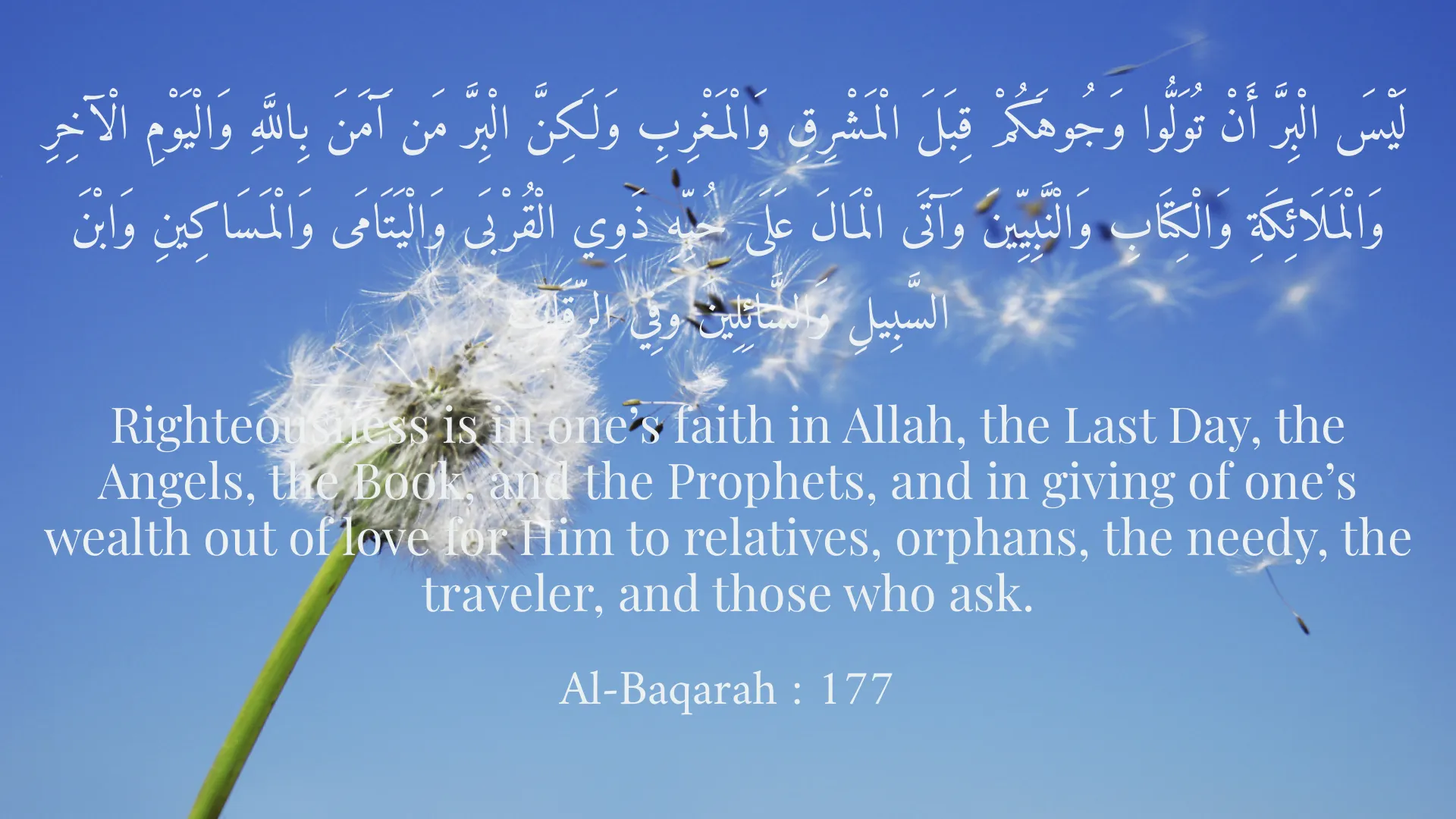
لَيْسَ الْبِرَّ أَنْ تُوَلُّوا وَجُوهَكُمْ قِبَلَ الْمَشْرِقِ وَالْمَغْرِبِ وَلَكِنَّ الْبِرَّ مَن آَمَنَ بِاللَّهِ وَالْيَوْمِ الْآخِرِ وَالْمَلَائِكَةِ وَالْكِتَابِ وَالْنَّبِيِّينَ وَآتَى الْمَالَ عَلَى حُبِّهِ ذَوِي الْقُرْبَى وَالْيَتَامَى وَالْمَسَاكِينِ وَابْنَ السَّبِيلِ وَالسَّائِلِينَ وَفِي الرِّقَابِ
Righteousness is in one’s faith in Allah, the Last Day, the Angels, the Book, and the Prophets, and in giving of one’s wealth out of love for Him to relatives, orphans, the needy, the traveler, and those who ask.
Al-Baqarah : 177
إِنَّمَا نُطْعِمُكُمْ لِوَجْهِ اللَّهِ لَا نُرِيدُ مِنْكُمْ جَزَاءً وَلَا شُكُورًا
We feed you only for the countenance of Allah; we wish not from you reward or gratitude.
Al-Insan : 9
Short Story
Once upon a time, there was a man named Hassan who lived in a neighborhood filled with needy people. Every day, he went to the market and saw many people struggling financially. Hassan decided to help them without expecting anything in return. He offered a meal to one of the orphans, putting a smile on his face. He knew that no one would notice his act. However, the sense of satisfaction in his heart made him happier than anything else. From that day onwards, Hassan continued to do good, realizing that these actions not only helped others but also made him feel more vibrant.