Quranic Answer
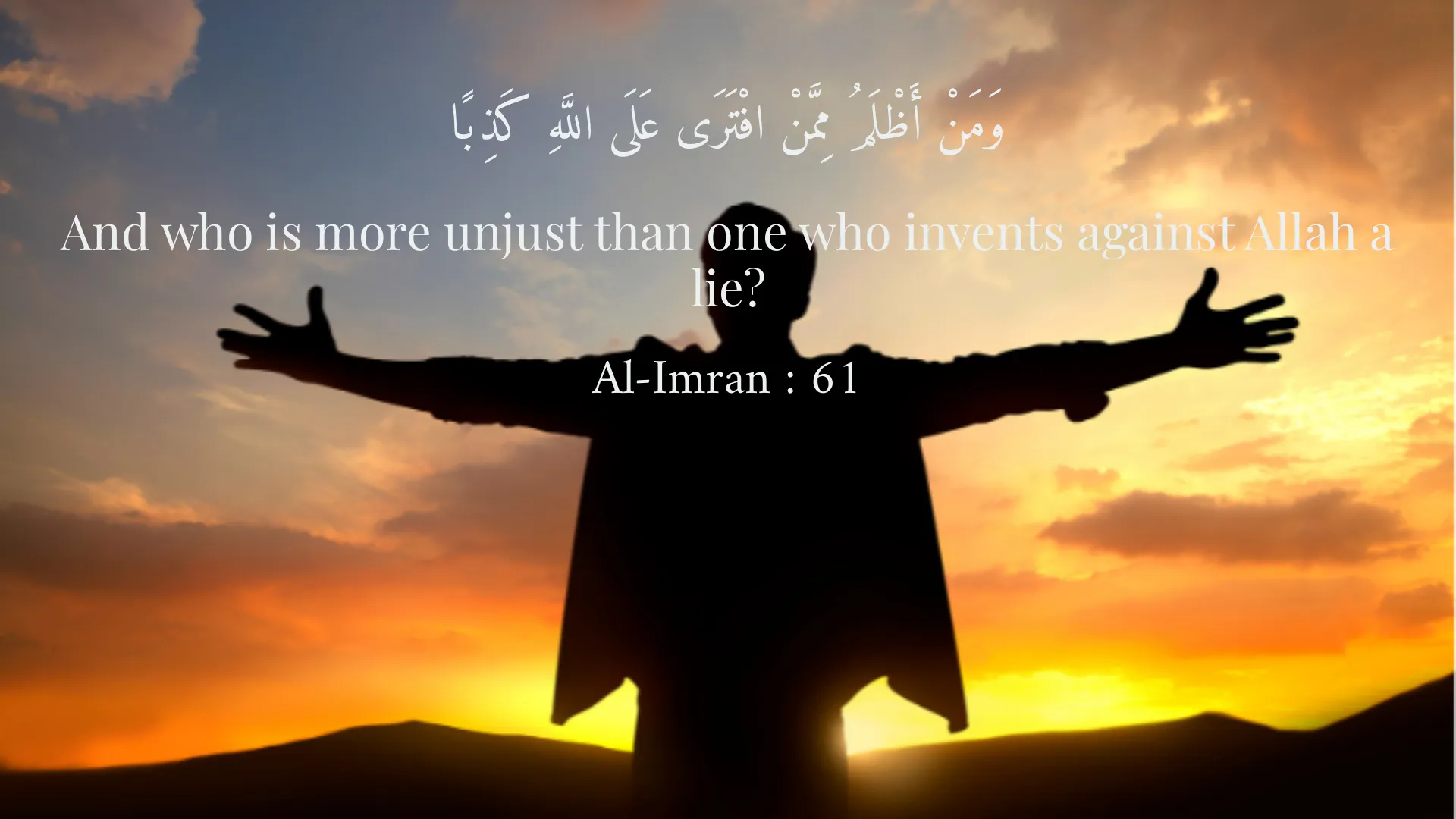
Lying, even when intended as a joke, is universally condemned in Islam, with the teachings of the Quran placing significant emphasis on truthfulness and integrity. This principle is foundational to the Islamic faith, shaping all interactions and relationships within the community and with God. In various verses of the Quran, lying is explicitly prohibited and viewed as a grave wrongdoing that can have extensive consequences, both on a personal level and in societal interactions. Reflecting on the Holy Quran, it becomes apparent how central honesty is to the teachings of Islam. In Surah Al-Imran, verse 61, Allah states: 'And who is more unjust than one who invents against Allah a lie?' This profound declaration not only condemns lying but also reinforces the idea that dishonesty is an affront to divine truth. For Muslims, lying is not a trivial matter, and implying that it can be permissible for the sake of humor undermines the deep respect and truthfulness that should dominate one’s relationship with God and fellow beings. Lying, when done even in jest, has far-reaching negative implications. By reinforcing false beliefs through ostensibly harmless jokes, individuals set a precedent that can lead to more significant lies in the future. It creates a slippery slope where dishonesty becomes a habit, subsequently jeopardizing trust among friends, family, and society at large. Such trivialization of lying can cultivate an environment of suspicion and doubt, where relationships are strained, and the bond of trust is severely compromised. In another insightful aspect of the Quran, Surah Hud, verse 113, stresses the importance of righteousness and warns against deceitful behavior. Allah commands Muslims to embody honesty, thereby fostering a community grounded in trust and mutual respect. The Quran does not simply provide a command to refrain from lying; it elucidates the broader implications of deception on interpersonal dynamics and community well-being. The act of lying, even when couched in humor, goes against the foundational tenets that support a strong moral fabric within society. Moreover, examples of how small lies can escalate into greater deceit are ubiquitous in everyday life. For instance, a seemingly benign joke among friends that involves bending the truth could lead to a gradual erosion of honesty. If jokingly lying becomes commonplace, individuals may find themselves resorting to dishonesty in more serious matters, effectively losing their moral compass. This slippery slope can be detrimental, as it not only impacts personal integrity but can also have broader societal ramifications if such behavior is normalized. Thus, individuals must approach humor with caution, ensuring that the boundaries of honesty are upheld even in jest. The propensity for light-hearted lying may appear innocuous, but its eventual consequences can be profound, damaging relationships and breeding mistrust in communities. From an Islamic perspective, truthfulness is not merely a preferred trait but a crucial element for achieving peace and tranquility of the soul. In the context of Islamic culture, the reverence for truthfulness extends beyond mere verbal honesty. It calls for authenticity in one’s character and engagements with others. A commitment to truth fosters transparency and strengthens relationships, which are vital for cultivation of a loving and supportive community. Honesty is, therefore, intertwined with the spiritual and ethical dimensions of behavior, making it a quintessential aspect of Islamic living. Furthermore, it is crucial to ponder upon the potential ramifications of lying, even as a joke. People are more likely to react unfavorably upon discovering lies, regardless of their intent. The hurt that comes from betrayal, even in jest, can fracture relationships and lead to conflicts that spiral beyond resolution. In a society that values trust and honesty, the repercussions of dishonesty are magnified, as breaches of trust can lead to familial discord, societal division, and communal strife. In conclusion, the teachings of the Quran and the broader Islamic principle underscore the imperative of truthfulness beyond mere commandment; it is central to building a harmonious society and nurturing genuine personal relationships. As Muslims navigate interactions in their daily lives, they must maintain a conscious awareness of the impact of their words—whether delivered in seriousness or humor. Upholding honesty is essential not only for spiritual fulfillment but also for creating an atmosphere of peace, respect, and trust that benefits all levels of community interaction. Ultimately, the call to truthfulness in Islam is a reminder of the profound influence sincerity and integrity wield in shaping individuals and communities for the better.
Related Verses
وَمَنْ أَظْلَمُ مِمَّنْ افْتَرَى عَلَى اللَّهِ كَذِبًا
And who is more unjust than one who invents against Allah a lie?
Al-Imran : 61
وَلَا تَرْتَابُوا فِي اللَّهِ
And do not doubt in Allah.
Hud : 113
Short Story
Once upon a time, there was a man named Hassan who always made funny jokes. One night, he told his friends that the river was filled with gold. His friends rushed there with excitement, but found nothing. Hassan realized that his joke had caused his friends distress and distrust. From that day on, Hassan decided never to lie even as a joke. He remembered that honesty helps maintain friendships and brings love to people's hearts.