Quranic Answer
Title: The Impact of Remembering Death in Islam: A Pathway to Spiritual Awakening Introduction The concept of death occupies a central role in Islamic teachings, serving as a profound reminder of the ultimate reality that each human will face. This understanding shapes the Muslim's worldview and influences behavior, decisions, and spiritual practices. Within the Holy Quran, Allah (SWT) frequently emphasizes the transient nature of worldly life compared to the everlasting reality of the hereafter. By internalizing the teachings related to death, believers can cultivate a more profound relationship with their faith and navigate their lives in a way that is aligned with divine guidance. This article explores the significance of remembering death in Islam, drawing upon key verses from the Quran and highlighting its impact on spiritual growth and ethical living. The Nature of Life and Death In Surah Al-Imran, verse 185, it is stated, 'Every soul will taste death, and you will only be given your full compensation on the Day of Resurrection.' This verse encapsulates the essence of human existence: life is a temporary blessing, while death is an unavoidable reality. Each individual is given a finite amount of time to achieve purpose and righteousness in the eyes of Allah. The inevitability of death serves as a wake-up call, compelling believers to prioritize their spiritual practices and consciously contribute to their communities in meaningful ways. Additionally, in Surah Al-Mu’minun, verses 99 and 100 remind us of the yearning that arises upon the realization of approaching death: 'Until, when death comes to one of them, he says, 'My Lord, send me back so that I might do righteousness in that which I left behind.' These verses illustrate the profound regret that may overwhelm individuals as they face the end of their mortal lives. The urgent desire to rectify past actions underscores the significance of living a life imbued with purpose, piety, and commitment to the tenets of Islam. The reflection on such verses encourages believers to examine their deeds constantly, motivating them to engage in righteous actions while they still have time. Fostering Spiritual Awareness Remembering death is not merely an act of somber reflection; it is a crucial aspect of spiritual awareness that fosters growth and mindfulness. In Islam, a clear understanding of the temporality of life encourages individuals to detach from material fleeting pleasures and worldly distractions. When one acknowledges that every moment is a gift that can never be reclaimed, there is a natural inclination to focus on what truly matters. This understanding nurtures an environment in which believers strive for continuous improvement in their relationship with Allah and in their conduct with fellow humans. As believers thoughtfully consider the implications of mortality, they often find themselves feeling a renewed sense of purpose. Life becomes a singular opportunity to engage in worship, seek forgiveness, and perform good deeds. The relentless pursuit of righteousness becomes more pronounced, leading individuals to conduct themselves in a manner that reflects the values instilled by their faith. Throughout the Islamic tradition, acts of worship, charity, and acts of kindness are highly revered, and keeping death in mind acts as a catalyst to pursue these acts earnestly. Encouraging Good Deeds and Alleviating Heedlessness In the fast-paced world that we navigate today, it's easy to become consumed by the allure of tangible achievements and material gain, often leading to spiritual negligence. The unfortunate transitory nature of life may cause individuals to engage in heedlessness, neglecting their spiritual obligations and ethical responsibilities. The purposeful remembrance of death engages believers to confront this pattern of heedlessness directly. When death is kept at the forefront of the mind, it highlights the importance of each deed, reminding believers of the great weight they carry in their actions. It is said that the believer who actively recalls their mortality translates that awareness into purposeful engagement in the world through acts of charity, community service, and consistent worship. The struggle to align one's life with the teachings of the Quran and the Sunnah gains precedence over temporally satisfying endeavors. Spiritual Tranquility and Deepening Relationship with Allah In contemplating death, individuals cultivate a sense of spiritual tranquility that transcends the mundane aspects of life. A continually enhanced relationship with Allah is achieved through fervent supplication, regular prayer, and reflection over the blessings and challenges of life. Believers turn toward prayer and remembrance of Allah as resources in navigating life's trials and tribulations, allowing the transformative power of connection to manifest in profound ways. The practice of remembering death can lead to a more intimate understanding of the soul’s immortality. In Islam, the belief in life after death reinforces the notion that the body is perishable but the soul perseveres. This understanding compels believers to prioritize the state of their souls and their actions in this world in relation to the hereafter. The fear of facing judgment, while daunting, is intertwined with hope and motivation to improve oneself and seek divine mercy. Conclusion In summary, the reminders of death woven throughout Islamic teachings serve as both a stark reminder of human mortality and an invitation to lead meaningful lives. Tethering oneself to the inevitability of death allows believers to navigate their spiritual journey with intention, cultivating a rich relationship with Allah while grounding themselves in acts of service, love, and moral integrity. As Muslims internalize the importance of remembering death, they are empowered to embrace life fully while remaining cognizant of their ultimate destination. This embrace of mortality fosters a spiritual paradigm that emphasizes ethical living, transcending the distractions of worldly existence and investing in eternal rewards. The teachings of the Quran guide one toward a life lived in purpose, where every action can be a step toward achieving closeness with the Creator and fulfilling the promise of a meaningful existence.
Related Verses
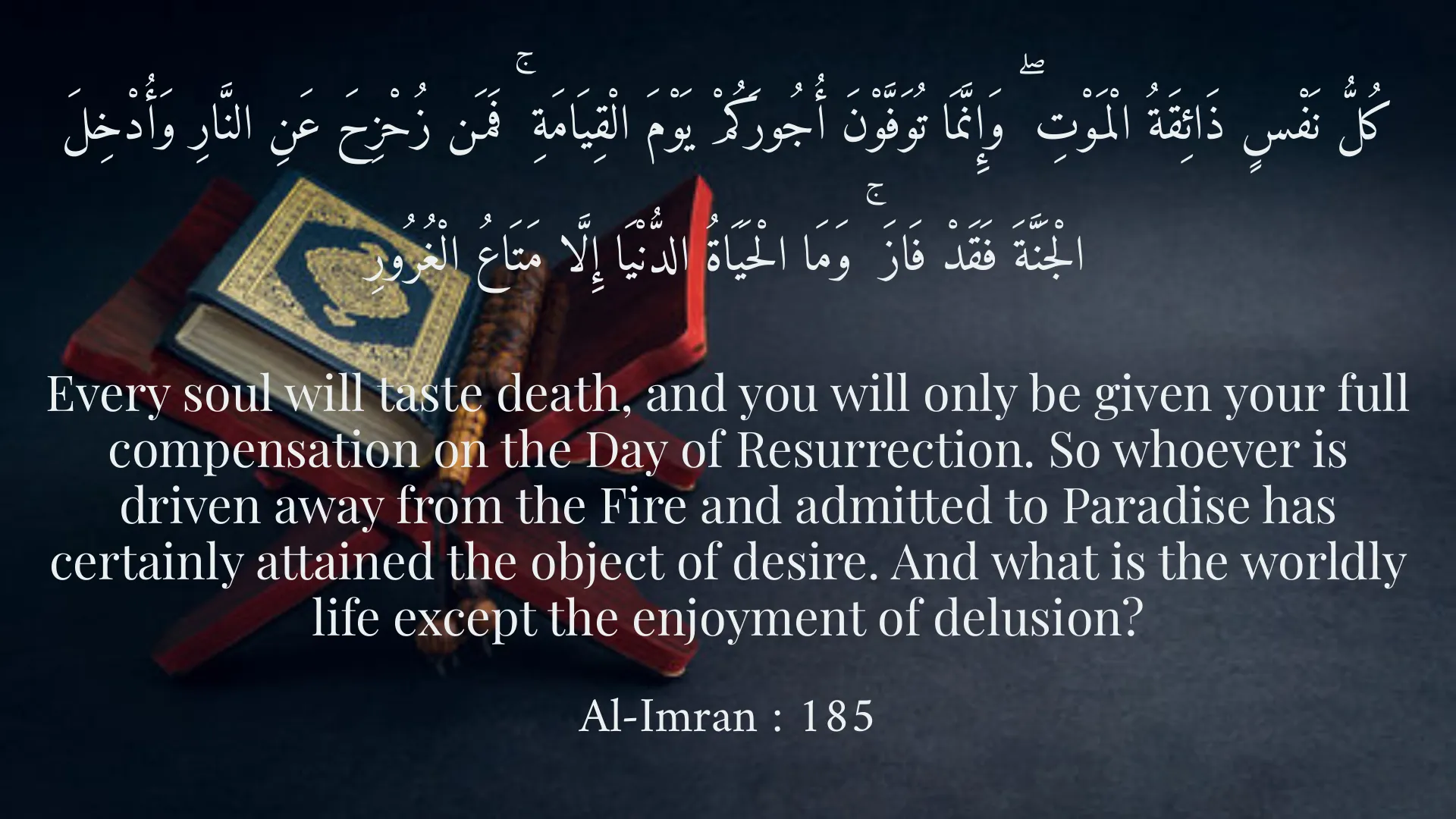
كُلُّ نَفْسٍ ذَائِقَةُ الْمَوْتِ ۖ وَإِنَّمَا تُوَفَّوْنَ أُجُورَكُمْ يَوْمَ الْقِيَامَةِ ۚ فَمَن زُحْزِحَ عَنِ النَّارِ وَأُدْخِلَ الْجَنَّةَ فَقَدْ فَازَ ۚ وَمَا الْحَيَاةُ الدُّنْيَا إِلَّا مَتَاعُ الْغُرُورِ
Every soul will taste death, and you will only be given your full compensation on the Day of Resurrection. So whoever is driven away from the Fire and admitted to Paradise has certainly attained the object of desire. And what is the worldly life except the enjoyment of delusion?
Al-Imran : 185
حَتَّى إِذَا جَاءَ أَحَدَهُمُ الْمَوْتُ قَالَ رَبِّ ارْجِعُونِ لَعَلِّي أَعْمَلُ صَالِحًا فِي مَا تَرَكْتُ ۚ كَلَّا إِنَّهَا كَلِمَةٌ هُوَ قَائِلُهَا ۖ وَمِن وَرَائِهِمْ بَرْزَخٌ إِلَى يَوْمِ يُبْعَثُونَ
Until, when death comes to one of them, he says, 'My Lord, send me back that perhaps I may do righteousness in that which I left behind.' No! It is only a word he is saying; and behind them is a barrier until the Day they are resurrected.
Al-Mu’minun : 99
Short Story
One day in the market, a man was shopping when he suddenly heard the call to prayer. This reminded him of death and the moment he would stand before God. This reminder inspired him to make the most of his life and to keep God and good deeds in mind. He said to himself, 'Every day, I must prepare myself for that great day,' and this thought gave him a special peace.