Quranic Answer
Sympathizing with the poor is a central theme in Islamic teachings, emphasized in the Holy Quran. The responsibility to care for the less fortunate is deeply embedded within the Islamic worldview, crossing the boundaries of mere charity and entering the realms of community responsibility and social justice. The Quran, which many Muslims consider the literal word of God, repeatedly instructs its followers to show empathy towards those who are impoverished, creating a moral imperative around supporting the socially marginalized. This obligation is framed not just as a charitable act but as an essential aspect of piety and a reflection of one's faith. One primary reason to empathize with the less fortunate is that such acts reflect a humane and Islamic spirit. Allah commands us in the Quran to pay attention to orphans and the needy and to assist them. This is not simply a suggestion but a divine directive that underscores the importance Islam places on social equity and support. In Surah Al-Baqarah, verse 177, Allah mentions, ‘and giving of zakah,’ highlighting the importance of zakat as both a religious obligation and a form of sympathy toward the poor. Zakat, one of the Five Pillars of Islam, is a mandatory charitable contribution that each financially capable Muslim must give, typically amounting to 2.5% of their accumulated wealth annually. This compulsory act serves as a social safety net, ensuring that resources are redistributed in a way that uplifts those who are struggling. The verse indicates that paying zakat is not just a means of helping those in need but also a testament to our faith and piety. By fulfilling this obligation, Muslims express their gratitude for the blessings granted by Allah, reaffirming the belief that what we have is not solely ours but a trust that should benefit those less fortunate as well. Moreover, in Surah Al-Ma'idah, verse 55, believers are instructed to support scholars and the needy. This verse expands the circle of compassion from just the poor to include educators and those imparting knowledge, further emphasizing the interconnectedness of social welfare and intellectual growth within the community. This fosters a holistic view of development where both economic and educational priorities can coexist, allowing individuals to empower themselves through learning while also ensuring that basic needs are met. In cultures that hold wealth accumulation in high regard, it can be easy for individuals to overlook or dismiss the struggles of the poor. However, by empathizing with the less fortunate, individuals can cultivate closer relationships among community members, challenging the often self-centered narratives that dominate modern societies. When we step away from a mindset focused solely on personal gain, we open ourselves to deeper connections, friendship, and unity within our communities. The act of giving doesn’t merely benefit the recipient; it enriches the giver's spirit and creates a sense of belonging and purpose. Sympathy and empathy signify the suspension of selfishness, encouraging people to focus on the needs of others rather than just their own desires. This shift in perspective is crucial, especially in a world characterized by individualism. Empathy involves understanding the struggles of others, motivating us to take action and alleviate their suffering, which is fundamentally in line with Islamic principles. By expressing sympathy towards the poor, we also cultivate virtues such as compassion, kindness, and altruism—qualities that are entwined with the Islamic ethos. Ultimately, helping the poor serves as a reminder that life is filled with Allah's blessings and encourages sharing these gifts with others. When we act with empathy, we are not only fulfilling religious obligations; we are embodying the very spirit of community and love as taught by the Prophet Muhammad (peace be upon him). The ideals of charity and support for the less fortunate are not only beneficial to the recipients but also transformative for the giver, enhancing their sense of spirituality and connection to the divine. Furthermore, Islamic teachings encourage believers to foster an ongoing relationship with the poor rather than perceiving charity as a one-time transaction. The emphasis is on creating a sustainable support system that enables impoverished individuals to escape the cycle of poverty, thereby revitalizing entire communities. This is approached through community initiatives, microfinance, and education programs aimed at empowerment rather than mere handouts. By investing time, effort, and resources into those less fortunate, we uphold the values embedded in the Quran and the teachings of the Prophet. In light of all these teachings, it's crucial to recognize that empathy for the poor transcends a religious duty; it is a fundamental aspect of what constitutes a thriving and healthy society. In today’s world, where wealth disparity is prevalent, Muslims are called to lead by example, demonstrating that true prosperity comes from uplifting others rather than merely accumulating wealth. By adhering to these principles, we can develop societies rooted in compassion and mutual support, ultimately improving the quality of life for all members of the community. In conclusion, sympathizing with the poor is a deeply rooted principle in Islam that not only commands us to care for the less fortunate but also serves as a pathway towards spiritual growth for the individual. The teachings of the Quran urge believers to act towards those in need with kindness, compassion, and a sense of community responsibility. This essential message resonates profoundly in contemporary society, inspiring countless individuals to embody the essence of faith through acts of empathy and support for the less fortunate.
Related Verses
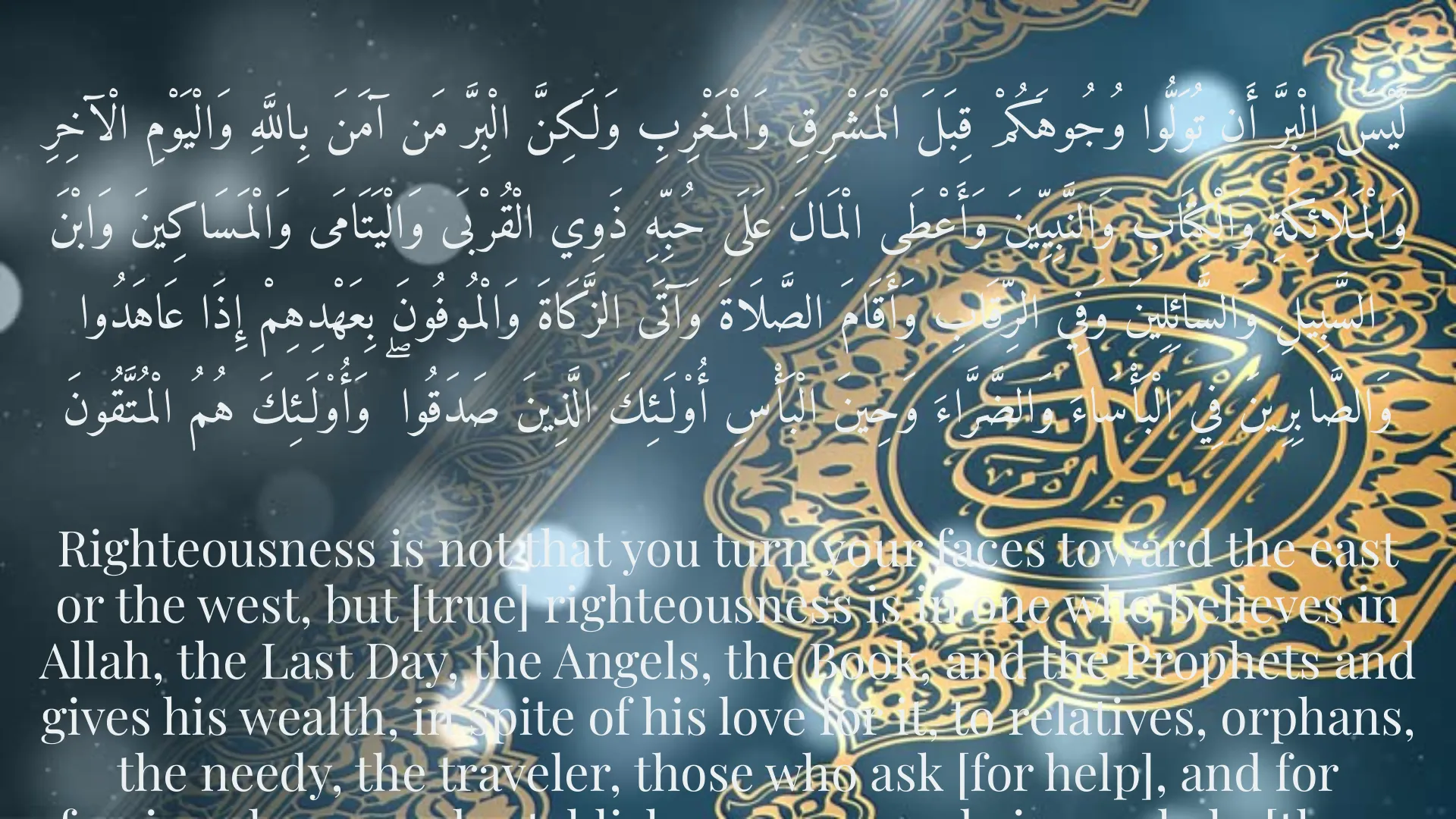
لَّيْسَ الْبِرَّ أَن تُوَلُّوا وُجُوهَكُمْ قِبَلَ الْمَشْرِقِ وَالْمَغْرِبِ وَلَكِنَّ الْبِرَّ مَن آمَنَ بِاللَّهِ وَالْيَوْمِ الْآخِرِ وَالْمَلَائِكَةِ وَالْكِتَابِ وَالنَّبِيِّينَ وَأَعْطَى الْمَالَ عَلَى حُبِّهِ ذَوِي الْقُرْبَى وَالْيَتَامَى وَالْمَسَاكِينَ وَابْنَ السَّبِيلِ وَالسَّائِلِينَ وَفِي الرِّقَابِ وَأَقَامَ الصَّلَاةَ وَآتَى الزَّكَاةَ وَالْمُوفُونَ بِعَهْدِهِمْ إِذَا عَاهَدُوا وَالصَّابِرِينَ فِي الْبَأْسَاءَ وَالضَّرَّاءَ وَحِينَ الْبَأْسِ أُو۟لَـئِكَ الَّذِينَ صَدَقُوا ۖ وَأُو۟لَـئِكَ هُمُ الْمُتَّقُونَ
Righteousness is not that you turn your faces toward the east or the west, but [true] righteousness is in one who believes in Allah, the Last Day, the Angels, the Book, and the Prophets and gives his wealth, in spite of his love for it, to relatives, orphans, the needy, the traveler, those who ask [for help], and for freeing slaves; and establishes prayer and gives zakah; [those who fulfill their promise when they promise]; and [those who are] patient in poverty and hardship and during battle. Those are the ones who have been true, and it is those who are the righteous.
Al-Baqarah : 177
إِنَّمَا وَلِيُّكُمُ اللَّهُ وَرَسُولُهُ وَالَّذِينَ آمَنُوا الَّذِينَ يُقِيمُونَ الصَّلَاةَ وَيُقْتُونَ الزَّكَاةَ وَهُمْ رَاكِعُونَ
Your ally is none but Allah and His Messenger and those who have believed - those who establish prayer and give zakah while they bow [in worship].
Al-Ma'idah : 55
Short Story
One day, a poor man was wandering the streets, searching for sustenance. Suddenly, he noticed an orphan child sitting in a corner, crying. The man approached and asked the child why he was crying. The child replied, 'I'm hungry, and no one helps me.' The man decided to help him and took some food from his pocket to give to the child. The child's face brightened with a smile, and he thanked the man. This simple act brought joy to the man's spirit, making him realize that helping others not only benefits them but also brings peace to himself.