Quranic Answer
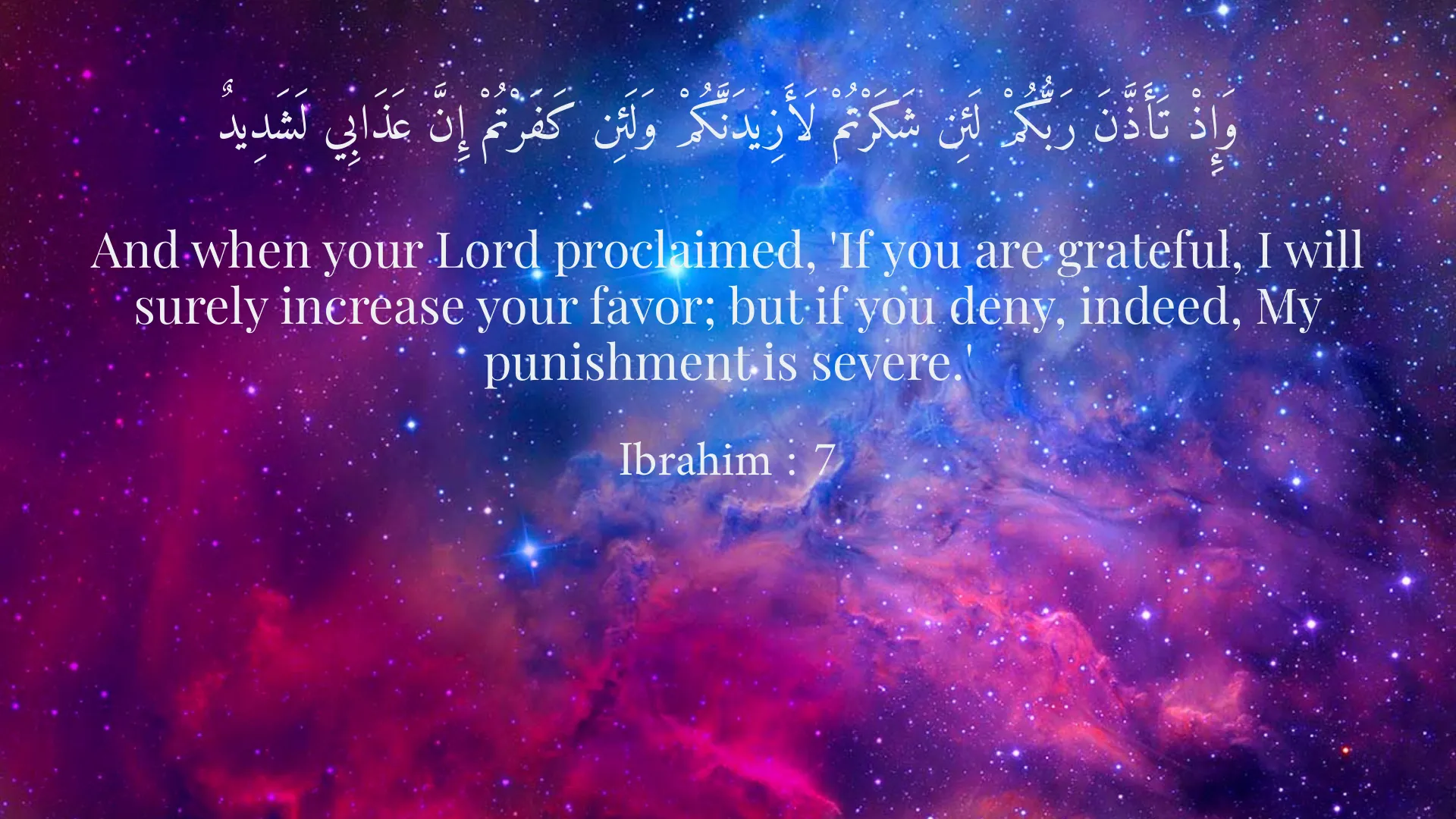
Gratitude is one of the most profound moral teachings found in the Holy Quran. It serves as a cornerstone for personal development, mental well-being, and spiritual elevation. The concept of gratitude is emphasized in several verses of the Quran, where Allah highlights that expressing gratitude results in an increase in blessings and provisions. One notable verse appears in Surah Ibrahim, verse 7: "And [mention] when your Lord proclaimed: 'If you are grateful, I will surely increase your favor upon you; but if you deny, indeed, My punishment is severe.'" This verse clearly indicates that gratitude has a direct correlation with the abundance of blessings one receives in life. Essentially, the more one appreciates what they have, the more they are likely to get additional blessings from God. The teachings of the Quran advocate that gratitude is not merely a passive acknowledgment but an active engagement with one’s life and surroundings. To cultivate a state of gratitude involves paying attention to the positive aspects of life, a practice that has shown to significantly enhance an individual’s capacity to cope with the challenges they face. Engaging in gratitude helps individuals cultivate a positive outlook and contributes to personal and spiritual growth. Surah Fatir, verse 34 emphasizes: "And be grateful to Me and do not deny [My favor]." In this verse, Allah provides us with a directive to express gratitude towards Him, indicating that doing so elevates our soul and acts as a robust mechanism to boost one's morale. In modern psychological terms, expressing gratitude can lead to heightened well-being and emotional resilience, as it fosters a mindset that prioritizes positives over negatives. In today's fast-paced world, where people often find themselves caught up in personal ambitions and challenges, the practice of gratitude becomes all the more vital. It serves as a reminder to focus on the positive elements in our lives, to count our blessings, rather than dwell on what we lack. This shift in focus can promote a deeper sense of life satisfaction and a feeling of happiness that might otherwise be overshadowed by life's difficulties. Research in positive psychology has demonstrated that cultivating gratitude can lead to significant improvements in mental health. For instance, studies have shown that practicing gratitude can reduce feelings of depression and anxiety, foster a greater sense of belonging, and improve interpersonal relationships. When we express gratitude, we not only enhance our own well-being but also positively influence those around us by creating an environment of appreciation and gratitude. Furthermore, the act of gratitude ties closely to the practice of mindfulness—being fully present and engaged with our lives. Mindfulness encourages individuals to savor their experiences and acknowledge the beauty and blessings they might overlook in their day-to-day lives. By integrating mindfulness with gratitude, individuals can cultivate a more profound sense of contentment and joy. Gratitude also plays a crucial role in how we manage our relationships with others. When individuals express gratitude towards their partners, family members, and friends, it creates a feedback loop of mutual respect and affection. Relationships rooted in appreciation are more likely to thrive and endure the test of time. Regular expressions of gratitude can lead to deeper connections, fostering trust and enhancing the emotional bonds that knit relationships together. Moreover, gratitude encourages a sense of community and belonging. In a time when individuals may feel isolated or disconnected, coming together to express appreciation for one another can contribute to the development of strong interpersonal ties and a supportive community. Experiences of collective gratitude—be it in a religious setting, community service, or family gatherings—can create a powerful sense of unity that benefits everyone involved. The importance of gratitude extends to our deeper spiritual life as well. Many spiritual traditions, including Islam, emphasize the role of gratitude in fostering a closer connection with the Divine. Acknowledging one’s blessings reinforces the understanding that there is a higher power at play in our lives—leading to a sense of humility and awe that can transform one's spiritual journey. Gratitude becomes a way to honor and recognize the gifts bestowed upon us by God, leading to a more profound understanding of our purpose and intentions. In conclusion, the Quran emphasizes gratitude as a fundamental principle that promotes personal well-being, resilience, and spiritual growth. Recognizing the importance of gratitude can have far-reaching effects on our mental health, relationships, and spiritual connectivity. By consciously practicing gratitude, we can cultivate a positive life perspective that enhances our overall quality of life. It serves as a reminder to celebrate and cherish even the smallest blessings, thereby paving the way for a more fulfilling and joyous existence. In summary, gratitude is not merely a passive act of acknowledgment. It is a powerful practice that shapes our experiences, influences our mental and emotional health, fosters relationships, and creates a deeper connection with the world around us. Hence, embracing gratitude translates to embracing life itself.
Related Verses
وَإِذْ تَأَذَّنَ رَبُّكُمْ لَئِن شَكَرْتُمْ لَأَزِيدَنَّكُمْ وَلَئِن كَفَرْتُمْ إِنَّ عَذَابِي لَشَدِيدٌ
And when your Lord proclaimed, 'If you are grateful, I will surely increase your favor; but if you deny, indeed, My punishment is severe.'
Ibrahim : 7
وَأَشْكُرُوا لِي وَلَا تَكْفُرُونِ
And be grateful to Me and do not deny Me.
Fatir : 34
Short Story
One day, a young man named Amir walked outside on a rainy day and reflected on the damages the rain had caused to the vineyards. While others were upset, he recalled the verses of the Quran and decided to focus on the blessings in his life. He remembered to practice gratitude daily. After this experience, he practiced gratitude every day, and his life began to improve.