Quranic Answer
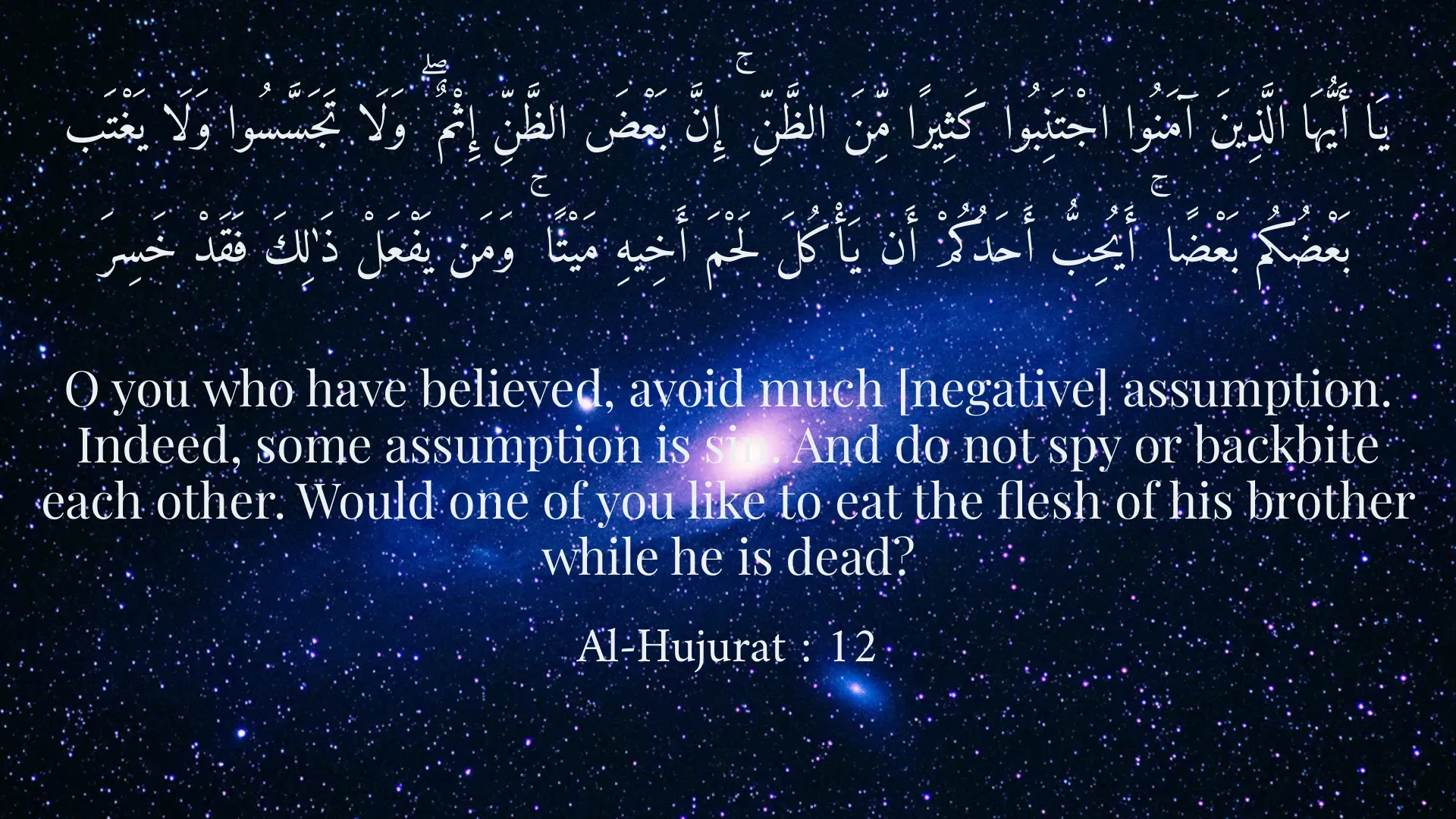
Backbiting, often referred to as 'ghibah' in Arabic, is a profoundly significant sin within the framework of Islamic morality. The repercussions of engaging in this grievous action are elaborately addressed in the Quran. One of the poignant verses that encapsulate the severity of backbiting is found in Surah Al-Hujurat, verse 12, where Allah warns the believers with these compelling words: 'O you who have believed, avoid much [negative] assumption. Indeed, some assumption is sin. And do not spy or backbite each other. Would one of you like to eat the flesh of his brother while he is dead?' This verse serves not only as a warning but also as a visceral metaphor that equates the act of backbiting to the horrific imagery of cannibalism, effectively conveying the abhorrence behind such behavior in Islam. The Quran emphasizes the moral and ethical dimensions of human interaction. The act of backbiting is framed as a repugnant sin, indicative of a person's failure to uphold the values of compassion, respect, and integrity. The vivid comparison drawn in this verse highlights the gravity of backbiting: it is not merely a social faux pas but rather a profound violation of trust and communal harmony. In essence, the verse admonishes believers to avoid backbiting as it undermines the fundamental values of Islam, which advocate for mutual respect and understanding among individuals. The act of backbiting can sever social bonds and create a culture permeated by mistrust and animosity. When a person engages in backbiting, they perpetuate a cycle of negativity that can exacerbate conflicts among individuals and communities. The toxicity of such behavior leads to feelings of jealousy and resentment, which can further compound interpersonal strife. In an environment where gossip and slander flourish, relationships erode, leaving a trail of hurt feelings and broken connections. Individuals enveloped in the habit of backbiting may find themselves isolated, as others become wary of their words and intentions. This underlines a critical aspect of human relationships in Islam: the importance of fostering an atmosphere of respect and goodwill. Moreover, backbiting is not merely detrimental to the individuals being spoken about; it also poses a significant threat to the soul of the person engaging in this behavior. By indulging in backbiting, one risks exposing themselves to divine punishment. In Islamic teachings, the concept of accountability is paramount. Every action, including the words we utter, is subject to scrutiny by Allah, making it imperative for believers to tread cautiously with their tongues. The Prophet Muhammad (peace be upon him) has stated, "Whoever believes in Allah and the Last Day should speak good or remain silent." This saying encapsulates the essence of ethical communication in Islam: if our words are not filled with goodness or positivity, it is better to refrain from speaking altogether. Recognizing backbiting as a social and moral disease is crucial in combating its prevalence within communities. The metaphor of disease suggests that backbiting spreads easily and can be infectious, impacting not just individuals but entire social networks. Therefore, elevating awareness about the dangers of backbiting is essential in fostering a more harmonious society. To combat this sin, believers must engage in self-reflection and cultivate their moral character. In doing so, they can conquer the temptation to speak ill of others and instead promote a culture of kindness and support. The teachings of the Quran and the Sunnah serve as guides for this transformation, pushing believers towards a higher moral standard. Conversely, if individuals choose to abandon this unacceptable behavior and strive for respectful and positive communication, they can lay the groundwork for a community infused with love, friendship, and mutual support. This paradigm shift allows for the blossoming of relationships built on trust, respect, and understanding. A community that emphasizes positive speech cultivates an environment where individuals feel valued and appreciated. The teachings of Islam encourage believers to uplift and encourage one another, reinforcing the bonds of brotherhood and sisterhood that are central to the faith. In this way, refraining from backbiting is not only a personal victory but a communal triumph. Furthermore, the Quran emphasizes that the tongue is a powerful instrument; it possesses the ability to heal or to harm. With such authority comes great responsibility. Believers must wield their words judiciously and with care. By consciously choosing to speak well of others, individuals contribute to societal well-being and personal growth. Such practices promote unity and understanding, essential ingredients in nurturing a thriving community. Ultimately, the battle against backbiting is one of conscious choice and moral commitment. To eradicate this behavior requires the collective will to uphold the standards set forth within Islamic teachings. Through education, self-awareness, and a committed effort to understand one another, believers can create a paradigm shift where gossip and slander cease to exist. The rewards of adopting commendable speech and cohesive communication practices are manifold, leading to personal improvement and the well-being of society at large. In summary, the path towards eliminating backbiting is not only beneficial for individual souls but is also fundamental in fostering a healthy, loving, and united Ummah. By steering clear of backbiting, we align ourselves with the principles of Islam, inviting divine blessings and fostering a loving and cohesive community.
Related Verses
يَا أَيُّهَا الَّذِينَ آمَنُوا اجْتَنِبُوا كَثِيرًا مِّنَ الظَّنِّ ۚ إِنَّ بَعْضَ الظَّنِّ إِثْمٌ ۖ وَلَا تَجَسَّسُوا وَلَا يَغْتَب بَعْضُكُم بَعْضًا ۚ أَيُحِبُّ أَحَدُكُمْ أَن يَأْكُلَ لَحْمَ أَخِيهِ مَيْتًا ۚ وَمَن يَفْعَلْ ذَٰلِكَ فَقَدْ خَسِرَ
O you who have believed, avoid much [negative] assumption. Indeed, some assumption is sin. And do not spy or backbite each other. Would one of you like to eat the flesh of his brother while he is dead?
Al-Hujurat : 12
وَإِذْ أَخَذْنَا مِيثَاقَ بَنِي إِسْرَائِيلَ لَا تَعْبُدُوا إِلَّا اللَّهَ وَبِالْوَالِدَيْنِ إِحْسَانًا وَلَا تَقْتُلُوا أَولَادَكُمْ مِنْ إِمْلاقٍ ۚ نَّحْنُ نَرْزُقُهُمْ وَإِيَّاكُمْ ۚ وَلَا تَقْرَبُوا فَوَاحِشَةً مَّا ظَهَرَ مِنْهَا وَمَا بَطَنَ ۚ وَلَا تَقْتُلُوا النَّفْسَ الَّتِي حَرَّمَ اللَّهُ إِلَّا بِالْحَقِّ ۚ ذَٰلِكُمْ وَصَّاكُم بِهِ لَعَلَّكُمْ تَعْقِلُونَ
And [mention] when We took the covenant from the Children of Israel, [enjoining upon them], 'Do not worship except Allah; and to parents, good behavior.'
Al-Baqarah : 83
Short Story
One day a man was sitting with his friends when he began discussing an absent individual. He asked others to share the person's flaws, but suddenly one of his friends said, 'Do you know that this is backbiting?' The man recalled the verses of the Quran and realized he should distance himself from this act. He decided from that day forward to only speak well of others and forget their faults.