Quranic Answer
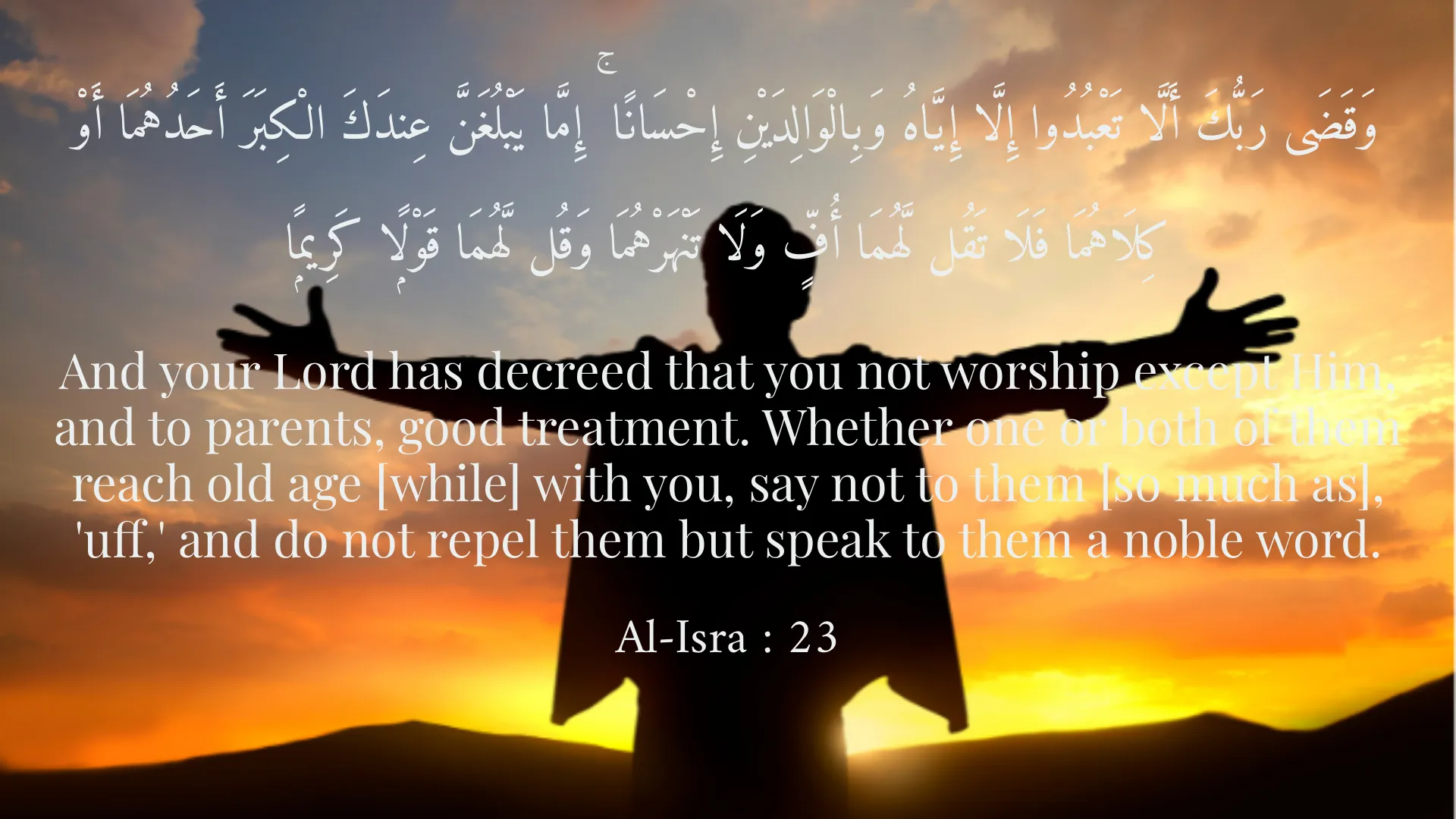
In the Holy Quran, one of the central themes revolves around the treatment of parents, emphasizing respect, honor, and gratitude. This subject is approached with great seriousness, with numerous verses explicitly condemning any form of disrespect toward one’s progenitors. Disobeying this principle not only undermines the familial bond but also adversely affects the spiritual and emotional well-being of the individual involved. Among the verses addressing this issue, one of the most consequential is found in verse 23 of Surah Al-Isra. The verse states: 'And your Lord has decreed that you not worship except Him, and to parents, good treatment. Whether one or both of them reach old age while with you, say not to them [so much as], ‘uff,’ and do not repel them but speak to them a noble word.' This admonition captures the essence of how vital it is to engage in respectful and gentle dialogue with parents, particularly when they age and may require more patience and understanding. The directive for positive treatment of parents is deeply rooted in Islamic teachings. It is not merely a recommendation but a decree from God, highlighting the significance of this obligation. The verse makes it clear that the act of even expressing frustration, even through a simple word like 'uff,' is discouraged. Parents dedicate their lives to raising their children, and as they grow older, they often rely on their children for care and support. This divine instruction underlines a reciprocal commitment; just as parents have sacrificed much for their children, the children are required to reciprocate that love and care, especially as their parents enter advanced years. The Quran further emphasizes this filial responsibility in Surah Luqman, verse 14, where Allah states, 'And We have enjoined upon man [care] for his parents…'. This verse serves as a reminder that the obligation to care for one’s parents is not an option but a duty ingrained in the fabric of Islamic values. It is an affirmation of the love and dedication that children should show toward their parents. Gratitude toward one’s parents is essential, and recognizing their sacrifices becomes an integral part of a child's moral and ethical upbringing. Moreover, the Quran does not limit the definition of 'good treatment' to physical care alone; it extends to emotional support and respect, which are equally crucial. The essence of parental respect includes listening to them, valuing their opinions, and showing affection. When a society adheres to these teachings, it fosters stability and harmony within families, creating an environment where love and respect can flourish. Additionally, in Surah At-Tawbah, verse 24, Allah underscores the importance of prioritizing love for Him and His Messenger above all else, including familial ties. This connection between reverence for God and respect for parents reveals a profound aspect of Islamic teachings: honoring parents is an integral part of expressing love for God. The Quran elucidates that the relationship between children and parents is so interwoven with one's relationship with God that to disrespect parents can lead to spiritual ramifications. Thus, disobedience to parents is not an isolated misstep; rather, it can manifest as a deviation from the righteous path laid out by divine commandments. Disrespecting parents can have dire consequences not only on an emotional and interpersonal level but spiritually as well. In Islamic belief, it is posited that being unruly toward parents may result in a diminished sense of peace and blessings in one’s life. When individuals choose to dismiss the advice and care of their parents, they often encounter a range of negative emotional and psychological consequences, leading to feelings of isolation and malaise. This disrespect damages familial bonds, fostering resentment and conflict within the household. Ultimately, a person's relationship with their parents can serve as a reflection of their character and values; hence, maintaining a respectful attitude is essential not only for familial harmony but for personal growth. The Islamic ethics surrounding parental respect extend beyond religious obligations; they encapsulate a broader social and cultural ethos that values kinship and community. In various cultural contexts, honoring parents correlates with societal stability and moral upbringing. Thus, the teachings in the Quran can be viewed as a critical construct for nurturing healthier families and communities. Respecting parents is not merely about following orders; it is about creating a nurturing space for shared love, respect, and understanding. In conclusion, the messages conveyed in the Holy Quran regarding respect for parents are multifaceted, focusing on the sanctity of parental relationships and the vital role they play in achieving a balanced and fulfilling life. Respecting one's parents is a sacred duty and integral to one’s spiritual journey. Disrespecting them not only leads to familial discord but can have significant detrimental effects on a person's spiritual constitution and overall blessings in life. To truly honor our parents, we must cultivate an attitude of kindness, patience, and gratitude, recognizing their invaluable role in our lives. Ultimately, embracing these teachings fosters a more harmonious existence, aligned with the divine principles laid forth in scripture.
Related Verses
وَقَضَى رَبُّكَ أَلَّا تَعْبُدُوا إِلَّا إِيَّاهُ وَبِالْوَالِدَيْنِ إِحْسَانًا ۚ إِمَّا يَبْلُغَنَّ عِندَكَ الْكِبَرَ أَحَدُهُمَا أَوْ كِلَاهُمَا فَلَا تَقُل لَّهُمَا أُفٍّ وَلَا تَنْهَرْهُمَا وَقُل لَّهُمَا قَوْلًۭا كَرِيمًۭا
And your Lord has decreed that you not worship except Him, and to parents, good treatment. Whether one or both of them reach old age [while] with you, say not to them [so much as], 'uff,' and do not repel them but speak to them a noble word.
Al-Isra : 23
وَوَصَّيْنَا الإِنْسَانَ بِوَالِدَيْهِ ۚ أَن اشْكُرْ لِي وَلِوَالِدَيْكَ إِلَيَّ الْمَصِيرُ
And We have enjoined upon man [care] for his parents. But if they endeavor to make you associate with Me that of which you have no knowledge, do not obey them. To Me is your return, and I will inform you about what you used to do.
Luqman : 14
Short Story
One day, a young man named Ali reflected on his behavior towards his parents. He realized that he often did not treat them kindly, which made them unhappy. He decided that from then on, he would show more respect to his parents and speak to them with more kindness. Soon, Ali noticed that this change in his behavior made his life happier and greatly improved his relationship with his parents.