Quranic Answer
The Significance of Gaze Control: A Deeper Understanding through the Lens of the Quran The complexity of human interaction often hinges on subtle elements that we may overlook in our daily lives. One such element is our gaze—the way we look at those around us. The importance of our gaze and being mindful of it is clearly emphasized in the Holy Quran. Through a beautiful and enlightening lens, we can draw wisdom from the teachings found in this sacred text pertaining to the control of our gaze. This concept is powerfully encapsulated in Surah An-Nur, where Allah commands the believers to lower their gaze and refrain from inappropriate looks. This directive not only touches upon a moral issue but also bears significant ramifications for how we establish human and social relationships. At its core, our gaze serves as an influential tool in shaping our experiences and interactions. A person's gaze is often the first point of contact and can communicate a multitude of messages without the use of words. The implication of keeping our gaze directed appropriately can resonate deeply throughout our lives. Narratively, Verse 30 of Surah An-Nur captures this sentiment concisely: "Tell the believing men to lower their gaze and guard their modesty; that is purer for them." In this verse, Allah reiterates the essence of modesty and restraint. The first layer of understanding the instruction to lower one’s gaze stems from the notion of protection—both for oneself and for others. In a world where distractions abound, we can often find ourselves desensitized to the significant impact that our gaze can have. By adhering to this directive, believers are reminded that avoiding non-mahrams, individuals who are not permissible to marry or engage with intimately, serves to preserve not only their own dignity but also that of the other person. Recognizing the sanctity of interactions, we become not only guards of our own character but also stewards of the collective decency of our communities. Moreover, it is essential to recognize the psychological and spiritual consequences of inappropriate gazes. The Quran elaborately discusses the repercussions that can arise from unrestrained looks. Such actions can trigger negative impulses and can ultimately pave the way for moral corruption within oneself. This degradation of moral integrity can manifest in various psychological struggles, leaving an individual trapped in feelings of guilt and shame. Drawing from psychological research, it becomes evident that the act of gazing, especially toward individuals who are not permissible, activates certain neural pathways that can lead to unhealthy desires and compulsions. Thus, the wisdom embedded in the Quran transcends mere religious adherence—it provides us with profound insight into the human psyche. Cultivating the habit of mindfully controlling our gaze can empower us to foster a healthier and more peaceful existence. By recognizing and appreciating the beauty of the human experience while maintaining respectful boundaries, we can adhere to our religious values and principles without feeling restrained. This practice of lowering our gaze encourages us to develop a sense of divine consciousness. As we become more aware of the implications of our gaze, we also cultivate a deeper sense of gratitude for the divine wisdom that governs our lives. In addition to spiritual consciousness, being mindful of our gaze promotes mutual respect and stronger connections within our communities. Observing boundaries and respecting the dignity of others allows for the establishment of trust in relationships. When individuals learn to exercise this principle, social harmony becomes more attainable. This effects the creation of communities where individuals feel safe and valued irrespective of gender or walking through diverse social landscapes. The act of preserving our gaze is not merely an individual endeavor; it is an invitation for collective growth. When we operate under a framework in which everyone respects the sanctity of their gaze, a ripple effect occurs within the community, enhancing interpersonal relationships. Such environments pave the way for productive dialogue, cooperation, and unity among diverse groups of people. Every individual becomes a mirror reflecting the virtues of modesty, respect, and integrity. In conclusion, the significance of our gaze as dictated in the Holy Quran offers insights that are both profound and multilayered. By diligently working on controlling our gaze, we can protect ourselves and contribute positively to our surroundings. This effort not only aids in attaining divine consciousness but also strengthens the foundational threads of our social fabric. The wisdom imparted by Allah is timeless; it remains ever-relevant in our personal development and growth within our communities. Ultimately, as we strive for improvement, let us remember the powerful impact that our gaze holds—a reflection of our internal state and our guiding principle in our interactions with others.
Related Verses
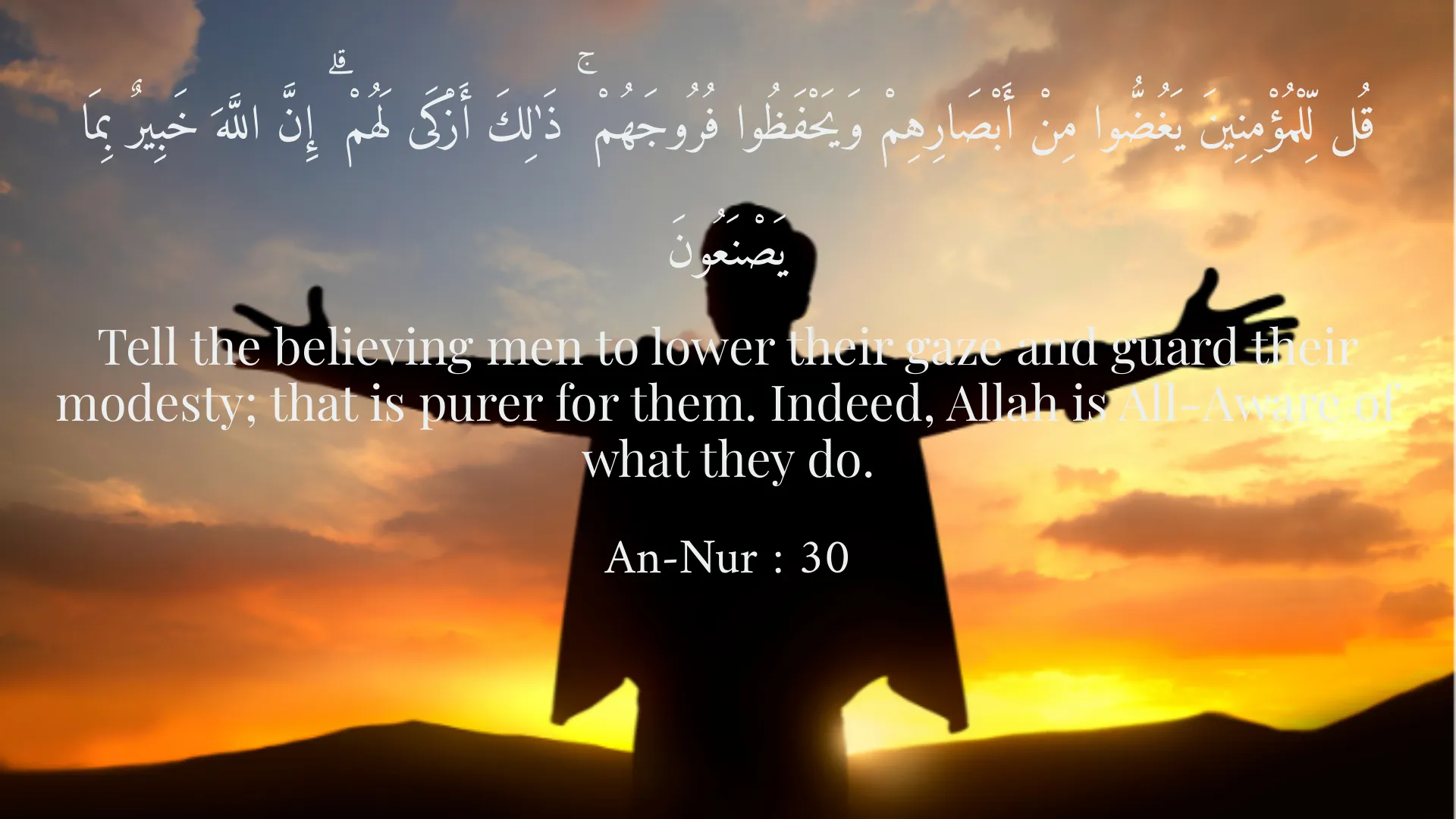
قُل لِّلْمُؤْمِنِينَ يَغُضُّوا مِنْ أَبْصَارِهِمْ وَيَحْفَظُوا فُرُوجَهُمْ ۚ ذَٰلِكَ أَزْكَى لَهُمْ ۗ إِنَّ اللَّهَ خَبِيرٌ بِمَا يَصْنَعُونَ
Tell the believing men to lower their gaze and guard their modesty; that is purer for them. Indeed, Allah is All-Aware of what they do.
An-Nur : 30
وَلَا تَقْرَبُوا الزِّنَا ۚ إِنَّهُ كَانَ فَاحِشَةً وَسَاءَ سَبِيلًا
And do not approach unlawful sexual intercourse. Indeed, it is ever an immorality and is evil as a way.
Al-Isra : 32
وَالَّذِينَ هُمْ لِفُرُوجِهِمْ حَافِظُونَ
And they who are to their private parts, guardians.
Al-Mu'minun : 5
Short Story
Once, a young man named Soroush attended a class about Islamic manners. The teacher had discussed the importance of looking according to the teachings of the Quran. He told Soroush that the eyes are like the gateways to the heart, and if we turn them towards inappropriate sights, we could fall into negativity. After this lesson, Soroush decided to always keep himself in check and admire the beauty of the world and divine gifts even amidst non-mahrams.