Quranic Answer
In the Holy Quran, fidelity to vows and promises is a core principle that is rigorously emphasized throughout its verses. This reflects a vital aspect of Islamic moral and ethical teachings, focusing not only on the importance of honesty but also on the broader implications of trustworthiness and integrity in human relationships, both with Allah and with other individuals. The concept of promise-keeping serves as a foundation for both personal and communal ethics in Islam, influencing behavior, instilling a sense of responsibility, and fostering stronger relationships among believers. A vow or promise, regardless of the party to whom it is made—be it God or fellow human beings—signifies a commitment that carries serious implications. In the Quran, this notion is articulated clearly in Surah Al-Baqarah, verse 177, where Allah states, "Fulfilling one's promises is one of the signs of faith and piety." This verse serves as a clear reminder that the act of keeping one's word is not merely a transaction but an essential spiritual duty. It underscores that a faithful believer is marked by their commitment to uphold the promises they make, illustrating how fidelity to one’s commitments reflects adherence to the teachings of Islam. The concept of fidelity to promises extends beyond mere ceremonial commitments; it encompasses a broader duty to uphold moral obligations and values. In Surah Al-Ma'idah, verse 1, Allah emphasizes, "O you who have believed, fulfill [all] contracts." This command lays the groundwork for ethical conduct between individuals, emphasizing the significance of trust in fostering community cohesion. When commitments are honored, the bonds of trust grow stronger, promoting an environment where individuals feel secure and valued. Moreover, the Quran teaches that the act of keeping promises is not solely about fulfilling contractual obligations. It also pertains to loyalty to values and ethical principles that guide day-to-day life. This perspective transforms promises into reflections of one's character and integrity. People are encouraged to remain steadfast not only in contractual agreements but in their commitments to justice, truth, and righteousness, reinforcing the concept that every action is a part of a larger moral framework. The importance of keeping vows and promises plays a vital role in establishing a stable society. By honoring their commitments, individuals cultivate an atmosphere of trust, which is essential for community development. This trust helps to reduce conflicts and disputes, allowing for smoother interpersonal and communal interactions. In an environment where promises are kept, people feel secure in their relationships, fostering a sense of belonging that can lead to greater cooperation and collaboration. Additionally, the notion of reciprocity is inherent in the fulfillment of vows. Committing to uphold promises fosters an expectation of loyalty from others, creating a mutual understanding that reinforces bonds within a community. As such, fidelity to one's word is more than an individual concern; it is a social endeavor that enriches relationships and promotes harmony. When individuals act with integrity, they inspire others to do the same, leading to a culture of accountability and respect. The essential nature of fidelity to vows is also mirrored in the actions of the Prophet Muhammad (PBUH), who serves as an exemplar of promise-keeping and integrity. His life illustrates the profound impact that such values can have on building a just and honorable society. He often quoted that "When a man tells something and he intends it in his heart, that is a trust." Such teachings propel the notion that promises should be treated as sacred trusts, thus elevating the ethical responsibility of individuals within their communities. Furthermore, the Quran suggests that the failure to keep promises carries significant spiritual implications. It warns believers that breaking a promise is not merely a social transgression but a breach of faith. This understanding elevates the act of promise-keeping beyond mundane interactions by linking it closely with one’s spiritual state and relationship with Allah. Surah Al-Tawbah, verse 1 addresses the gravity of promises made and highlights the importance of maintaining a righteous character through them. As Muslims embark on their daily lives, they are encouraged to consider how their actions reflect their commitment to their vows. It means consciously practicing honesty, loyalty, and reliability in their dealings with family, friends, and society at large. Every promise kept is viewed as an act of worship, reinforcing the connection between faith and ethical conduct. Just as individuals make pledges to one another, they should also recognize their promise to uphold Islamic principles and values in every aspect of their daily interactions. Ultimately, the Quran teaches that promises are not merely words but commitments that define one’s character and behavior. Each vow signifies a mutual relationship where loyalty is paramount on both sides. The interdependence of individuals in a community means that when one party fails to keep their word, it can lead to a breakdown in trust, affecting the wider social fabric. In conclusion, fidelity to vows and promises is not only a religious obligation embedded within Islamic teachings but also a fundamental social value that strengthens the bonds of community. The essence of keeping promises plays a pivotal role in establishing trust, fostering cooperation, and nurturing ethical relationships among individuals. By honoring their commitments, people can inspire a culture of integrity, enhancing the moral fabric of society and fulfilling their spiritual responsibilities. For believers, the call to be steadfast in their promises is thus both a personal commitment and a communal necessity, reinforcing the idea that every vow keeps them connected to the values of their faith and the community around them.
Related Verses
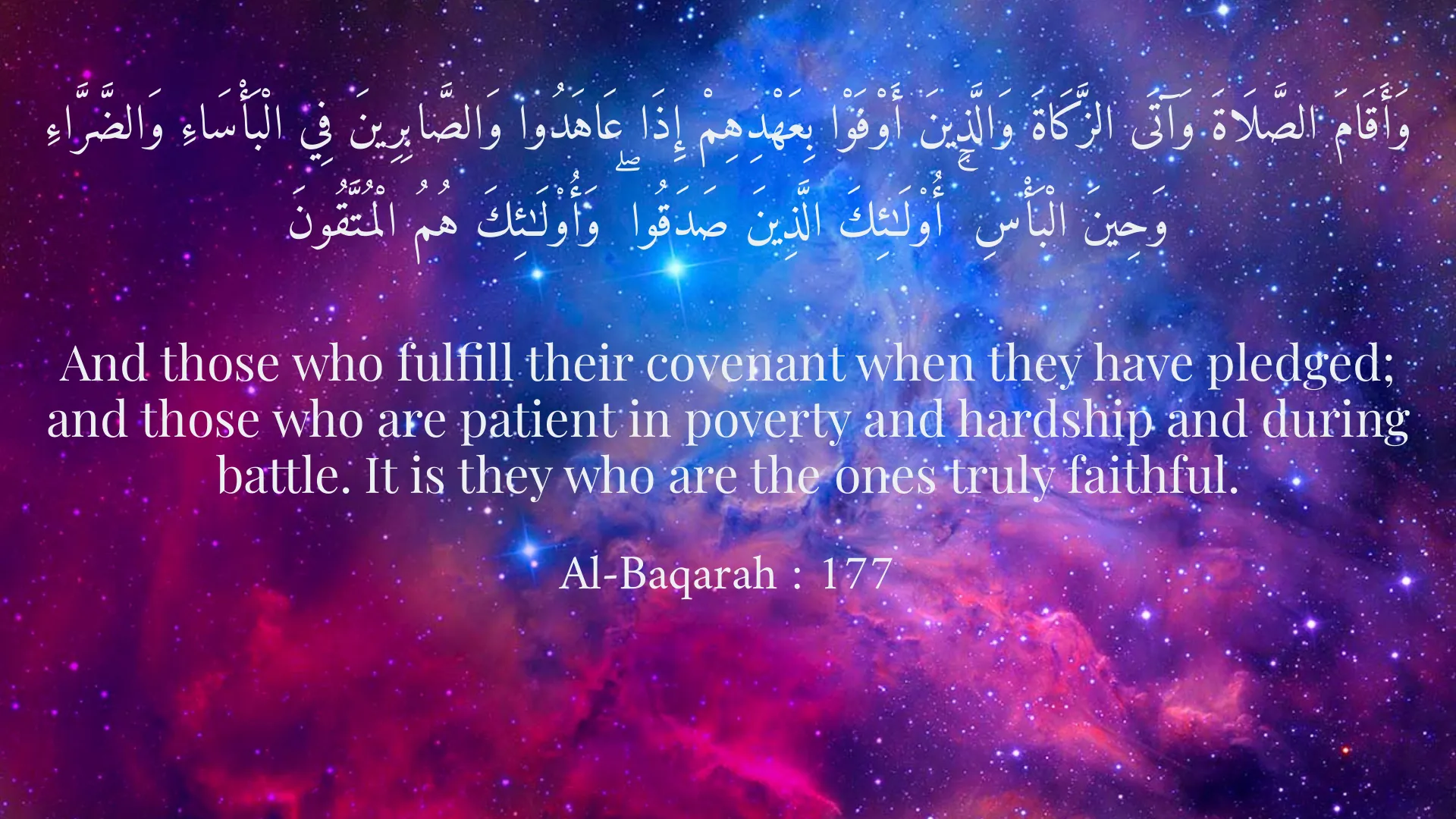
وَأَقَامَ الصَّلَاةَ وَآتَى الزَّكَاةَ وَالَّذِينَ أَوْفَوْا بِعَهْدِهِمْ إِذَا عَاهَدُوا وَالصَّابِرِينَ فِي الْبَأْسَاءِ وَالضَّرَّاءِ وَحِينَ الْبَأْسِ ۚ أُو۟لَـٰئِكَ الَّذِينَ صَدَقُوا ۖ وَأُو۟لَـٰئِكَ هُمُ الْمُتَّقُونَ
And those who fulfill their covenant when they have pledged; and those who are patient in poverty and hardship and during battle. It is they who are the ones truly faithful.
Al-Baqarah : 177
يَا أَيُّهَا الَّذِينَ آمَنُوا أَوْفُوا بِالْعُقُودِ ۚ أُحِلَّتْ لَكُمْ بَهِيمَةُ الْأَنْعَامِ إِلَّا مَا يُتْلَى عَلَيْكُمْ ۖ غَيْرَ مُحِلٍّ لِصَيْدِ الْبَحْرِ وَأَنتُمْ حُرُمٌۭ ۗ إِنَّ اللَّهَ يَحْكُمُ مَا يُرِيدُ
O you who have believed, fulfill [all] contracts.
Al-Ma'idah : 1
Short Story
One day, Adel, a young and thoughtful person, walked towards the market with a light in his heart. In the market, he observed a few people arguing over a deal. He remembered a Quranic verse that emphasizes the importance of fidelity to vows. Adel decided to help these two individuals and reminded them that they should both honor their agreement. This act of Adel not only inspired him but also created a strong friendship and pact between the two individuals.