Quranic Answer
In the Holy Quran, being good to parents is recognized as one of the key duties for believers. In Surah Al-Isra, verses 23 and 24, Allah explicitly states that one must treat their parents with kindness and warns against disrespecting them. These verses emphasize that even if one’s parents reach old age, one should not say 'uff' to them, but should engage with them respectfully and affectionately. This act is not only a moral obligation but also an act of worship. Being good to parents can have a profoundly positive impact on both our social and personal lives. In fact, kindness toward parents fosters family ties and creates a sense of security and tranquility for the individual. Additionally, the Quran introduced kindness to parents as one of the factors that brings blessings into life. Allah reminds believers in Surah Luqman, verse 14, to be grateful to their parents, tying this notion to a fruitful and blessed existence. Thus, by treating our parents well, we not only draw closer to Allah's satisfaction but also enhance the quality and blessings of our own lives. The notion of being dutiful and respectful to one’s parents is deeply embedded in the Islamic faith and culture, transcending time and geographical boundaries. In various cultures around the world, parents are seen as the foundation of the family unit, and this view is echoed in Islamic teaching. The respect that is afforded to parents stems from the sacrifices they make in nurturing their children, providing them with the necessities of life, and offering emotional support throughout their developmental years. The Quran encourages believers to recognize and appreciate these sacrifices, promoting an environment where love and respect flourish amidst familial relationships. In a world that can often be fast-paced and self-centered, reflecting on the teachings related to parenthood in the Quran can provide valuable guidance. Surah Al-Isra serves as a reminder that parents deserve our utmost care and regard, especially as they age. The instruction to not utter even a mere expression of annoyance, such as 'uff,' underscores the importance of maintaining a level of dignity and respect in our interactions with them. This principle calls for deeper empathy and compassion towards parents, encouraging us to invest time and energy into understanding their evolving needs as they grow older. Moreover, to respect and care for one’s parents aligns with broader societal values, including fostering healthy family relationships and instilling moral values in the next generation. As children witness their parents’ exemplary behavior and respect for their own parents, they are likely to emulate these actions, creating a positive cycle of mutual respect and kindness. The family unit ultimately becomes a microcosm of compassion, cooperation, and love. The impact of treating one’s parents with kindness is not merely restricted to the individual’s relationship with them; it often extends into community interactions. A person who embodies these virtues is likely to cultivate other meaningful relationships characterized by respect, patience, and understanding. Kindness creates an atmosphere of goodwill and a sense of belonging, ensuring that the family is supported by a network of positivity and emotional stability. Another significant lesson we learn from the Quran regarding kindness to parents is that achieving Allah’s love and blessings is intertwined with our treatment of them. Surah Luqman, verse 14, reminds believers of the importance of gratitude towards their parents. This message reinforces the concept that familial respect is not just a foundational duty but a spiritual obligation. By practicing kindness to parents, believers earn the pleasure of Allah, which in turn leads to a more rewarding and fruitful life. Furthermore, kindness towards one’s parents can manifest in various forms. It can be something as simple as sharing daily experiences or engaging in deep conversations that foster an emotional bond. Alternatively, it can involve providing support during illness or taking the time to help with their daily tasks, which can aid in alleviating some of their burdens. Each act of kindness and respect serves to enrich the relationship, ensuring that the parents feel valued and respected. It is important to acknowledge that while the Quran provides us with clear guiding principles, the real-life implementation can sometimes be challenging. Circumstances vary widely; culturally, some families are more divided due to geographical distance, lifestyle differences, or differing personal values. However, the commitment to maintain good relations remains a personal endeavor that each individual must undertake. Regardless of the challenges that may arise, the emphasis in the Quran highlights the importance of making that effort. The guidance outlined in the Quran regarding treatment of parents extends beyond verbal expressions of love or acts of service. It calls for active engagement in meaningful relationships, nurturing parental well-being, and advocating for their needs within society. As such, it is our responsibility as believers to honor our parents’ legacy and ensure that the family continues to be a sacred space for nurturing love, understanding, and respect. In conclusion, the Islamic teachings on respecting and being kind to parents are powerful reminders of our moral and spiritual duties. By fostering a culture of kindness within familial relationships, believers not only fulfill their religious obligations but also contribute to the development of stronger communities that prioritize compassion and understanding. Ultimately, being good to parents mirrors the very essence of what it means to be a responsible, loving, and devout individual in all aspects of life, leading to a harmonious and fulfilling existence.
Related Verses
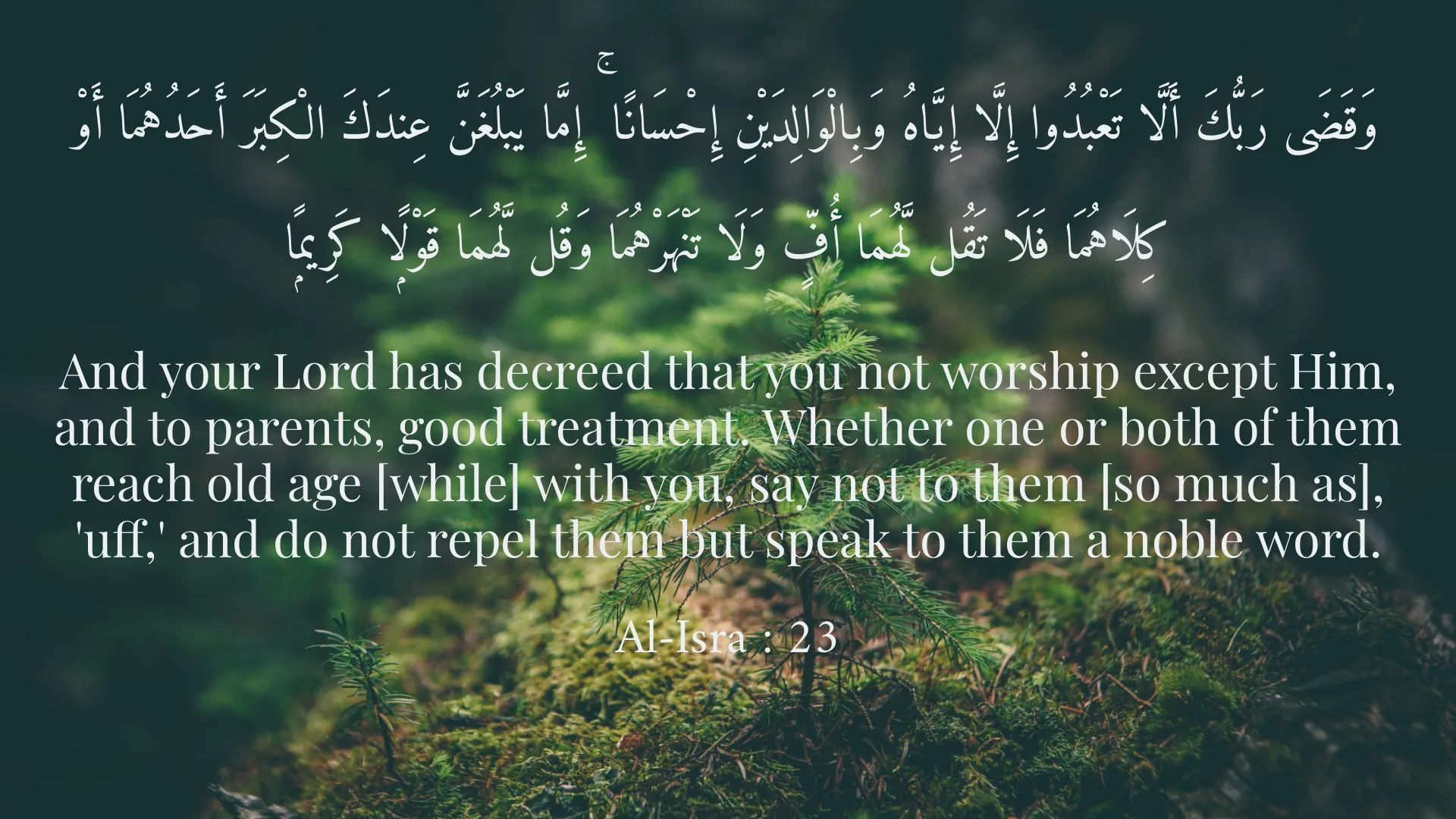
وَقَضَى رَبُّكَ أَلَّا تَعْبُدُوا إِلَّا إِيَّاهُ وَبِالْوَالِدَيْنِ إِحْسَانًا ۚ إِمَّا يَبْلُغَنَّ عِندَكَ الْكِبَرَ أَحَدُهُمَا أَوْ كِلَاهُمَا فَلَا تَقُل لَّهُمَا أُفٍّ وَلَا تَنْهَرْهُمَا وَقُل لَّهُمَا قَوْلًۭا كَرِيمًۭا
And your Lord has decreed that you not worship except Him, and to parents, good treatment. Whether one or both of them reach old age [while] with you, say not to them [so much as], 'uff,' and do not repel them but speak to them a noble word.
Al-Isra : 23
وَوَصَّيْنَا الإِنسَانَ بِوَالِدَيْهِ ۚ إِنْ شَكَرْتَ لِي وََلِوَالِدَيْكَ فَإِنَّمَا تُشْكَرُونَ
And We have enjoined upon man [care] for his parents. But if they endeavor to make you associate with Me that of which you have no knowledge, do not obey them. To Me is your return, and I will inform you about what you used to do.
Luqman : 14
Short Story
One day, a man was walking to the market with his son. Along the way, the boy disrespected some elders. The father calmly said to him, 'Son, learn that respecting elders, especially parents, is a sign of true culture and etiquette.' The son listened to his father and began to act with respect in his conversations thereafter. This story reminds us that respecting parents and elders is valuable.