Quranic Answer
Gratitude in Times of Hardship: A Pathway to Resilience and Spiritual Growth In the Holy Quran, gratitude in all circumstances, especially during hardships, is a recurring theme. The significance of expressing gratitude is not merely a suggestion but a divine command that fosters resilience, appreciation, and spiritual growth among believers. The verse from Surah Al-Baqarah, verse 155, emphasizes this notion, stating: 'And We will surely test you with something of fear and hunger and a loss of wealth and lives and fruits, but give good tidings to the patient.' This profound statement is a reminder that life is intrinsically linked with trials and tribulations; however, the manner in which we respond to these challenges can define our character, faith, and ultimately, our destiny. Understanding the Nature of Trials Life's trials can manifest in various forms – fear, hunger, health issues, financial difficulties, and the loss of loved ones. Each of these challenges can cause deep distress and discomfort. Nonetheless, the Quran provides a hopeful perspective by urging individuals to embrace patience and gratitude, even in the direst circumstances. The act of gratitude, especially during adversity, is a powerful tool that not only alleviates pain but also encourages a mindset shift. When faced with hardships, it is easy to lose sight of the positive aspects of our lives. However, taking a moment to reflect on our blessings can redirect our thoughts from despair to hope. For instance, during tough times, we might find ourselves gravitating more towards our friends and family. The relationships we cultivate and the emotional support we receive become vital lifelines that reinforce our sense of belonging and community. Gratitude as a Catalyst for Personal Growth Moreover, practicing gratitude fosters resilience. By acknowledging what we are thankful for, we cultivate a positive mindset that empowers us to confront life’s challenges with bravery and determination. As highlighted in the teachings of the Quran, gratitude is intrinsically tied to patience. In Surah Ibrahim, verse 7, Allah proclaims: 'And [mention] when your Lord proclaimed: If you are grateful, I will surely increase your favors upon you; but if you deny, indeed, My punishment is severe.' This verse encapsulates the idea that gratitude is both a source of strength and a mechanism to receive abundant blessings. Expressing gratitude during turbulent times is not a simple task; it requires conscious effort and reflection. It can take the form of daily journaling, meditative practices, or even moments of prayer where one reflects on the grace of Allah despite the ongoing challenges. These practices serve as reminders that life, in its complexity, is sprinkled with countless blessings that often go unnoticed amidst our struggles. The Spiritual Dimension of Gratitude The Quran teaches that gratitude aligns us with our Creator and ultimately brings us closer to God. Embracing gratitude requires humility and an acknowledgment of our dependence on divine mercy. It is essential to recognize that gratitude is not merely a response to favorable circumstances but an attitude that can be cultivated regardless of one’s situation. Engaging in acts of gratitude can also enhance one's spiritual life. Many believers find that expressing thankfulness through prayer deepens their connection with Allah. By turning our thoughts towards the things we appreciate, we soften the harshness of our circumstances and nurture a sense of contentment. Purposeful Acts of Kindness Another avenue through which gratitude manifests is through acts of kindness towards others. In moments of hardship, reaching out to support individuals facing similar struggles or extending help to those less fortunate can lead to profound personal fulfillment. It strengthens the bonds of community and creates a chain of positivity that reverberates through society. Such actions are a reflection of gratitude in action, promoting a cycle of giving and receiving that enriches our lives and connects us all. Additionally, sharing our stories of hardship and the lessons learned can enable others to navigate their challenges with greater resilience. By fostering open conversations around vulnerability and gratitude, we create an atmosphere where individuals feel supported and empowered. Resilience: A Journey Towards Growth In conclusion, the teachings of the Quran on gratitude are vital in nurturing resilience and faith, especially during periods of hardship. The dual message of patience and gratitude serves as a beacon for those weathering life's storms. Each trial can be viewed as an opportunity for growth, a chance to strengthen our bonds with loved ones, and a way to deepen our spiritual connection with Allah. As we navigate the complexities of life, we must hold onto the conviction that gratitude is a powerful, transformative force that enhances our ability to endure challenges. In essence, gratitude is more than an expression; it is a way of life. By embracing gratitude, especially during tough times, we can cultivate a profound sense of peace and fortitude that enables us to emerge stronger and more connected. It reminds us that every test carries with it the possibility of triumph and growth, culminating in a deeper appreciation for the journey we are on. Let us actively choose gratitude, knowing that in doing so, we align ourselves with divine favor and amplify the blessings in our lives.
Related Verses
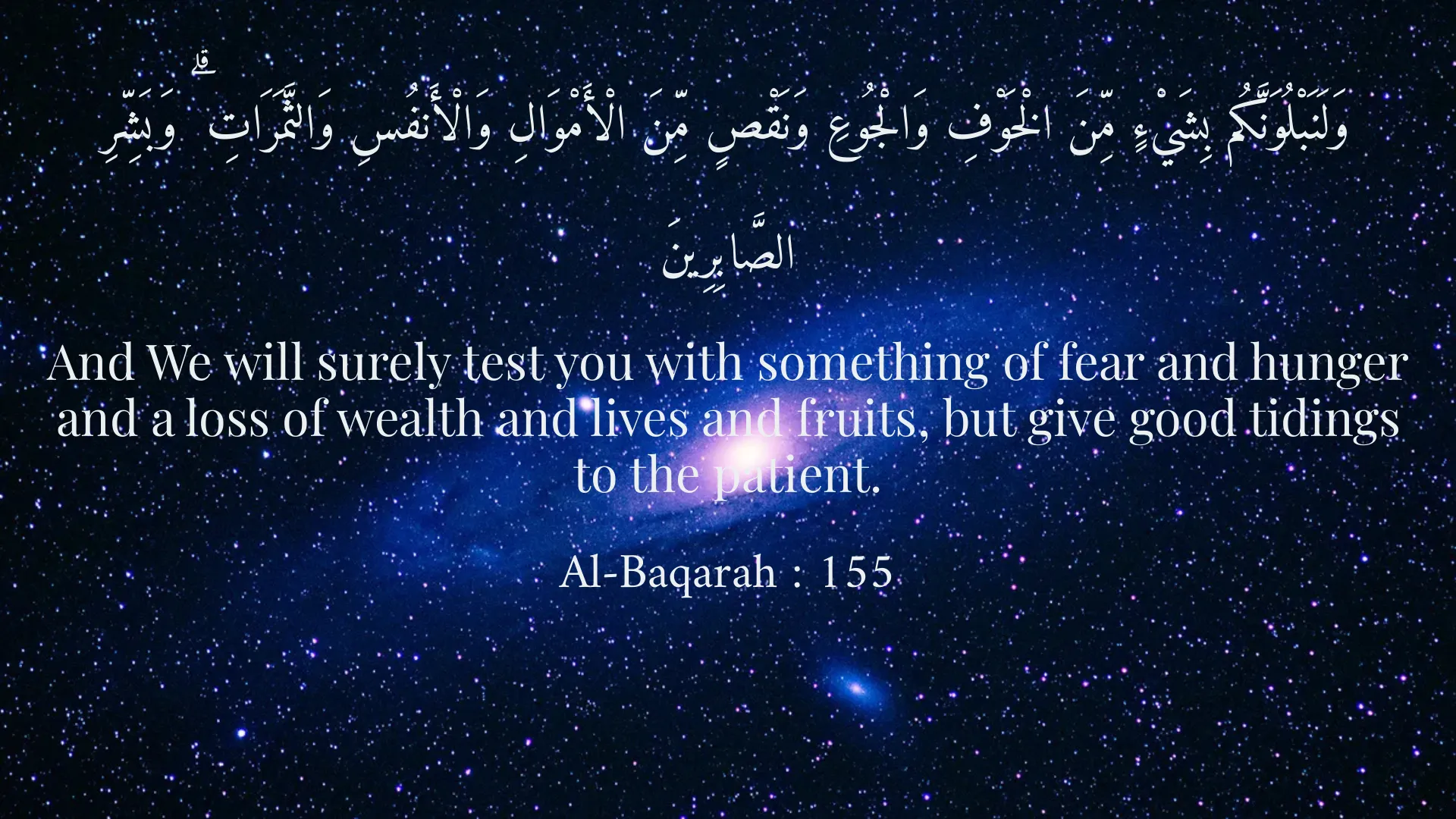
وَلَنَبْلُوَنَّكُم بِشَيْءٍ مِّنَ الْخَوْفِ وَالْجُوعِ وَنَقْصٍ مِّنَ الْأَمْوَالِ وَالْأَنفُسِ وَالثَّمَرَاتِ ۗ وَبَشِّرِ الصَّابِرِينَ
And We will surely test you with something of fear and hunger and a loss of wealth and lives and fruits, but give good tidings to the patient.
Al-Baqarah : 155
وَإِذْ أَذَّنَا رَبُّكُمْ لَئِن شَكَرْتُمْ لَأَزِيدَنَّكُمْ وَلَئِن كَفَرْتُمْ إِنَّ عَذَابِي لَشَدِيدٌ
And [mention] when your Lord proclaimed: If you are grateful, I will surely increase your favors upon you; but if you deny, indeed, My punishment is severe.
Ibrahim : 7
Short Story
One day, a man named Hamid was experiencing many troubles in his life. He felt extremely depressed and hopeless. While passing through the market, he encountered a religious scholar. The scholar asked him, 'Why don’t you express gratitude?' Hamid replied, 'How can I be grateful when everything is going wrong for me?' The scholar said, 'Even in hardships, there are blessings. When difficulties arise, enhance your strength and patience, and never forget to be thankful to God.' This statement revived Hamid's spirit, and he remembered that he should always be grateful.