Quranic Answer
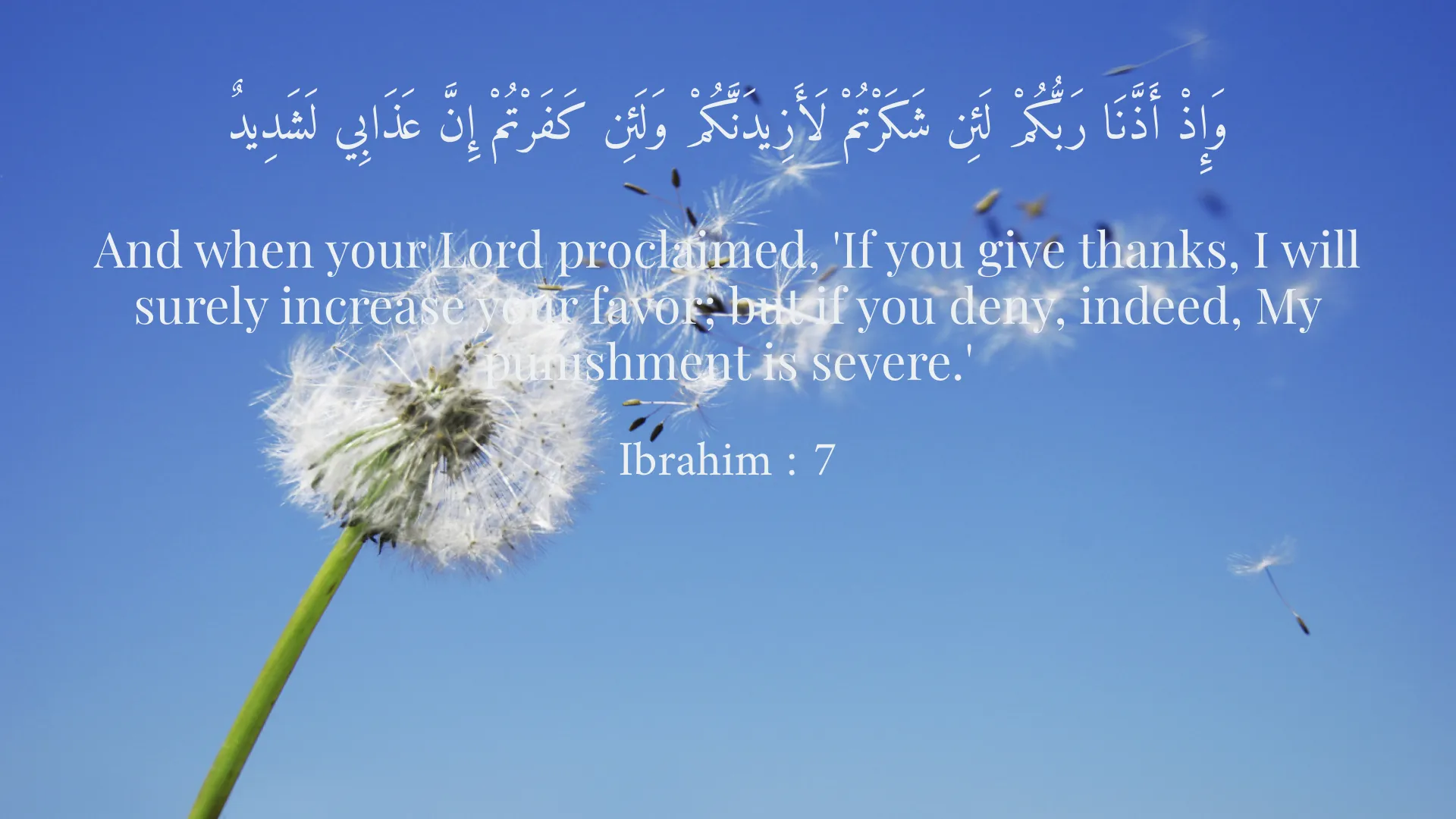
Gratitude is a powerful and transformative emotion that plays a significant role in the spiritual and emotional well-being of individuals. In Islamic teachings, gratitude, or 'Shukr,' is not only viewed as a simple expression of thanks but is also considered a profound obligation and virtue that connects believers with Allah (God). The Quran, which serves as the primary religious text for Muslims, emphasizes the importance of gratitude repeatedly, framing it as a key teaching that can unlock greater blessings and mercy from Allah. In Surah Ibrahim, verse 7, Allah emphasizes this crucial lesson: "And when your Lord proclaimed, 'If you give thanks, I will surely increase your favor; but if you deny, indeed, My punishment is severe.'" This verse encapsulates the essential principle that gratitude serves as a gateway to an abundance of divine gifts. It suggests that the act of expressing gratitude can lead to an increase in the blessings one receives. This principle applies to both material and spiritual dimensions, highlighting the inseparable link between thankfulness and the enhancement of one's life experience. When one acknowledges and appreciates the small blessings in life—such as good health, a secure home, or the simple joy that comes from sipping a warm cup of tea on a cold day—we cultivate a deeper awareness of Allah's continuous generosity. Each of these seemingly minor blessings contributes to the fabric of our daily lives, yet they are often overlooked in our quest for larger aspirations. If we fail to express gratitude for these smaller gifts, we risk losing them, which can lead to feelings of discontent or unhappiness. Surah An-Nahl, verse 18 corroborates this idea when it states, "And if you count the favors of Allah, you will not be able to enumerate them." This verse serves as a reminder that the blessings we receive from Allah are countless and far-reaching. The beauty of this divine generosity is that it often goes unrecognized until we take the time to reflect on it critically. A person engrossed in negative emotions or self-pity might overlook blessings, failing to appreciate what they have and consequently leading to a diminished sense of joy and satisfaction in life. The act of practicing gratitude nurtures not only our faith but also fosters a more optimistic and joyful outlook on life. When we consciously shift our focus from what we lack to what we have, we begin to see the world through a lens of abundance rather than scarcity. This transformation can significantly impact our overall mental health and relationships with others. For example, gratitude can lead to better interpersonal relationships. When we express gratitude towards others—whether it's appreciating a friend's support or acknowledging a loved one's efforts—we strengthen our emotional bonds with them. Furthermore, studies have indicated that individuals who engage in the practice of gratitude report fewer symptoms of depression and anxiety. They tend to exhibit higher levels of empathy, which allows them to connect more deeply with those around them. Additionally, gratitude is intrinsically linked to the concept of contentment. When we nurture an attitude of thankfulness, we inevitably become more accepting of our circumstances. Contentment does not imply that one has to cease striving for better or improved conditions in life; it merely encourages us to find peace and satisfaction in our current situation, whatever it may be. This peaceful state of mind opens up avenues for spiritual growth and maturity, as well as a broader perspective on life's challenges. In Islamic teachings, maintaining gratitude is not conditional upon one's circumstances. Rather, believers are encouraged to express their appreciation for Allah's blessings in all situations, whether joyous or challenging. By remembering that Allah is always by our side and continues to shower us with blessings, we develop resilience and hope. Unfavorable events and circumstances should not lead us to despair, as these challenges can also serve as opportunities for growth and reflection. Moreover, the concept of gratitude in Islam extends beyond individual acknowledgment. It propels believers towards communal expressions of thankfulness and charity. Sharing one's blessings with others is an integral part of gratitude. Engaging in acts of charity—such as helping those in need or donating to worthwhile causes—creates a cycle of positivity and kindness that echoes the very essence of gratitude. This nurturing environment reinforces communal bonds and promotes social cohesion, further enhancing the spirit of giving. Finally, the practice of gratitude has potential long-term benefits for personal growth, spiritual maturity, and overall life satisfaction. It encourages us to look beyond ourselves, fostering a deep appreciation for the interconnectedness of life and the universe. As we become more attuned to the blessings around us, we are likely to deepen our spiritual connection with Allah, paving the way for guidance, mercy, and deeper faith. In conclusion, gratitude for blessings is a cornerstone of Islamic teachings, intricately woven into the fabric of the believer's daily life. The Quran impels us to cultivate thankfulness, drawing attention to the multitude of divine gifts that surround us. Through the practice of gratitude, we not only enhance our spiritual connections but also enrich our emotional and relational lives. When our hearts are filled with gratitude, we transform our perspectives, foster joy and contentment, and inspire positive change both within ourselves and in the world around us. Expressing gratitude is not merely a reaction to receiving blessings; it is an active practice that opens the door to a richer, more fulfilling life that recognizes the abundance and mercy of Allah.
Related Verses
وَإِذْ أَذَّنَا رَبُّكُمْ لَئِن شَكَرْتُمْ لَأَزِيدَنَّكُمْ وَلَئِن كَفَرْتُمْ إِنَّ عَذَابِي لَشَدِيدٌ
And when your Lord proclaimed, 'If you give thanks, I will surely increase your favor; but if you deny, indeed, My punishment is severe.'
Ibrahim : 7
وَإِن تَعُدُّوا نِعْمَةَ اللَّـهِ لَا تُحْصُوهَا
And if you count the favors of Allah, you will not be able to enumerate them.
An-Nahl : 18
Short Story
One day, a man sat by the sea, reflecting on the nice weather. He realized how small blessings like the gentle breeze and the sound of waves played a significant role in his life. He decided to express gratitude for these small blessings every day, and from that day on, he experienced greater satisfaction and peace in his life.