Quranic Answer
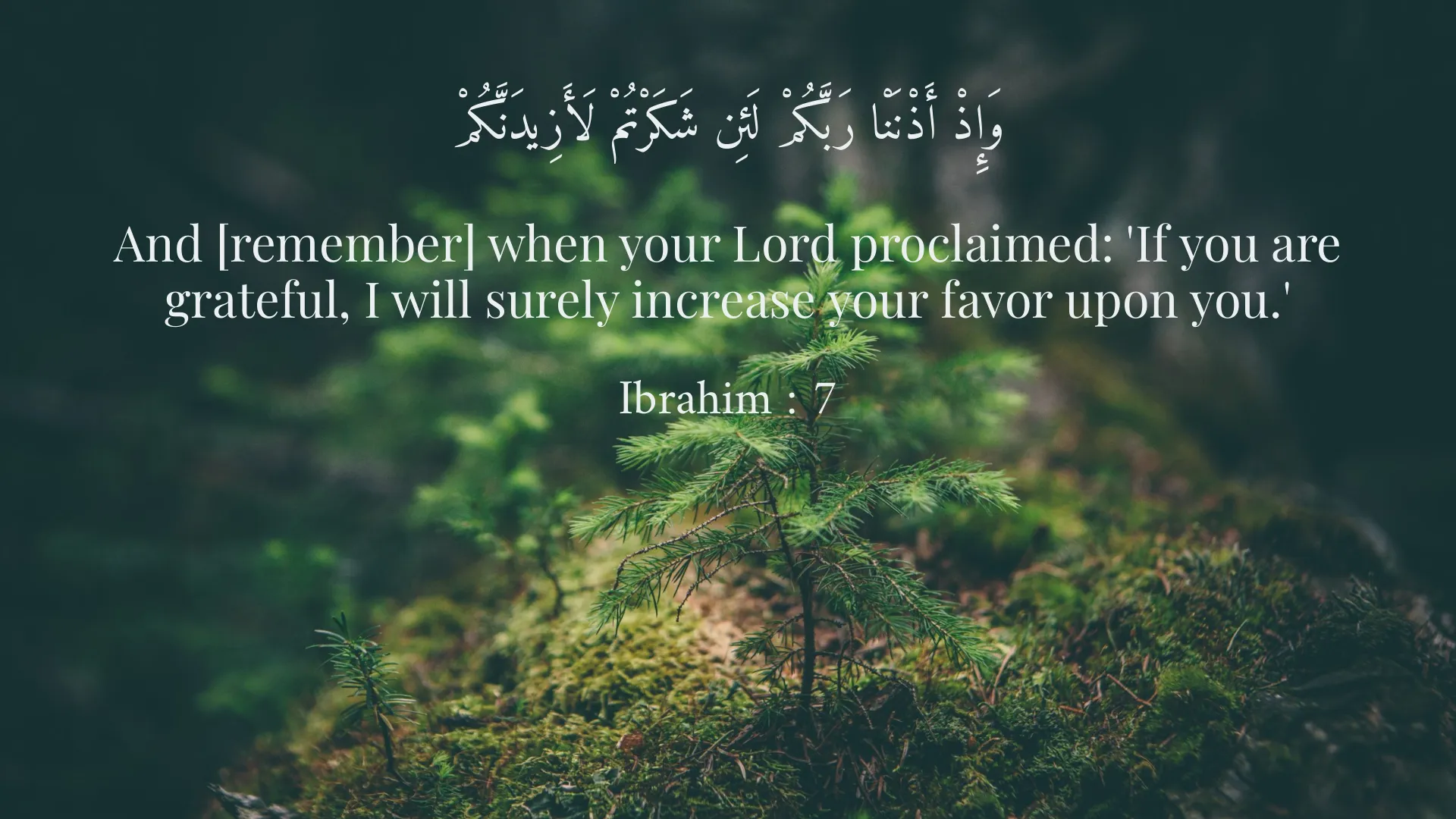
In the Holy Quran, Allah, the Almighty, imparts valuable wisdom to believers, advising them to be grateful in all circumstances and to express their gratitude during both times of joy and hardship. This advice not only serves as a moral compass for individuals navigating through life's ups and downs but also acts as a profound spiritual practice that yields numerous psychological and emotional benefits. The imperative of gratitude in the face of adversity is a recurrent theme in Islamic teachings, and it inherently embodies a divine promise: recognizing and appreciating the blessings we have can lead to even greater favors from Allah. The significance of gratitude can be found prominently in Surah Ibrahim (Chapter 14), verse 7, where Allah commands: "And [remember] when your Lord proclaimed: 'If you are grateful, I will surely increase your favor upon you.'" This verse succinctly encapsulates the essence of gratitude within the Islamic worldview. It portrays gratitude not merely as a polite response to favors or blessings received, but as an inviting call to acknowledge the bounties bestowed upon us, thereby cultivating an inner sense of satisfaction and appreciation for life. Practicing gratitude especially during difficult circumstances aids individuals in transforming challenges into opportunities for personal growth and elevation. Life is inherently filled with trials and tribulations, and it is the perspective with which we approach these difficulties that shapes our experiences and outcomes. Those who maintain an attitude of gratitude amidst their struggles often find themselves able to perceive problems not as insurmountable barriers but rather as essential experiences that contribute to their development as resilient individuals. In addition to the aforementioned verse, Surah Al-Baqarah (Chapter 2), verse 155 emphasizes the importance of patience and gratitude during times of testing. Allah states: "And We will surely test you with something of fear and hunger and a loss of wealth and lives and fruits, but give good tidings to the patient." This verse illustrates that hardships should not only be expected but embraced as a vital aspect of our spiritual journey. By focusing on gratitude, one becomes more aware of the lessons woven within these trials and can adopt a more positive and constructive perspective. The relationship between gratitude and psychological well-being is well-documented in various psychological studies as well. Research indicates that individuals who regularly practice gratitude tend to have higher levels of emotional well-being, reduced stress, and a more optimistic outlook toward life. This resonates with the teachings of the Quran, where gratefulness is not merely a righteous act, but a profound state of being that has a tangible impact on one’s mental health. When one is in a state of gratitude, they often experience a deeper connection with Allah, feeling His presence and support in their lives. This spiritual connection can lead to a greater sense of peace, tranquility, and acceptance of circumstances. It empowers individuals to navigate their challenges with a clearer mind and a more open heart, thus enabling them to explore the hidden blessings within their struggles. Gratitude also fosters empathy and compassion, enabling individuals to recognize and appreciate the struggles of others. This interconnectedness is vital in building a supportive community where individuals uplift one another through shared experiences of hardship and joy. In reflecting on their own gratitude, believers are encouraged to express their appreciation not only toward Allah but also towards the people and circumstances around them. This interconnected web of gratitude creates an inclusive community fabric where support and understanding flourish. The practice of gratitude is further entrenched in the daily lives of Muslims through various forms, such as regular prayers (Salat) that include prayers of thanks (Shukr) and supplication (Dua). Through these rituals, believers are reminded to express their gratitude consistently, reinforcing a resilient mindset that empowers them during challenging times. Moreover, Islamic teachings encourage believers to acknowledge even the smallest cues of blessings, whether it is a loving family, health, or simple daily kindnesses. In conclusion, the guidance presented in the Holy Quran regarding gratitude is multifaceted and deeply transformative. As evidenced in Surah Ibrahim and Surah Al-Baqarah, the practice of gratitude during both favorable and unfavorable circumstances brings about a holistic approach to life that promotes spiritual growth, emotional resilience, and deeper connections with Allah and humanity. With a firm belief that gratitude leads to an increase in blessings, Muslims are encouraged to weave this virtue into the very fabric of their existence. The act of being thankful not only nurtures one's soul but also enhances their experiences, encouraging them to view life through a lens of appreciation, positivity, and unwavering faith. Ultimately, cultivating a mindset of gratitude leads to a greater sense of fulfillment, a strengthened relationship with the divine, and a richer, more profound experience of life itself.
Related Verses
وَإِذْ أَذْنَنْا رَبَّكُمْ لَئِن شَكَرْتُمْ لَأَزِيدَنَّكُمْ
And [remember] when your Lord proclaimed: 'If you are grateful, I will surely increase your favor upon you.'
Ibrahim : 7
وَ لَنَبْلُوَنَّكُم بِشَيْءٍ مِّنَ الْخَوْفِ وَ الْجُوعِ وَ نَقْصٍ مِّنَ الْأَمْوَالِ وَ الْأَنفُسِ وَ الثَّمَرَاتِ ۗ وَبَشِّرِ الصَّابِرِينَ
And We will surely test you with something of fear and hunger and a loss of wealth and lives and fruits, but give good tidings to the patient.
Al-Baqarah : 155
Short Story
One day, a woman named Fatimah was going through immense hardships. She decided to turn to gratitude and started counting all the small and large blessings in her life. While reflecting on this, she felt a special tranquility in her heart. By recalling the verses of the Quran and God's power, she managed to overcome her difficulties and remained hopeful of Allah's grace. Days passed, and she realized that with faith and gratitude, divine blessings were always flowing in her life.