Quranic Answer
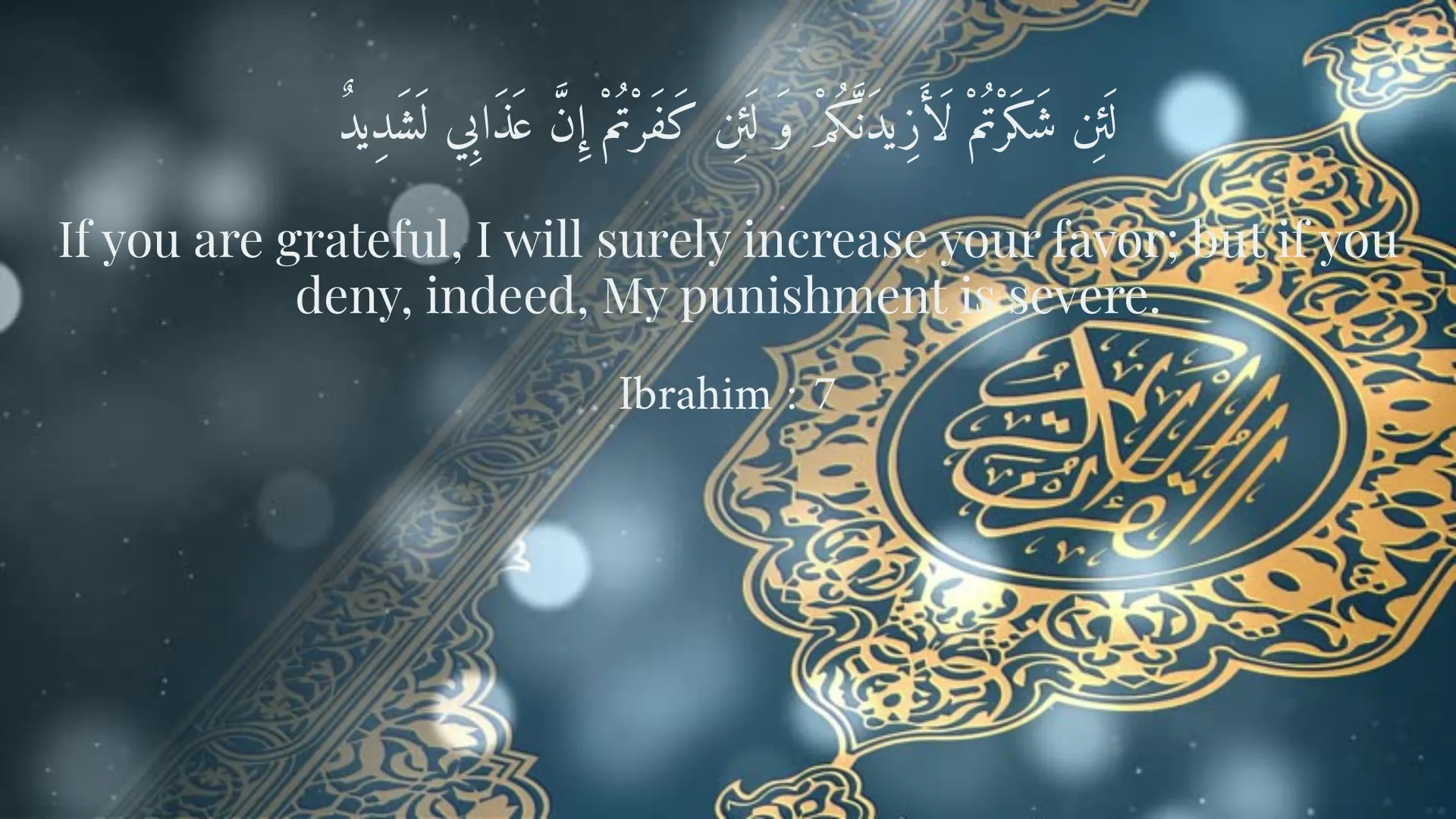
Gratitude is a profound and fundamental concept that deeply resonates within the teachings of the Holy Quran. It serves as a guide for humanity, urging individuals to express thankfulness in all circumstances, but particularly during challenging times. This notion not only reflects a strong relationship with the Creator but also fosters an attitude of resilience and hope. One key source of wisdom regarding gratitude in hardship is found in Surah Ibrahim (Chapter 14), verse 7, where Allah (SWT) states, 'If you are grateful, I will surely increase your favor; but if you deny, indeed, My punishment is severe.' This verse serves as a stark reminder of the relationship between gratitude and divine blessings. The core message of this verse underlines the importance of gratitude as a means of recognizing and appreciating the good in one’s life, irrespective of external conditions. It suggests that expressing thankfulness can lead to an increase in one’s blessings and divine favor. When individuals choose to appreciate what they have, rather than focusing on what they lack, they position themselves to receive even more from Allah. One might wonder how gratitude can be maintained during difficult times. Life is filled with challenges and tribulations that can sometimes feel overwhelming. Yet, the act of being grateful is not reliant solely on one’s circumstances but is rooted in a deeper understanding and faith. In times of hardship, gratitude acts as a beacon of light, guiding individuals through the darkness of despair and uncertainty. It allows them to maintain a broader perspective of their lives, helping them realize that despite adversity, there are still blessings to be acknowledged. In Surah Al-Baqarah (Chapter 2), verse 153, Allah advises believers to seek patience and prayer during trials. The verse states, 'Indeed, Allah is with the patient.' This highlights the significance of maintaining a connection with God through prayer and an attitude of gratitude. Expressing gratitude in prayer, especially during moments of struggle, reinforces the believer's faith and trust in the divine plan. This connection becomes a source of strength, enabling individuals to cope more effectively with life’s challenges. The combination of patience and prayer, along with gratitude, creates a spiritual resilience that shields believers from the despair that often accompanies difficulties. Being grateful during tough times is a reflection of one’s faith. It showcases a believer’s understanding that the trials they face are part of a greater design. Every difficulty has the potential to teach valuable lessons, instill strength, and build character. Gratitude invites a person to embrace their situations, turning what may seem like a burden into an opportunity for growth. In practicing gratitude, believers acknowledge that Allah's wisdom transcends human understanding and that, in every challenge, lies the potential for new blessings. Moreover, the psychological benefits of gratitude cannot be overlooked. Scientific studies have shown that practicing gratitude can improve mental health, enhance well-being, and reduce feelings of anxiety and depression. By actively choosing to be grateful, individuals can shift their focus from negativity to positivity. In this sense, gratitude serves not only as a religious obligation but as a beneficial practice that can improve one’s overall quality of life. The Quran also emphasizes the importance of community and collective gratitude. When individuals express gratitude, they foster a sense of togetherness, encouraging others to do the same. This collective gratitude can lead to stronger community bonds, increased compassion, and a greater sense of belonging. In times of trial, communities that come together in gratitude are better equipped to face challenges, support one another, and emerge more resilient. Indeed, historical and contemporary examples abound of individuals and communities who have demonstrated remarkable resilience through gratitude. Whether it is a person facing illness, loss, or economic hardship, those who manage to express gratitude often find peace and strength that others may not. Their stories resonate with the timeless wisdom of the Quran, illustrating the profound impact that gratitude can have on human experience. In conclusion, the principle of gratitude as outlined in the Holy Quran is a powerful tool for navigating life’s challenges. Surah Ibrahim (14:7) and Surah Al-Baqarah (2:153) teach us that gratitude in adversity not only attracts divine favor but also fortifies our spirits, enhances our relationships, and improves our mental health. By committing to a practice of gratitude, particularly amidst trials, individuals can transform their experiences and cultivate a deeper trust in Allah’s plan. Ultimately, the spiritual and psychological benefits of gratitude can change lives, guiding believers toward a path of resilience and hope. Thus, embodying gratitude is not merely an act of worship but an essential component of leading a fulfilling life.
Related Verses
لَئِن شَكَرْتُمْ لَأَزِيدَنَّكُمْ وَ لَئِن كَفَرْتُمْ إِنَّ عَذَابِي لَشَدِيدٌ
If you are grateful, I will surely increase your favor; but if you deny, indeed, My punishment is severe.
Ibrahim : 7
يَاأَيُّهَا الَّذِينَ آمَنُوا اسْتَعِينُوا بِالصَّبْرِ وَالصَّلَاةِ ۚ إِنَّ اللَّهَ مَعَ الصَّابِرِينَ
O you who have believed, seek help through patience and prayer. Indeed, Allah is with the patient.
Al-Baqarah : 153
وَالَّذِينَ يَبْتَغُونَ مَأْوًى وَلَكِن صَابِرِينَ
And those who strive for a dwelling place, but are patient.
Al-Mu'minun : 61
Short Story
One day in a distant land, a man named Yusuf faced many difficulties. He never stopped praying and being grateful, reminding himself daily of the blessings he had. Surprisingly, after some time, his problems were resolved and life got better for him. Yusuf proved with his gratitude and patience that even amidst hardships, hope can remain alive.