Quranic Answer
Being humble towards parents is one of the most important moral principles in Islam, a sentiment that resonates deeply within the teachings of the Holy Quran. The values encompassed in the Quran provide a framework that guides believers toward leading a righteous life, replete with gratitude, respect, and humility. One of the most evocative verses highlighting this principle is found in Surah Al-Isra, verse 23, where Allah decrees, 'And your Lord has decreed that you not worship except Him, and to parents, good treatment.' This divine commandment serves as a profound reminder of the significance of parents in daily life, emphasizing that one's duty towards them holds paramount importance, second only to the worship of Allah Himself. The essence of this verse underscores the idea that parents play a monumental role in shaping an individual's personality, beliefs, and values. From the moment of conception to adulthood, parents dedicate their time, energy, and resources to nurture and rear their children. Their sacrifices and unconditional love rarely go unnoticed, but the acknowledgment and gratitude that they deserve is integral to develop a healthy relationship. In a world where disconnection often surfaces, particularly among younger generations, the teachings of the Quran serve as a compass guiding individuals back toward recognizing the indispensable roles played by their parents. In various layers of society, the venerable concept of respecting parents continues to be recognized as one of the fundamental values that shape communal interactions. Engendering respect for one’s parents lays the groundwork for developing empathy and understanding toward others. A person reared in an environment where respect for parents is paramount is more likely to translate that respect toward other relationships in life. Interpersonal relations transform; the individual learns not just to honor personal connections but also to appreciate and value differing perspectives and experiences across society. This cycle of respect, starting with the parents, extends outward, creating bonds that ultimately strengthen social fabrics. Additionally, the Quran offers further insight into parental respect and gratitude in Surah Luqman, verse 14, which states, 'And We have enjoined upon man [care] for his parents. But if they endeavor to make you associate with Me that of which you have no knowledge, do not obey them. To Me is your return, and I will inform you about what you used to do.' This verse reinforces the idea that while deep care for parents is obligatory, there are boundaries in matters of faith and belief. Should parents urge their children to act in ways contrary to Islamic teachings, it becomes a matter of individual integrity and conscience. In navigating these situations, the essence of respect remains unchanged; one should still honor their parents while upholding personal beliefs and values. This delicate balance between parental respect and personal conviction is vital for fostering a relationship built on love, understanding, and growth. A core aspect of gratitude towards parents emerges in the acknowledgment of their sacrifices. Often, the immense efforts parents put forth throughout their lives go unrecognized; this can lead to feelings of resentment or disappointment among children. However, when children take a step back to reflect on the countless ways their parents have supported and guided them, the relationship can transform into one founded on mutual respect and empathy. In engaging in this kind of reflection, gratitude emerges as a natural response, reinforcing familial bonds and nurturing a sense of belonging. Being humble involves recognizing not only the efforts of one's parents but also understanding the complexities of their experiences. They, too, have faced struggles, decisions, and challenges throughout their lives. This recognition engenders a deeper compassion within children, often propelling them to seek opportunities to support, love, and care for their own parents in return. Such cyclical love and respect create a powerful legacy that transcends generations, establishing a profound sense of family loyalty and connection. Furthermore, humility toward parents can significantly influence how individuals ultimately engage with society at large. As individuals harness this essential teaching from Islam, they begin to pave the way for an environment rich with appreciation and kindness. Respect ingrained in the home spills out into everyday interactions, affecting workplaces, neighborhoods, and social groups. A person who holds parents in high regard often showcases patience, understanding, and compassion towards others, reinforcing the idea that the roots of humility spring from familial respect. Therefore, teaching children about the importance of valuing their parents instills an inherent respect for all human beings they encounter. As society continues to advance, the teachings outlined within the Quran remain timeless, emphasizing the necessity of cherishing and honoring parents. Individuals, particularly those tasked with shaping future generations, must strive to uphold and promote these values, creating a ripple effect that fosters a culture of respect and humility. Through our actions, respect for parents can be met with love, patience, and understanding, symbolizing a deeper connection to faith and to one another. In conclusion, being humble toward parents extends far beyond mere duty; it forms the backbone of moral and ethical values in Islam. As outlined in the Holy Quran, gratitude, respect, and care for parents are vital principles that serve as guiding beacons in an individual's life. From nurturing strong familial bonds to fostering a compassionate and understanding society, the lessons learned in honoring one’s parents resonate at every level of human interaction. Such humility ultimately becomes a catalyst for positive change, instilling virtues that promote cohesion, kindness, and empathy in everyday relationships, thus contributing to a more harmonious world.
Related Verses
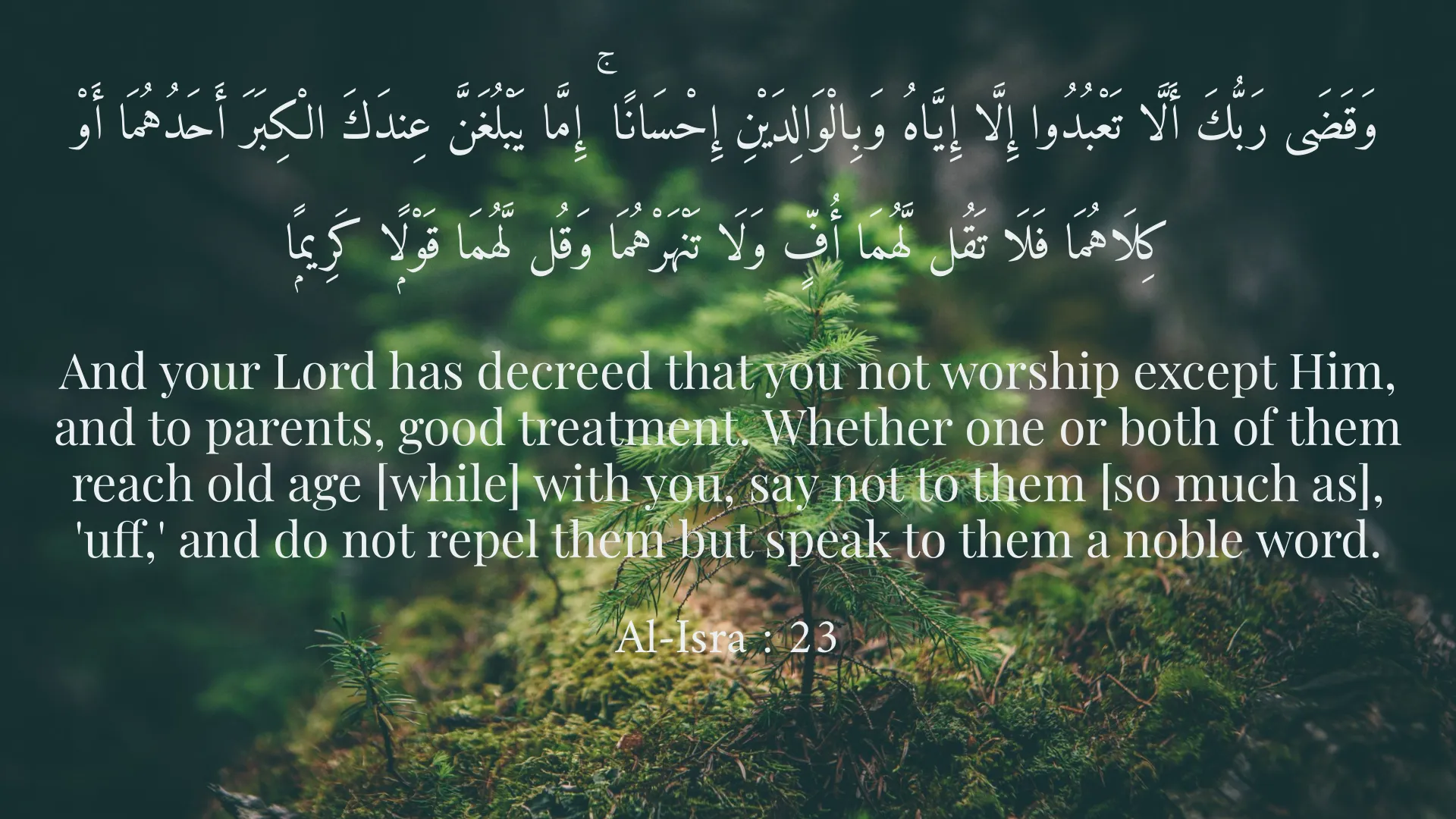
وَقَضَى رَبُّكَ أَلَّا تَعْبُدُوا إِلَّا إِيَّاهُ وَبِالْوَالِدَيْنِ إِحْسَانًا ۚ إِمَّا يَبْلُغَنَّ عِندَكَ الْكِبَرَ أَحَدُهُمَا أَوْ كِلَاهُمَا فَلَا تَقُل لَّهُمَا أُفٍّ وَلَا تَنْهَرْهُمَا وَقُل لَّهُمَا قَوْلًۭا كَرِيمًۭا
And your Lord has decreed that you not worship except Him, and to parents, good treatment. Whether one or both of them reach old age [while] with you, say not to them [so much as], 'uff,' and do not repel them but speak to them a noble word.
Al-Isra : 23
وَوَصَّيْنَا الْإِنْسَانَ بِوَالِدَيْهِ ۚ أَن اشْكُرْ لِي وَلِوَالِدَيْكَ إِلَيَّ الْمَصِيرُ
And We have enjoined upon man [care] for his parents. But if they endeavor to make you associate with Me that of which you have no knowledge, do not obey them. To Me is your return, and I will inform you about what you used to do.
Luqman : 14
Short Story
Once upon a time, there was a young man named Reza who had a deep question in his heart. He often pondered the secret of success. One day, while sitting with his parents, they were having a conversation about life and gratitude for their efforts. His father said, 'My son, respecting and being grateful to parents is one of the fundamental values of life.' Reza listened attentively and decided to show more respect and love to his parents from that day forward. Day by day, his life improved, and he felt a greater sense of happiness.