Quranic Answer
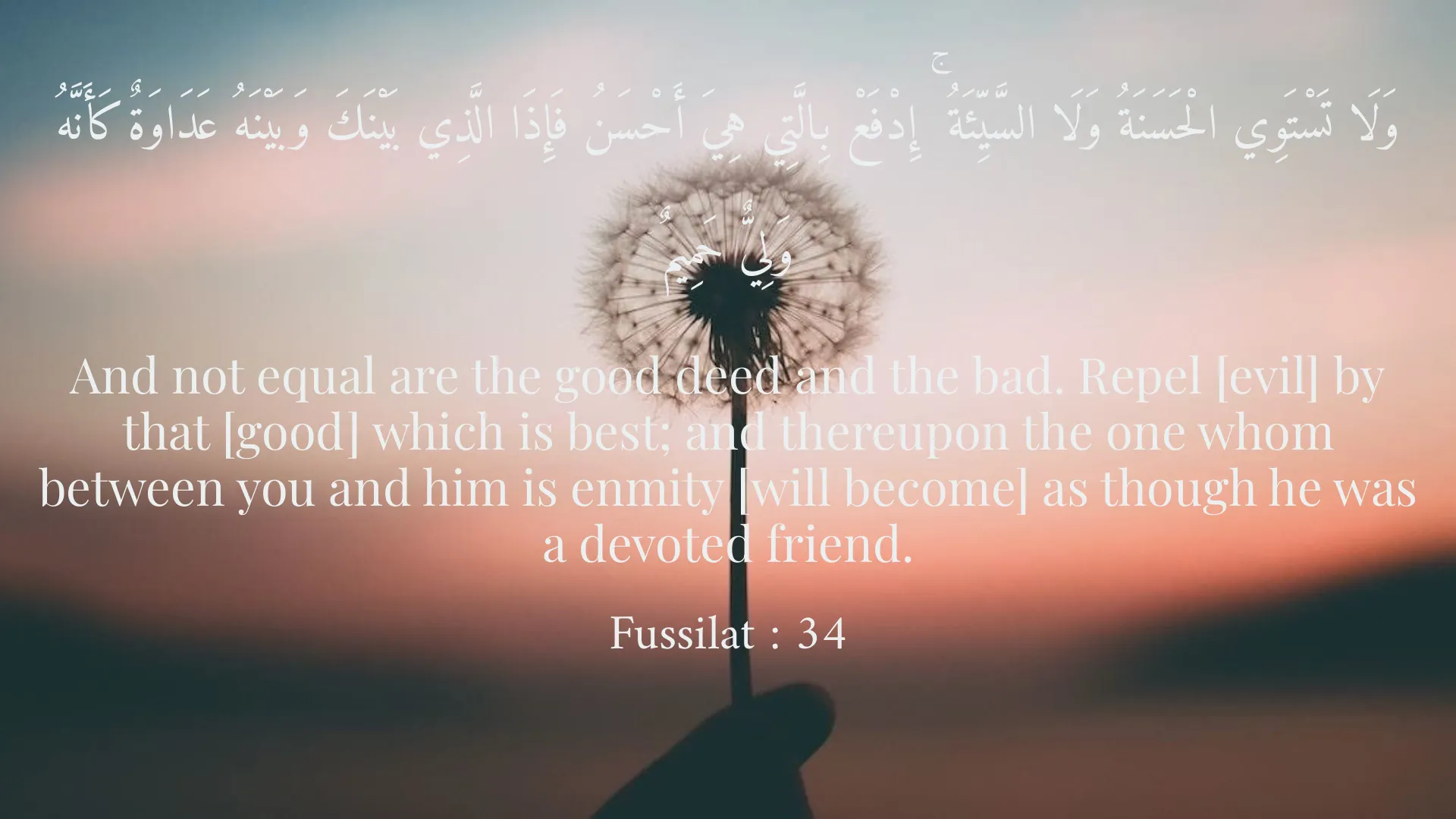
In the Holy Quran, we find numerous directives that encourage adherence to high moral standards and motivate individuals to engage positively with others. Even amidst hostility and enmity, these teachings implore believers to rise above negative sentiments. One compelling example is found in Surah Fussilat, verse 34, where it states: "And not equal are the good deed and the bad. Repel [evil] by that [good] which is best; and thereupon the one whom between you and him is enmity [will become] as though he was a devoted friend." This profound message encapsulates the spirit of the Quranic teachings on interpersonal conduct and conflict resolution. The essence of this verse is that good actions can transcend negative feelings. Within this teaching lies a powerful socio-political commentary on human interactions; it proposes a transformative approach to dealing with conflict. Where hostility and animosity reside, the Quran implores us to respond with decorum, characterized by kindness and compassion. This is not just a method of conflict resolution but a path to humanizing our adversaries, enabling the potential for empathy and understanding. For instance, imagine two individuals or groups locked in a bitter feud. Direct confrontation often ensues, leading to a cycle of retaliation that can cloud judgment and perpetuate superficial divisions. However, when one party decides to extend kindness, understanding, and goodwill, the atmosphere often shifts. A simple act of kindness such as a smile, a gesture of goodwill, or an invitation to dialogue may significantly alter the dynamics of the relationship. The Quran encourages this line of thinking, externalizing the concept that through good deeds, feelings of enmity can metamorphose into friendship. Furthermore, Surah Al-Imran, verse 134 reinforces this ideology, stating: "And those who spend in the cause of Allah during ease and hardship and who restrain anger and who pardon the people; and Allah loves the doers of good." Here, the Quran underlines the significance of qualities such as forgiveness and calmness, especially during conflicts and challenging circumstances. Restraining anger does not imply passivity or acceptance of wrongdoing; instead, it promotes a proactive stance of remedying wrong through benevolence. The patience exhibited in restraining one's anger and practicing forgiveness is emphasized as a noble trait, coveted by Allah. This directive serves as a stark reminder for all believers that while feeling wronged or insulted may elicit emotional responses meant to retaliate, the Quran teaches us to contemplate our reactions. It challenges us to embody attributes of compassion and understanding, despite personal grievances. We must elevate our moral consciousness, emphasizing loving relationships over fleeting sentiments of animosity. The act of forgiving someone and moving forward is not merely for the benefit of the offender but liberates the offended from the chains of past grievances, fostering healthier relationships. Additionally, the Quranic perspective urges us to adopt the broader social responsibility in our communities. The ripple effect of demonstrating kindness extends beyond individual interactions; it sets a precedent for collective behavior. When one initiates goodwill, others are inspired to follow suit. This can lead to a progressive communal environment where mutual respect abounds, actions spur reciprocal behavior, thereby constructing robust networks of compassion. The proactive stance highlighted in Quranic teachings encourages believers to engage in community service, promote peace initiatives, and spread messages of love. Congregating for causes that uplift neighborhoods, support those in need, and facilitate dialogues among opposing factions can significantly diminish the seeds of animosity, ushering in a spirit of harmony. By enacting such principles, the broader objective of creating a peaceful society can be realized. Conversely, the Quran cautions about the implications of harboring negativity towards others. When adversities arise, the natural inclination may lead to resentment and aversion. Yet, succumbing to such feelings only deepens divides within humanity. The Quran's call for civility implores us to dismantle the emotions that underpin conflict and to actively participate in alleviating it with goodwill and kindness. Moreover, engaging in friendly terms with adversaries may appear challenging, yet it elevates the potential for reconciliation. Over time, showing consistent kindness results in a softening of hearts. We recognize that everyone carries their own burdens, and empathetic exchanges might pave the way for understanding and fostering alliances. It transforms how we view conflicts, allowing us the flexibility to navigate them with intellect and grace rather than hostility. Ultimately, the Quran emphasizes that even when faced with adversaries, we must prioritize principles of love, kindness, and forgiveness. These teachings do not diminish the pain caused by unjust actions; instead, they provide a framework for addressing grievances while fostering personal growth and community enrichment. Such behaviors reflect nobility of spirit and moral integrity, hallmarks of a truly righteous person. In conclusion, the integration of these Quranic principles into daily life can have transformative effects on society. The cultivation of an environment wherein kindness and reconciliation take precedence represents a communal struggle. It enables individuals to transcend their grievances and embody the essence of good morals. Furthermore, by engaging in acts of goodwill, we can hope for not only our personal transformations but also the reshaping of society for the better. Adopting an outlook of empathy and understanding, underlined by the Quranic teachings, allows us to achieve the desired harmony and promotes a healthier coexistence.
Related Verses
وَلَا تَسْتَوِي الْحَسَنَةُ وَلَا السَّيِّئَةُ ۚ إِدْفَعْ بِالَّتِي هِيَ أَحْسَنُ فَإِذَا الَّذِي بَيْنَكَ وَبَيْنَهُ عَدَاوَةٌ كَأَنَّهُ وَلِيٌّ حَمِيمٌ
And not equal are the good deed and the bad. Repel [evil] by that [good] which is best; and thereupon the one whom between you and him is enmity [will become] as though he was a devoted friend.
Fussilat : 34
وَالَّذِينَ يُنفِقُونَ فِي السَّرَّاء وَالضَّرَّاء وَالْكَاظِمِينَ الْغَيْظَ وَالْعَافِينَ عَنِ النَّاسِ ۗ وَاللَّهُ يُحِبُّ الْمُحْسِنِينَ
And those who spend in the cause of Allah during ease and hardship and who restrain anger and who pardon the people; and Allah loves the doers of good.
Al-Imran : 134
Short Story
One day, a man was sitting in a garden, looking at the fruits of the trees. He recalled the verses of the Quran and decided to show kindness to his neighbor with whom he always had conflicts. He picked some fruits and took them to his neighbor's house. The neighbor, initially surprised, opened up with apologies when he saw the kindness. Thus, two individuals who were always enemies became old friends.