Quranic Answer
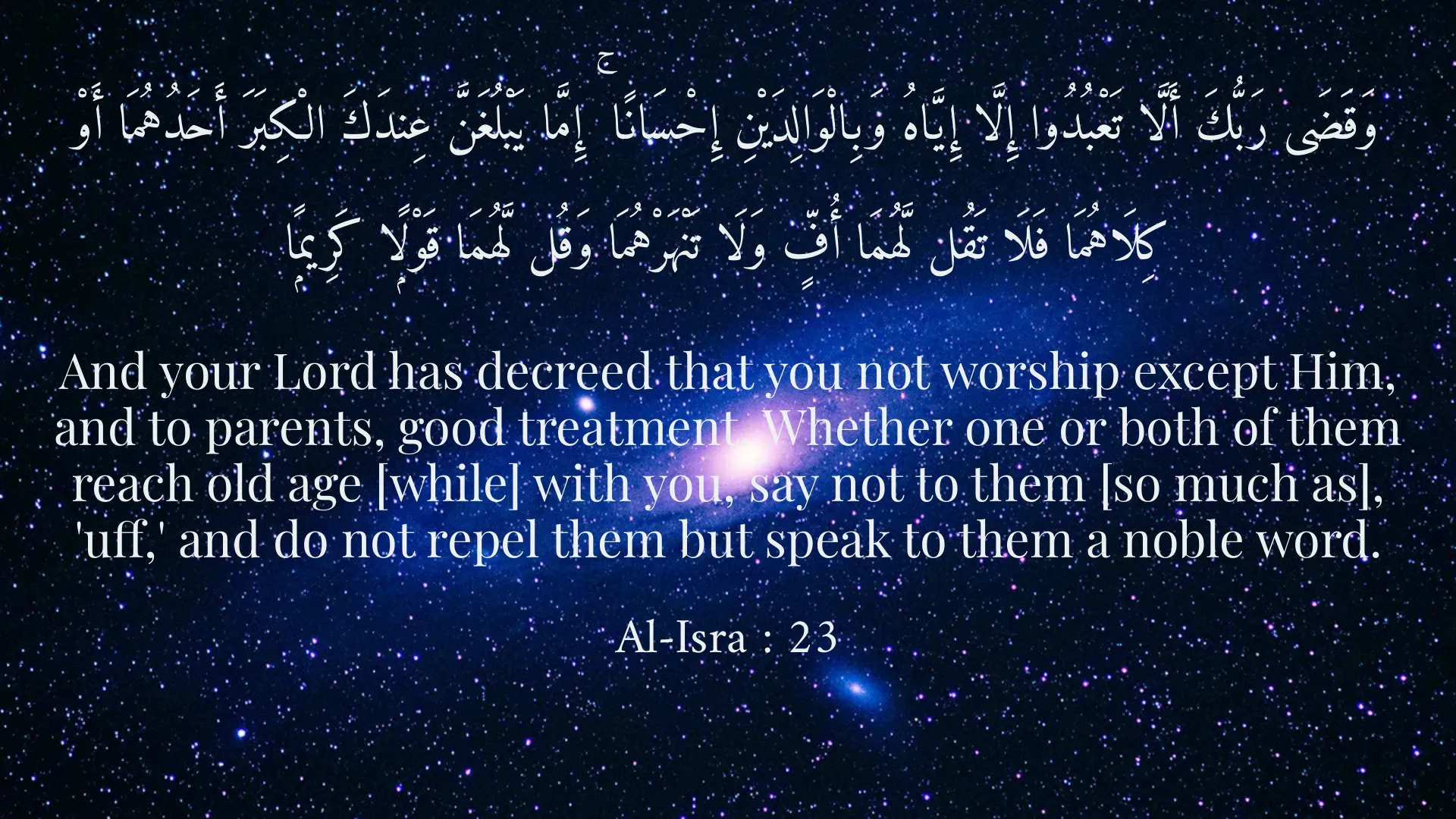
In the Holy Quran, there is a profound emphasis on the fundamental values of kindness and compassion extended towards parents. The significance of these virtues can be seen in various verses, with one of the most poignant references found in verse 23 of Surah Al-Isra. Here, Allah commands humanity to worship none but Him while guiding us to treat our parents with the utmost kindness. This verse is particularly telling as it carries a powerful message for believers regarding the treatment of their parents through all phases of life, especially in their old age. As believers, we are instructed that if one or both of our parents reach a stage of vulnerability and frailty that often accompanies advanced age, we should not express annoyance or frustration towards them. Instead, we are commanded to converse with them in a way that reflects tenderness, respect, and kindness. This encouragement serves as a reminder of the high importance Islam places on family relationships, particularly the relationship between parents and children. To understand why kindness to parents is so heavily emphasized in Islam, we must reflect on the role parents play in our lives. From the very first moments of existence, parents are often the very first individuals who nurture and protect us. They accompany us through various hardships and sacrifices, striving to create a comfortable environment for our growth and development. The relationship with our parents is characterized by love, sacrifice, and commitment to our welfare, making kindness towards them not just a religious obligation, but also a moral and ethical duty. In this context, Surah Luqman further emphasizes the critical role of parental guidance. Surah Luqman, verse 14, highlights how the Quran reiterates the significance of being grateful to parents. This verse illustrates the relationship between gratitude and kindness. It reinforces that while we must honor our parents, we should also acknowledge their contributions to our lives. This acknowledgement is foundational in nurturing a deep appreciation and respect for the sacrifices they have made. Moreover, kindness towards parents serves a dual purpose. On one hand, it acts as a means of repaying the immense effort they have invested in raising us, thereby fostering a stronger bond of love and intimacy within the family. On the other hand, it is also a means of earning Allah's blessings and mercy. By treating our parents with kindness, we are fulfilling a significant act of worship, thereby drawing closer to the essence of Islam. Islam teaches that the love and compassion shown towards our parents reverberate throughout the complexities of family life. This compassion not only nurtures mutual respect but also encourages positive behavioral patterns within families. Acts of kindness can be expressed in myriad ways—whether through simple gestures such as speaking softly to them, helping them with daily tasks, or providing emotional support during tough times. These acts solidify familial bonds, ensure stability within the family unit, and instill values of empathy and respect in the next generation. The consequences of kindness extend beyond personal, immediate gratification. They cultivate an environment where respect flourishes. A family that practices kindness and compassion is one that nurtures future generations to create and sustain harmony. Children who witness their parents treating their elders with respect and reverence are likely to emulate these behaviors in their own lives, thereby fostering a culture deeply rooted in the values of kindness. Furthermore, the act of honoring parents is intimately tied to the broader moral fabric of society as a whole. In a time when family structures are often strained by external societal pressures, reinforcing the values of kindness and compassion can help maintain stability. This ripple effect can lead to a more harmonious society where individuals are empathetic and respectful toward one another, reflecting the fundamental principles of Islam. In summary, the call for kindness towards parents, as articulated in the Holy Quran, is an inherent aspect of Islamic teaching that has far-reaching implications for family dynamics and society at large. The directive in Surah Al-Isra, combined with verses from Surah Luqman, serve to reinforce the necessity of promoting kindness within the parent-child relationship. Through understanding the sacrifices of our parents and acknowledging their role, we are not only fulfilling a religious duty but are also privileged to facilitate deeper familial relationships. Thus, our acts of kindness become acts of worship, inviting Allah's blessings and mercy into our lives. It is this interplay of divine guidance and moral responsibility that channels the importance of kindness to parents in our everyday encounters. Ultimately, our journey through life should be illuminated by the compassion we show towards our parents, ensuring that we never lose sight of the immeasurable value of their sacrifices.
Related Verses
وَقَضَى رَبُّكَ أَلَّا تَعْبُدُوا إِلَّا إِيَّاهُ وَبِالْوَالِدَيْنِ إِحْسَانًا ۚ إِمَّا يَبْلُغَنَّ عِندَكَ الْكِبَرَ أَحَدُهُمَا أَوْ كِلَاهُمَا فَلَا تَقُل لَّهُمَا أُفٍّ وَلَا تَنْهَرْهُمَا وَقُل لَّهُمَا قَوْلًۭا كَرِيمًۭا
And your Lord has decreed that you not worship except Him, and to parents, good treatment. Whether one or both of them reach old age [while] with you, say not to them [so much as], 'uff,' and do not repel them but speak to them a noble word.
Al-Isra : 23
وَوَصَّيْنَا الْإِنْسَانَ بِوَالِدَيْهِ ۚ إِنْ شَكَرْتَ لِي وَلِوَالِدَيْكَ فَأِنَّمَا تَشْكُرُ لِنَفْسِكَ ۖ وَإِنْ كَانَتَا جِهَادَكَ لِتَشْكُرَ لَهُمَا فَلَا تُطِعْهُمَا.
And We have enjoined upon man [care] for his parents. But if they endeavor to make you associate with Me that of which you have no knowledge, do not obey them. To Me is your return, and I will inform you about what you used to do.
Luqman : 14
Short Story
Once upon a time, a boy named Sajjad was in search of the truth of his life. He realized that his parents had worked hard for him over the years. After reading the Quranic verses about parents, he decided to show them more respect and be there for them. Soon, Sajjad noticed that with his positive behavior, he not only brought joy to his parents but also found greater peace and contentment himself.