Quranic Answer
The Importance of Supporting the Poor and Needy in Islam In the Holy Quran, the significance of paying attention to the poor and needy is clearly articulated, presenting a vital aspect of Islam that encompasses not only moral imperatives but also social responsibilities. This subject is essential for fostering a compassionate and just society, ensuring that the less fortunate are not left to navigate the hardships of life alone. This article delves into the various aspects of this teaching, exploring its implications and importance within the framework of Islamic values. One of the pivotal verses pertaining to charity and support for the underprivileged can be found in Surah Al-Baqarah, verse 273. The verse reads: "Charity is for the poor and the needy..." This short yet powerful directive serves as a reminder that helping the poor is not merely an act of kindness but a sacred duty resting on the shoulders of every Muslim. This injunction transforms the act of giving into a divine obligation, instituting a system of mutual support and care. The Quran emphasizes the need for support and assistance towards the poor in various contexts, establishing it as a fundamental tenet. In Surah Al-Ma'idah, verse 55, Allah states: "And do not let the mutual love among yourselves lead you to divide; worship Allah alone." This serves to highlight the reciprocal nature of kindness and support among community members, emphasizing that genuine faith is reflected by how one treats the less fortunate. Support for the needy cultivates unity and fabricates a sense of belonging and solidarity within a community, allowing individuals to uplift one another and thrive together. Further examination into the Quran reveals more verses dedicated to the issue of social justice. One of the most striking messages comes from Surah Al-Insan, verse 8. In this verse, we find Angel Gabriel urging humanity to assist not only orphans but also those who find themselves destitute. This call to action is profound, serving to enlighten believers on the significance and magnitude of their role in the lives of those who are less privileged. The divine guidance reminds us that by extending our hands to lift others, we are partaking in a sacred mission aimed at creating a more equitable society. Therefore, when Muslims engage in charitable acts, they are not merely responding to a dire need, but they are also fulfilling an essential aspect of their faith. The obligation to help the needy transcends the boundaries of just monetary assistance; it embodies acts of kindness, compassion, and a genuine concern for the well-being of others. In Islam, charity is not limited to financial donations; it may also involve offering one's time, skills, and resources to improve the lives of the less fortunate. This holistic approach creates a richer and more integrated societal framework, where individuals actively seek to help their neighbors and uplift communities. Additionally, caring for the poor leads to personal enrichment, growth, and fulfillment. Through acts of charity and kindness, individuals often find themselves enveloped in a state of peace and gratitude. Engaging with the needy allows for self-reflection and an appreciation for one’s own blessings and privileges. Having a compassionate heart fosters empathy, effectively breaking down barriers and societal divides. This creates an environment where kindness becomes the norm, encouraging a cycle of support and philanthropy that strengthens bonds among community members. Moreover, in a broader social context, prioritizing the welfare of the poor can diminish the societal disparities that create divisions and conflict. When individuals are united in their commitment to assist those in need, communities grow stronger and more resilient. This enhances social cohesion, ensuring that every member of society feels valued and important. By creating a culture of generosity and support, society as a whole can alleviate issues like poverty, unemployment, and inequality. Islamic teachings convey profound messages concerning the ethical treatment of others, particularly in regard to the poor. Acts of charity, caring for the needy, and fostering an environment of mutual support are cornerstones of a thriving society. When believers recognize this principle, they align themselves with divine teachings that ultimately lead to personal and communal awakening. Ultimately, the Quran’s directives surrounding the poor and needy serve as powerful reminders of the intrinsic value of human life. They advocate for justice, compassion, and proactive engagement. Recognizing the interconnectedness of humanity through these teachings nurtures a sense of responsibility, compelling individuals to reflect upon their roles in a society marked by diversity and inequality. In conclusion, the imperative to support the poor and needy is deeply imbibed in Islamic culture and faith. Upholding this sacred duty nourishes communities and uplifts the human spirit, reminding us of our shared humanity. Charitable acts, kindness, and compassion are not merely encouraged; they are mandated for every believer. By embodying these values, Muslims can work together to create a world that resonates with justice, compassion, and mutual support. As we strive to fulfill this responsibility, we must embrace the true essence of brotherhood and humanity, recognizing that in the act of caring for the distressed, we are fortifying the foundation of a society built on love, respect, and dignity.
Related Verses
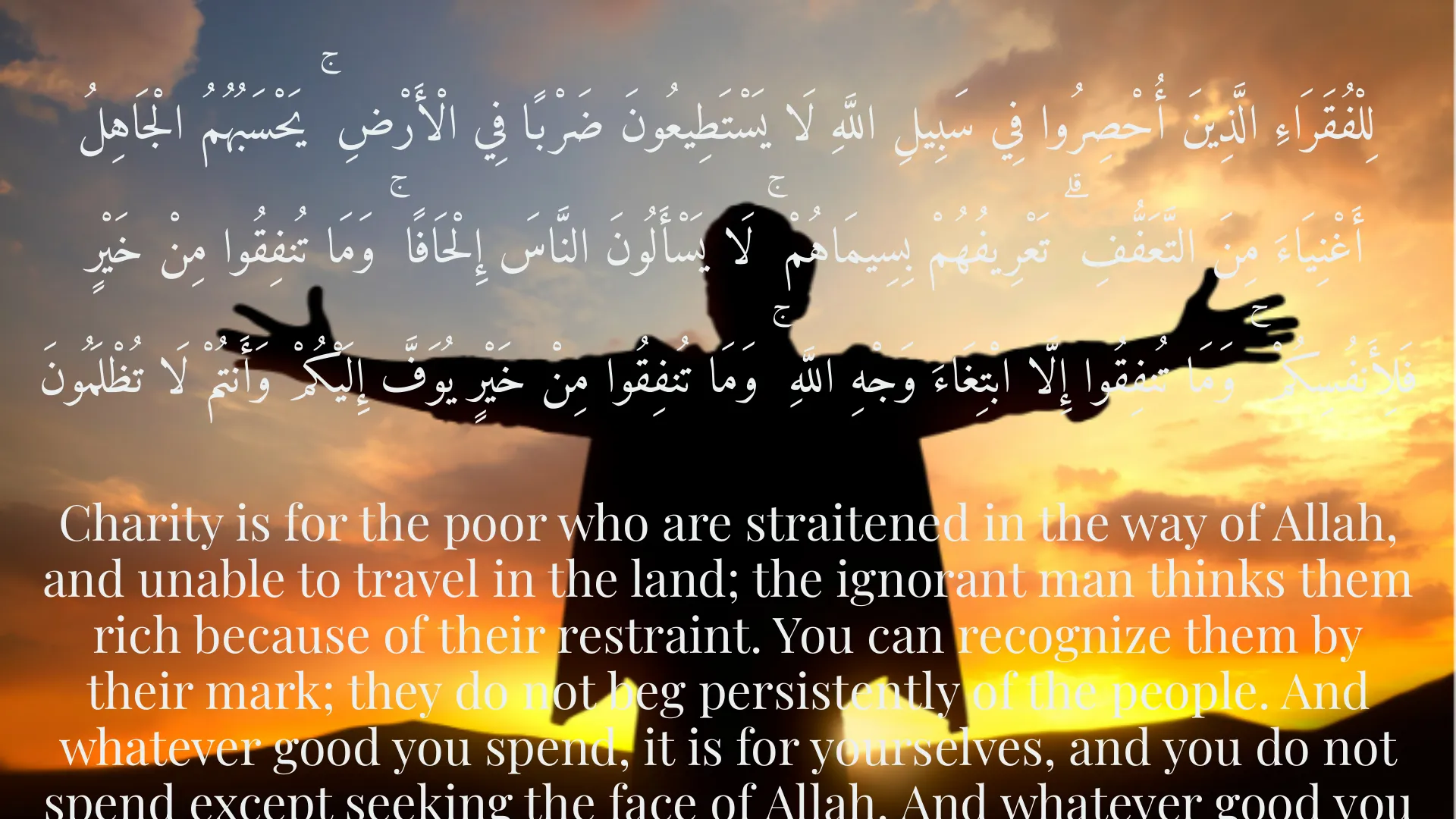
لِلْفُقَرَاءِ الَّذِينَ أُحْصِرُوا فِي سَبِيلِ اللَّهِ لَا يَسْتَطِيعُونَ ضَرْبًا فِي الْأَرْضِ ۚ يَحْسَبُهُمُ الْجَاهِلُ أَغْنِيَاءَ مِنَ التَّعَفُّفِ ۗ تَعْرِيفُهُمْ بِسِيمَاهُمْ ۚ لَا يَسْأَلُونَ النَّاسَ إِلْحَافًا ۚ وَمَا تُنفِقُوا مِنْ خَيْرٍ فَلِأَنفُسِكُمْ ۚ وَمَا تُنفِقُوا إِلَّا ابْتِغَاءَ وَجْهِ اللَّهِ ۚ وَمَا تُنفِقُوا مِنْ خَيْرٍ يُوَفَّ إِلَيْكُمْ وَأَنتُمْ لَا تُظْلَمُونَ
Charity is for the poor who are straitened in the way of Allah, and unable to travel in the land; the ignorant man thinks them rich because of their restraint. You can recognize them by their mark; they do not beg persistently of the people. And whatever good you spend, it is for yourselves, and you do not spend except seeking the face of Allah. And whatever good you spend will be fully repaid to you, and you will not be wronged.
Al-Baqarah : 273
إِنَّمَا وَلِيُّكُمُ اللَّهُ وَرَسُولُهُ وَالَّذِينَ آمَنُوا الَّذِينَ يُقِيمُونَ الصَّلَاةَ وَيُقِيمُونَ الزَّكَوَةَ وَهُمْ رَاكِعُونَ
Your ally is none but Allah and His Messenger and those who have believed - those who establish prayer and give zakah, and they bow [in worship].
Al-Ma'idah : 55
وَيُطْعِمُونَ الطَّعَامَ عَلَى حُبِّهِ مِسْكِينًا وَيَتِيمًا وَأَسِيرًا
And they give food in spite of love for it to the needy, the orphan, and the captive.
Al-Insan : 8
Short Story
One day, a wealthy man went to the market and saw a poor man laboring all day but still having nothing to eat. Seeing this, the wealthy man decided to give some of his money to him. When the poor man received this help, he was greatly astonished and prayed for God to bless the wealthy man. This story shows that kindness towards the poor not only brings personal satisfaction but also shines the light of mercy upon one’s life.