Quranic Answer
Repentance holds a special significance in Islam, and this concept is deeply rooted in the teachings of the Quran. The Quran provides a comprehensive framework for understanding the nature of sin, the importance of seeking forgiveness, and the boundless mercy of Allah. A powerful verse in this context is found in Surah Al-Baqarah, verse 82, which states: 'And those who commit evil deeds and then repent, they will find refuge in His mercy.' This verse emphasizes the fundamental belief that no sin is so great that it cannot be forgiven by Allah. It assures us that Allah is always ready to forgive those who sincerely turn back to Him, irrespective of the gravity of their transgressions. The theme of repentance permeates throughout various chapters of the Quran. In Surah At-Tahrim, verse 8, Allah states, 'O you who have believed, repent to Allah with sincere repentance. Perhaps your Lord will remove from you your misdeeds and admit you into gardens beneath which rivers flow.' This verse not only highlights the necessity of repentance but also emphasizes the sincerity which must accompany such acts. It is not merely a ritualistic act; rather, true repentance requires a deep acknowledgment of one's sins, a heartfelt desire to change, and a firm commitment to avoiding such actions in the future. The importance of repentance cannot be overstated, as it serves as a catalyst for transformation in an individual's life. On a personal level, repentance serves to cleanse the soul and restore the individual’s connection with Allah. This connection is vital; it fortifies a person's faith and enriches their spiritual life. By seeking forgiveness, individuals cultivate a mindset that embraces humility, awareness of their shortcomings, and a continuous effort towards self-improvement. Moreover, the act of repentance does not solely pertain to one's relationship with Allah; it also has profound implications for social and interpersonal relationships. In today’s fast-paced world, people often find themselves caught in the web of misunderstandings and conflicts. Acknowledging personal faults and seeking forgiveness from others can help mend broken relationships and foster a sense of community. Thus, repentance is not just an individual affair; it carries with it social responsibility and a commitment to harmonious living. Repentance plays a crucial role in achieving inner peace and spiritual growth. To attain tranquility in our hearts and minds, it is imperative to confront our mistakes, learn from them, and strive towards rectifying them. It encourages introspection and self-awareness, prompting individuals to reassess their actions and behaviors. This journey of self-discovery can lead to personal development, propelling individuals towards a more fulfilling and vibrant life. The significance of repentance is further amplified by the teachings of religious scholars and leaders who stress its importance throughout an individual’s life. Repentance should not be considered a one-time act; rather, it should be a consistent aspect of a believer's life. In the Hadith, it is narrated that the Prophet Muhammad (peace be upon him) emphasized the importance of repentance, stating that everyone sins and the best of the sinners are those who repent. This serves as a reminder that being human inherently involves error, and the path to righteousness is paved with the willingness to acknowledge faults and seek forgiveness. Additionally, the concept of divine rewards and salvation from the punishment of the Hereafter serves as a powerful motivator for believers to engage in repentance. The Quran repeatedly assures us of Allah's mercy and forgiveness for those who turn to Him sincerely. In Surah Al-Zumar, verse 53, Allah invites individuals to not despair of His mercy: 'Say, O My servants who have believed, fear your Lord. For those who do good in this world is good, and the earth of Allah is spacious. Indeed, the patient will be given their reward without account.' This reassurance inspires hope and serves as a guiding principle for believers to seek repentance, knowing that their sincere efforts will be met with immense rewards in this life and the next. In conclusion, repentance is a fundamental aspect of Islamic teaching that carries profound implications for individual and societal well-being. It is a reminder of the limitless mercy of Allah and the importance of turning back to Him, no matter how far one has strayed. The verses of the Quran serve as a source of guidance, encouraging believers to foster a relationship of love and repentance with their Creator. Through this act, individuals can achieve inner peace, improve relationships with those around them, and continuously strive towards personal and spiritual growth. Engaging in repentance is essential not only for achieving divine forgiveness but also for living a life imbued with purpose and fulfillment. As believers, we must embrace the concept of repentance and weave it into the very fabric of our daily lives, understanding that it is a crucial step in our journey towards spiritual integrity and connection with Allah.
Related Verses
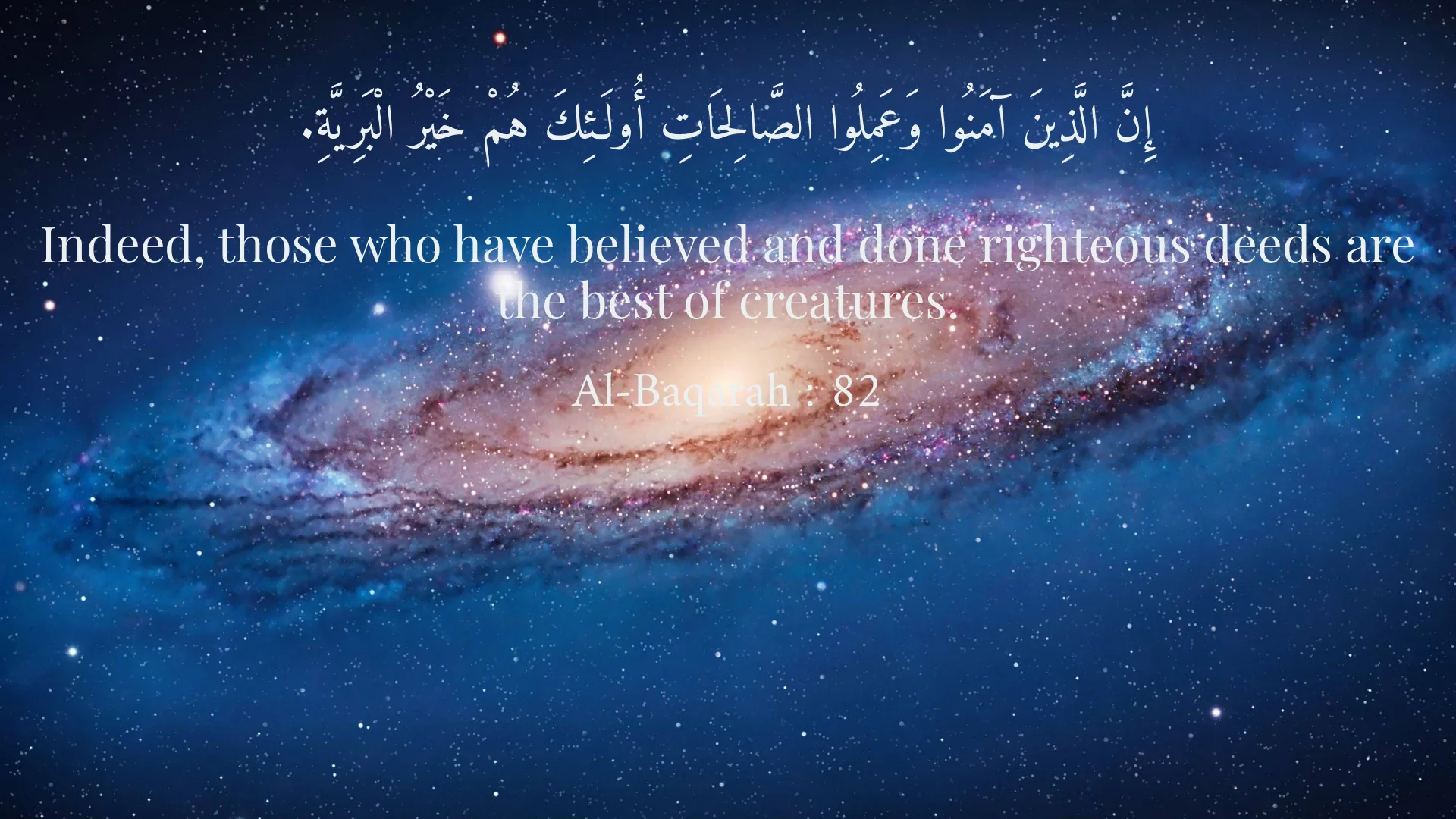
إِنَّ الَّذِينَ آمَنُوا وَعَمِلُوا الصَّالِحَاتِ أُولَـئِكَ هُمْ خَيْرُ الْبَرِيَّةِ.
Indeed, those who have believed and done righteous deeds are the best of creatures.
Al-Baqarah : 82
يَا أَيُّهَا الَّذِينَ آمَنُوا توبُوا إِلَى اللَّهِ تَوْبَةً نَّصُوحًا ۚ عَسَى رَبُّكُمْ أَن يُكَفِّرَ عَنكُمْ سَيِّئَاتِكُمْ.
O you who have believed, repent to Allah with sincere repentance. Perhaps your Lord will remove from you your misdeeds.
At-Tahrim : 8
وَقُل لِّلْمُؤْمِنَاتِ يَغْضُضْنَ مِنْ أَبْصَارِهِنَّ وَيَحْفَظْنَ فُرُوجَهُنَّ.
And tell the believing women to lower [some] of their vision and guard their private parts.
An-Nur : 31
Short Story
One day, a man was walking through a forest, feeling tired of life. He remembered Allah and decided to repent. Sitting under a tree, he recalled the verses of the Quran. He felt that his sins no longer tormented him. In that moment, he realized that repentance would not only positively affect him but also lead him to a better life.