Quranic Answer
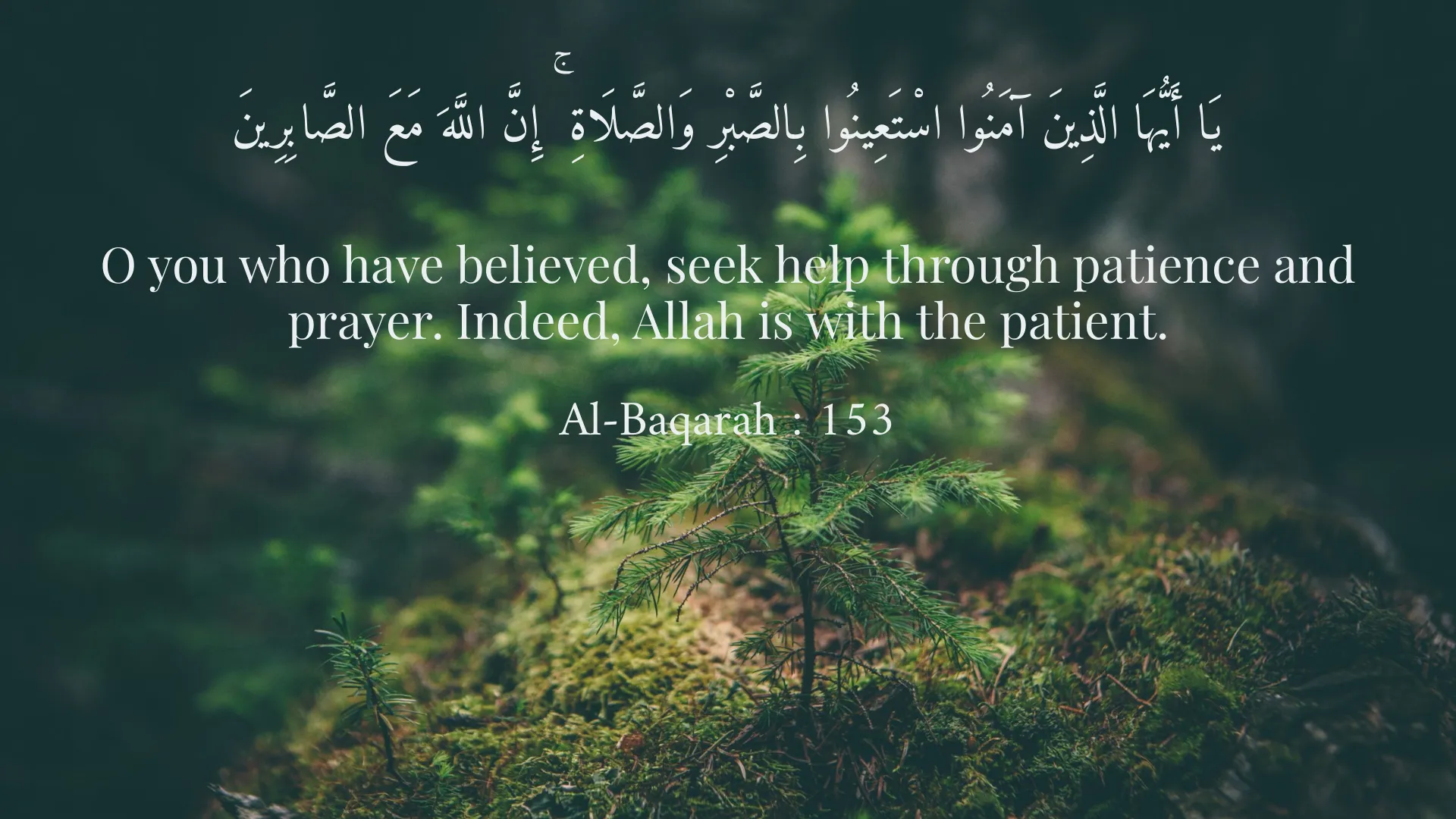
Patience is often regarded as one of the most prominent virtues in the teachings of many religions, and in the Quran, it holds a particularly esteemed position among believers. The profound significance of patience can be witnessed in various verses throughout the Quran, underscoring its vital role in the lives of those who hold faith. In particular, verse 153 of Surah Al-Baqarah serves as an important reminder for believers, as Allah instructs them to seek help through both patience and prayer. This dual guidance underscores the importance of maintaining composure and resilience when faced with life's challenges and difficulties. The commandment to seek help through patience and prayer indicates that patience is not merely a passive endurance of hardship, but an active commitment to turn to Allah for strength and guidance during trying times. The necessity of patience during challenges becomes a hallmark of faith, reflecting one's reliance on divine assistance. The Quran consistently emphasizes this attribute, suggesting that true believers exhibit an unwavering resolve, especially when confronted with despair and uncertainty. The theme of patience emerges again in Surah Al-Anfal, verse 46, where Allah cautions believers against disputes that may lead to despair. The verse states, 'And do not dispute and thus lose heart and weaken your claim.' This highlights an important lesson: that yielding to hopelessness only serves to diminish one’s strength of will and determination. In essence, when believers allow themselves to succumb to negative emotions, they risk undermining their own potential and the pursuit of their aims. Instead, the Quran urges individuals to remain steadfast in their convictions, as doing so cultivates a sense of resilience that can lead to eventual success. This resilience is crucial, particularly in moments when challenges appear insurmountable. The assurance that patience carries rewards is echoed throughout the Quran, and it serves as a beacon of hope in times of difficulty. Patience allows individuals to endure hardships and stresses while fostering a deeper connection with their faith. In doing so, believers reinforce their trust in Allah's wisdom and timing, which can ultimately lead to positive outcomes, even when the fruits of their efforts seem distant. Moreover, patience is inherently tied to the concept of faith in divine wisdom. In a world that often prioritizes instant gratification and quick results, the virtue of patience calls upon individuals to practice self-restraint and to trust in a larger plan that may unfold over time. This trust extends beyond mere optimism; it is a profound belief that Allah is with those who are patient, as reiterated in various passages in the Quran. In challenging situations, the cultivation of patience can make a significant difference in the outcomes one experiences. For believers, it is essential to remember that every hardship brings with it the potential for growth, learning, and resilience. Patience becomes a tool that empowers individuals to navigate adversity with grace and strength, reinforcing their faith and commitment to their beliefs. On a practical level, how can one cultivate patience in everyday life? First and foremost, turning to prayer serves as a powerful outlet for finding comfort and solace. Engaging in daily prayers helps to center the mind, cultivate inner peace, and remind believers of their connection to Allah. Additionally, seeking knowledge and reflecting on the stories of the prophets and other figures within the Islamic tradition can inspire individuals to emulate the patience displayed by those who came before them. Reading verses of the Quran that emphasize patience can also serve as a reminder of the significance of this virtue. Moreover, employing mindfulness practices can enhance one’s capacity for patience. Developing a heightened awareness of one’s thoughts, emotions, and reactions can help individuals respond to challenges in a more measured way. By recognizing when frustration or fatigue arises, one can consciously choose to invoke patience rather than react impulsively. This self-awareness is an essential component of nurturing resilience and will enable believers to persevere through challenging times. In conclusion, patience stands as a cornerstone of the believer's journey in the Quran. It is a virtue that not only fosters resilience during times of adversity but also strengthens one’s faith and enhances their relationship with Allah. The teachings of the Quran invite all believers to acknowledge the importance of patience and to actively seek it as a means of achieving success and victory in life. When confronted with despair, it is crucial to remember the promise that Allah is with those who are patient. Embracing this principle, individuals can traverse the hardships and stresses they encounter and ultimately experience the sweet fruits of their unwavering efforts. Thus, patience is not merely a trait, but a pathway to transcendence and spiritual fulfillment.
Related Verses
يَا أَيُّهَا الَّذِينَ آمَنُوا اسْتَعِينُوا بِالصَّبْرِ وَالصَّلَاةِ ۚ إِنَّ اللَّهَ مَعَ الصَّابِرِينَ
O you who have believed, seek help through patience and prayer. Indeed, Allah is with the patient.
Al-Baqarah : 153
وَلا تَنازَعُوا فَيَفْشَلَ عَزْمُكُمْ وَتَذْهَبَ رِيحُكُمْ
And do not dispute and thus lose heart and weaken your claim.
Al-Anfal : 46
Short Story
One day, a man was searching within himself for the meaning and purpose of his life. He was facing difficulties and challenges, and sometimes felt despondent. However, a glimmer of hope urged him to keep going. He remembered the verses of the Quran which state that 'Allah is with the patient.' This phrase resonated in his mind and strengthened his spirit. He decided to be patient and believe that the results of his efforts would one day manifest.