Quranic Answer
Doing good deeds, whether in personal or social life, is an essential teaching of the Holy Quran. The significance of good deeds goes beyond mere actions; it reflects a deeper commitment to moral values and societal welfare. The Holy Quran, as a divine guide for humanity, repeatedly emphasizes the importance of kindness, charity, and altruism. In our fast-paced world, where self-interest often takes precedence, these teachings serve as a poignant reminder of our collective responsibility to uplift and support one another. This article explores the inherent virtues of doing good deeds as underscored in the Quran, the spiritual gains associated with such actions, and practical recommendations for integrating these principles into our daily lives. The Quran instructs Muslims to engage in acts of kindness and charity, presenting them as avenues to attain closeness to Allah. Good deeds facilitate a relationship with the divine and signify an individual's commitment to living a life of integrity. Allah highlights this point in several verses, such as Surah Al-Imran, verse 92, which states: 'Never will you attain the good reward until you spend from that which you love.' This powerful verse underlines the essence of sacrifice in our acts of kindness; it encourages believers to give not just from their surplus but from their most cherished possessions. This act of giving is a reflection of one's faith and devotion in striving for a relationship with Allah, indicating that true piety encompasses both inner faith and outward acts of generosity. Moreover, the Quran doesn’t limit good deeds to tangible acts of charity alone but broadens the definition to include good character and moral behavior. In Surah Al-Mu'minun, verse 60, Allah states: 'And those who are steadfast in their testimony and their covenant'. This verse elevates the virtue of maintaining a good character, suggesting that one can practice good deeds simply by striving to embody principles of honesty, patience, and righteousness in interactions with others. It highlights the idea that one's intention plays a pivotal role in determining the spiritual value of their actions. Performing good deeds, even if unnoticed by others, reveals a person's sincerity and commitment to faith, as they seek divine pleasure rather than public recognition. Another critical aspect of good deeds is the spiritual benefit they provide to the doer. Engaging in acts of kindness is not merely beneficial for the recipient; it fosters a sense of fulfillment, tranquility, and happiness within the giver. These perceived benefits extend beyond temporary feelings of joy; they contribute to a more profound sense of purpose and self-worth that aligns with Islamic teachings. Engaging in altruism helps individuals cultivate a positive mindset and emotional resilience, allowing them to navigate life's challenges with greater ease and grace. In essence, the practice of performing good deeds enhances mental and spiritual well-being while simultaneously serving the community. The Quran uses vivid analogies to illustrate the concept of charity and the multiplication of good deeds. In Surah Al-Baqarah, verse 261, Allah likens good actions to a seed that produces seven ears; in each ear, there are a hundred grains. This metaphor effectively communicates the idea that acts of kindness and charity yield tremendous rewards, not only in the hereafter but also in this life. The return on investment for good deeds is multifaceted—spiritual reward, personal growth, and the nurturing of a compassionate society. This analogy serves to inspire believers to engage in charitable activities, as the divine rewards and benefits far exceed the initial contributions they make. Integrating good deeds into our lives may seem challenging at times, especially within the context of our busy schedules and personal trials. However, incorporating small acts of kindness into our daily routines can significantly impact our lives and the lives of others. Here are some practical recommendations for infusing the spirit of good deeds into our everyday experiences: 1. Start Small: Consider engaging in small acts of kindness daily, such as helping a neighbor, volunteering for community service, or simply offering a warm smile to those around you. These simple gestures can ignite a positive ripple effect, encouraging others to contribute to a culture of generosity. 2. Cultivate Gratitude: Practicing gratitude can enhance your perspective on life and remind you of what you have to give. When you express thankfulness for your blessings, it fosters a desire to share with those in need and motivates you to engage in charitable actions. 3. Allocate Time for Charity: Designate a specific time each week or month to engage in community service or charitable activities. Such a commitment helps develop a strong habit of giving, ensuring that you continuously seek out opportunities to do good. 4. Encourage Others: Share your experiences and encourage friends and family to join you in acts of kindness. Collective efforts can become a source of inspiration and motivation, fostering a supportive network of individuals aiming to make positive changes together. 5. Reflect on Intentions: Regularly assess your intentions behind your actions. The Quran teaches that sincerity is key to gaining Allah's pleasure. By ensuring that your acts of kindness are genuine and devoid of ego, your spirit of giving will flourish. In conclusion, the teachings of the Holy Quran regarding good deeds offer a timeless framework for spiritual and moral development. Acts of kindness and charity serve not only to benefit others but also to foster a deep sense of contentment and fulfillment within ourselves. As we strive to draw closer to Allah through our good deeds, we can create a wellspring of compassion and generosity in our lives and communities. Let us commit to living out these teachings daily, embracing the abundant rewards that come from giving generously and cultivating a life rooted in kindness.
Related Verses
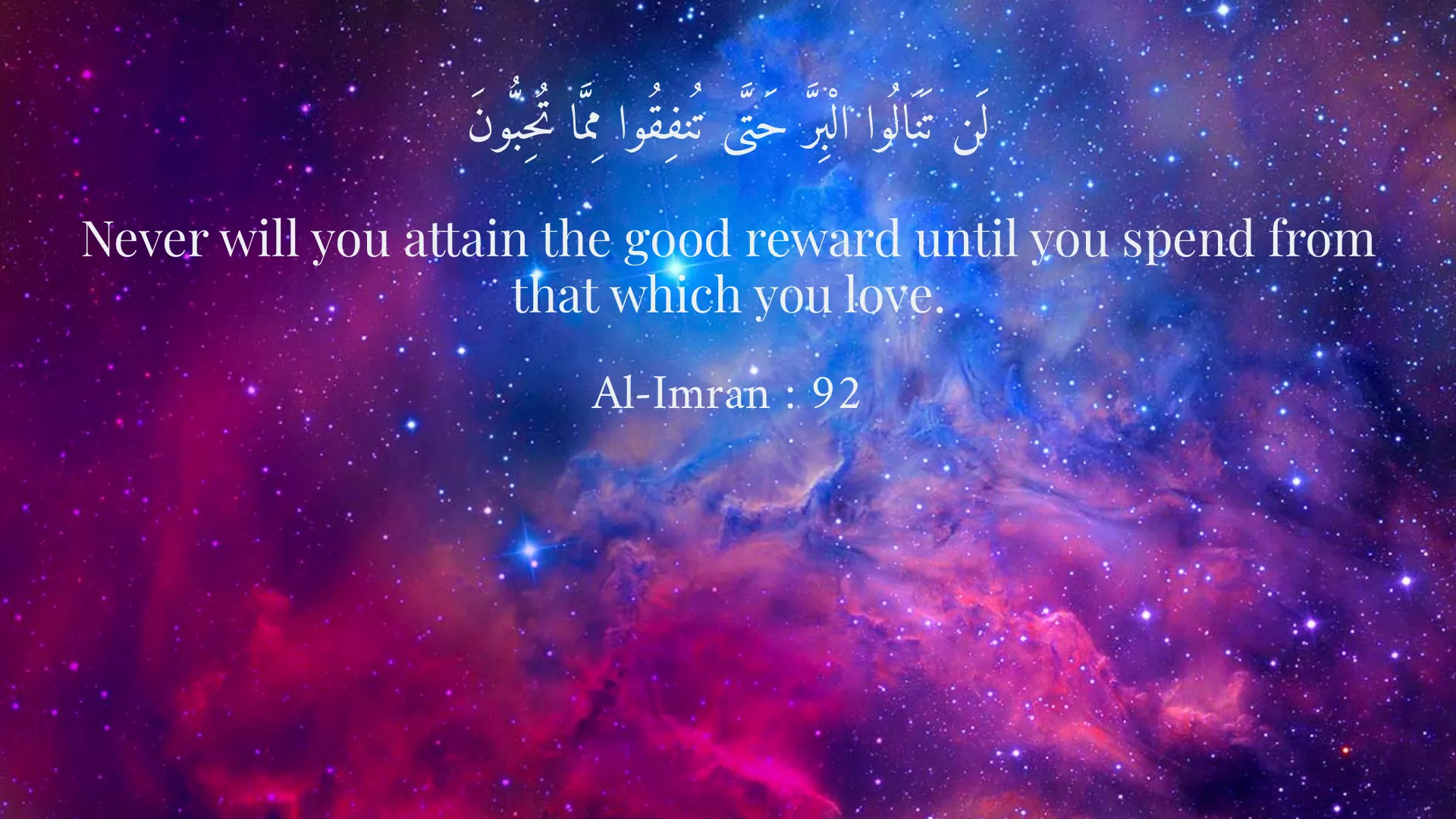
لَن تَنَالُوا الْبِرَّ حَتَّى تُنفِقُوا مِمَّا تُحِبُّونَ
Never will you attain the good reward until you spend from that which you love.
Al-Imran : 92
وَالَّذِينَ هُمْ لِأَمَانَاتِهِمْ وَعَهْدِهِمْ رَاعُونَ
And they who are to their trusts and their covenant due.
Al-Mu'minun : 60
مَثَلُ الَّذِينَ يُنفِقُونَ أَمْوَالَهُمْ فِي سَبِيلِ اللَّهِ كَمَثَلِ حَبَّةٍ أَنبَتَتْ سَبْعَ سُنبُلَاتٍ
The example of those who spend their wealth in the cause of Allah is like a seed that sprouts into seven ears.
Al-Baqarah : 261
Short Story
One day, Adel was busy with his daily chores when he remembered the verses of the Quran. He decided to dedicate his day to doing good. He thought to himself: even if no one sees, God sees my good deed and rewards me. Thus, he visited a nursing home and helped the elderly with kindness and a smile. After that day, he felt a great sense of satisfaction and happiness within himself.