Quranic Answer
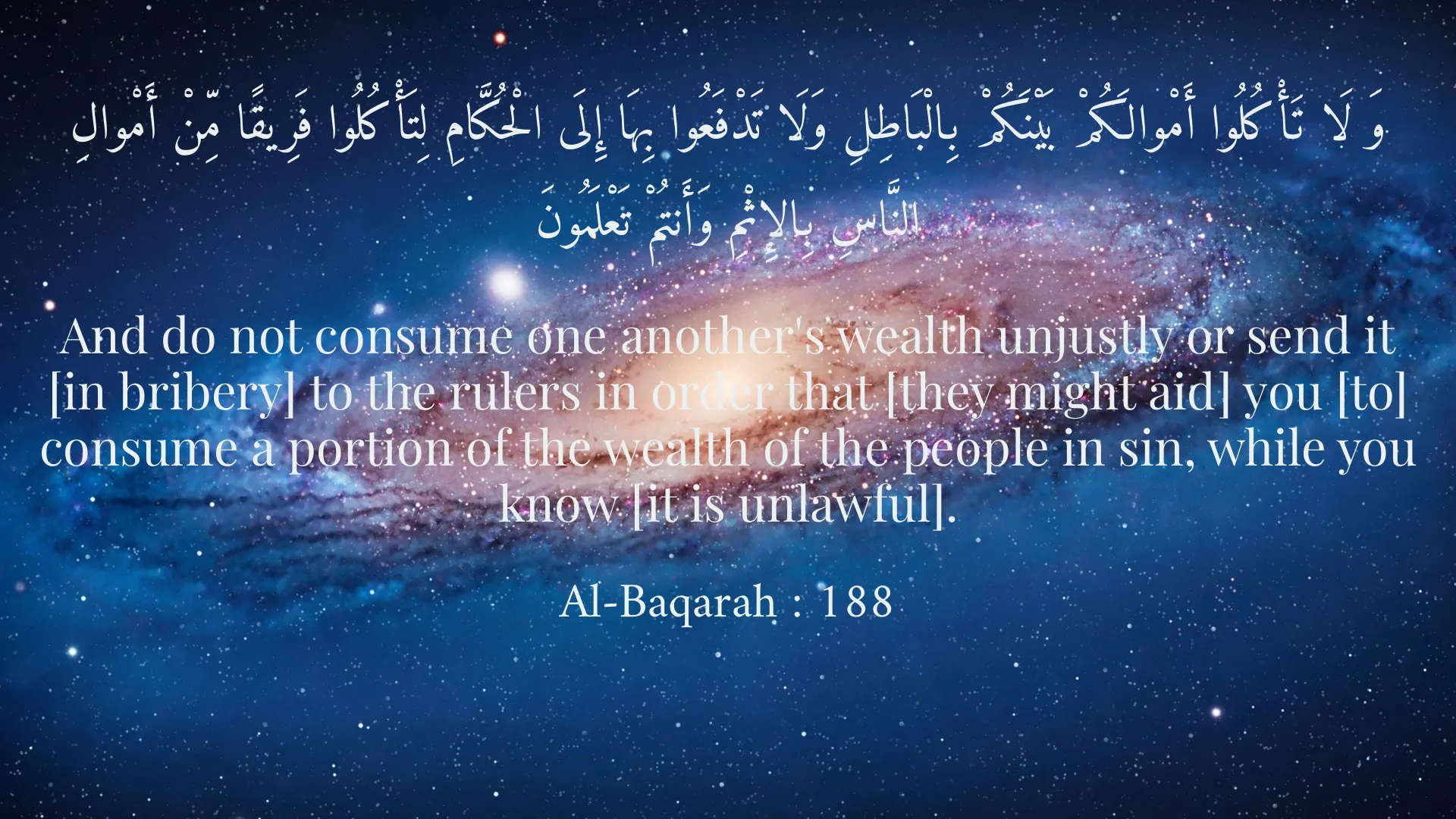
In the Holy Quran, the subjects of oppression and the actions of oppressors are depicted with clarity and strong condemnation. These themes resonate deeply within the teachings of the Quran, providing a moral compass for the Muslim community and beyond. In Islam, justice is not merely a lifestyle choice; it is a divine commandment that requires adherence in personal behavior and societal structure alike. One of the vital representations of oppression is found in Surah Al-Baqarah, verse 188. Allah states, 'And do not consume one another's wealth unjustly or send it [in bribery] to the rulers in order that [they might aid] you [to] consume a portion of the wealth of the people in sin, while you know [it is unlawful].' This verse is significant as it outlines not just the act of taking wealth unjustly but also the more complex dynamics of corruption involving manipulation through bribery. Ultimately, these actions are condemned emphatically because they reinforce a cycle of injustice, leading to further oppression of the weak and the vulnerable in society. The Quran emphasizes that such unjust practices do not only harm the victims but severely impact the oppressors as well, revealing the moral ramifications of their deeds. Moreover, previous themes of punishment for oppressors are woven throughout various verses in the Quran. A striking example is found in Surah Al-Imran, verse 21, where it is stated: 'Indeed, those who disbelieve in the verses of Allah and kill the prophets without right and kill those who enjoin justice from among the people, give them tidings of a painful punishment.' This verse serves as a stark reminder of how oppression can escalate into egregious acts of violence against the very prophets sent to guide humanity. Here, the relationship between disbelief and oppressive actions becomes apparent, illustrating that the transgressions against God and His messengers result in dire consequences. This narrative of punishment is not merely about retribution; it also incites a deeper introspection within the believers concerning the implications of their actions. The passage warns against both physical oppression and the injustices perpetuated through passive acceptance. Consequently, it cultivates a mentality of careful vigilance, urging the believers to remain steadfast against the dangers of oppression. This fear, while perhaps seen as negative, actually empowers people to strive for justice, compelling them to be advocates against tyranny. What stands out in these verses is the Quran's emphasis on justice as a collective responsibility. Each member of the community is thus drawn into a moral obligation to uphold justice. The call to justice is not restricted solely to personal conduct but extends to societal structures, underscoring the notion that injustice affects entire communities, and by extension, humanity as a whole. This encourages collective action towards establishing environments that adhere to justice and fairness — a theme that reverberates throughout the Quran and Islamic teachings. As we navigate through the challenges presented by varying forms of oppression in today's world, it is crucial to recognize that Islam fundamentally opposes injustices, providing a framework for ethical behavior based on principles enshrined in the Quran. In practical terms, this necessitates active engagement in promoting justice, whether through personal actions or social initiatives. The belief in justice is a guiding principle that fuels efforts to uplift those who are marginalized and oppressed, affirming human dignity and worth. Furthermore, the Quran encourages self-reflection and accountability among individuals, pushing them to confront their biases and systemic inequalities head-on. By internalizing these lessons, believers become agents of change within their communities, demonstrating that deviation from justice could invite severe consequences, not only in this world but also in the Hereafter. The essence of adhering to ethical practices can be observed throughout Islamic history, where figures such as the Prophet Muhammad and the Imams embodied the principles of justice, promoting equity, and challenging oppression. Their actions exemplified the struggle against tyranny and their commitment to the oppressed serves as an enduring legacy that inspires many to this day. To break away from cycles of oppression, it is essential to be vocal against injustices, support those who are oppressed, and take meaningful actions that combat systemic disparities. Such endeavors call for a renewed commitment to justice founded not only on the teachings of the Quran but also on the principles of fairness and equity rooted in human dignity. The intersection of faith and activism allows individuals to transcend mere condemnation and engage constructively, fostering societies grounded in justice. In conclusion, the clear depiction of oppression and oppressors in the Holy Quran serves as a profound reminder of the ethical responsibilities placed upon believers. As Muslims and human beings, there is an inherent duty to combat injustices wherever they may manifest and to act according to the higher moral standards encouraged by both religion and social consciousness. Upholding justice, protecting the rights of the vulnerable, and confronting tyrannical forces remain essential imperatives familiar to our shared human experience. The journey towards justice is not just a path of personal righteousness but a collective endeavor that commands both courage and resolve, echoing through time as a foundational lesson in both Shia and Islam.
Related Verses
وَ لَا تَأْكُلُوا أَمْوالَكُمْ بَيْنَكُمْ بِالْبَاطِلِ وَلَا تَدْفَعُوا بِهَا إِلَى الْحُكَّامِ لِتَأْكُلُوا فَرِيقًا مِّنْ أَمْوالِ النَّاسِ بِالإِثْمِ وَأَنتُمْ تَعْلَمُونَ
And do not consume one another's wealth unjustly or send it [in bribery] to the rulers in order that [they might aid] you [to] consume a portion of the wealth of the people in sin, while you know [it is unlawful].
Al-Baqarah : 188
إِنَّ الَّذِينَ كَفَرُوا بِآيَاتِ اللَّهِ وَيَقْتُلُونَ الْأَنْبِيَاءَ بِغَيْرِ حَقٍّ وَيَقْتُلُونَ الَّذِينَ يَأْمُرُونَ بِالْقِسْطِ مِنَ النَّاسِ فَبَشِّرْهُمْ بِعَذَابٍ أَلِيمٍ
Indeed, those who disbelieve in the verses of Allah and kill the prophets without right and kill those who enjoin justice from among the people, give them tidings of a painful punishment.
Al-Imran : 21
Short Story
Once there was a man named Ali living in a small town. He was deeply unhappy with the oppression that existed in his society. Ali decided to listen to the voices of those who were oppressed. He turned to the Quran and became familiar with its verses, understanding that oppression always leads to terrible consequences. He sought to remind others that in order to prevent oppression, they must raise their voices and defend their rights. Ali believed that one must fear the oppressor and stand for the oppressed.