Quranic Answer
Title: The Significance of Fairness and Justice in Speech: Insights from the Holy Quran Introduction In the pursuit of a fair and just society, the principles laid down in the Holy Quran serve as a guiding light for believers. Among these principles, fairness and justice in speech stand out as fundamental precepts emphasized throughout the scripture. The Quran reminds us of the importance of speaking justly and upholding truth, regardless of the challenges we may face in our lives. Through various verses, particularly from Surah An-Nisa and Surah Al-Ma’idah, believers are urged to maintain a steadfast commitment to justice and fairness, cultivating peace and harmony in their communities. The Command of Justice in Surah An-Nisa Surah An-Nisa, verse 135, serves as a poignant reminder of the necessity of fairness and justice in speech. The verse states, "O you who have believed! Be persistently standing firm in justice, witnesses in the name of Allah, even if it be against yourselves or parents and relatives. Whether one is rich or poor, Allah is more worthy of both. So follow not [personal] inclination, lest you not be just. And if you distort [your testimony] or refuse [to give it], then indeed Allah is ever, with what you do, Acquainted." This verse emphasizes the importance of being unwavering in our commitment to justice, even when it requires us to speak out against our own interests or the interests of our loved ones. One of the most profound aspects of this command is the insistence on impartiality. Individuals are called to rise above personal biases and emotions to uphold justice, which is fundamental in building trust within a society. When people bear witness truthfully, irrespective of wealth or status, it fosters a community where fairness reigns, and everyone is treated equitably. Consequently, this commitment to just speech leads to greater social cohesion, allowing people to forge healthier relationships. The Role of Fairness in Society Fairness in speech is not merely a religious obligation; it is a vital component of social peace and tranquility. It plays a crucial role in establishing trust among individuals and communities. When individuals strive to present their thoughts and testimonies accurately and justly, it promotes reliance on the truth and discourages misunderstandings, which can lead to conflict. The fragile fabric of society is woven from the threads of honesty, transparency, and integrity in communication. Unjust speech, on the other hand, can sow the seeds of division and mistrust. When individuals distort the truth for personal gain or out of misplaced loyalties, it can erode credibility and create rifts within communities. Therefore, fairness in speech is instrumental not only for personal integrity but for the collective well-being of society as a whole. As we engage in dialogues, whether personal or public, it is essential to remember that what we say can have lasting effects on the relationships we build and maintain, along with the trust that underpins them. Divine Instruction in Surah Al-Ma’idah In addition to Surah An-Nisa, the themes of justice and fairness are echoed in Surah Al-Ma’idah, verse 8. Here, Allah commands believers to uphold justice even when faced with antagonism. This verse serves as a reminder that maintaining fairness is particularly necessary in challenging circumstances. When confronted with opposition, emotions might compel individuals to act unjustly or speak unfairly, but the Quran instructs believers to remain steadfast in their principles. Through this guidance, the Quran advocates for a standard that transcends situational factors. It encourages individuals to remain anchored in the values of truth and justice. This commitment is essential for positive human interactions, as it not only facilitates constructive dialogue but also mitigates conflicts. The Benefits of Upholding Fairness in Speech Embracing the principle of fairness in speech has numerous benefits, both for the individual and society at large. For the individual, being committed to fairness cultivates a personal sense of integrity and honesty. When one attempts to speak justly, it fosters self-awareness and responsibility, pushing individuals to evaluate their thoughts and words critically. Moreover, fairness in speech contributes to emotional and mental well-being. When interactions are marked by truthfulness and equity, individuals experience a sense of relief and empowerment. They can avoid the burden of guilt that often accompanies deceit or unjust actions. Therefore, fairness nurtures an inner harmony that aligns with personal values and beliefs. On a communal level, promoting fairness leads to the development of trust among neighbors and peers. In societies where individuals practice justice in their speech, the likelihood of collaboration and mutual support increases. People feel secure in exchanging ideas and opinions, which enhances social growth and cohesiveness. Ultimately, communities built on fairness and justice tend to thrive, as members work together towards common goals and ideals. Conclusion In conclusion, the teachings of the Holy Quran underscore the significance of fairness and justice in speech as cardinal principles that believers must embrace. The verses from Surah An-Nisa and Surah Al-Ma’idah serve as powerful reminders of the moral obligation to uphold truth and justice, regardless of personal circumstances or external pressures. By being steadfast in these principles, individuals can contribute to building a society characterized by trust, peace, and collaboration. In times of adversity or temptation, the call to maintain fairness in speech strengthens our resolve and guides us toward a righteous path in life. Ultimately, pursuing fairness in our expressions cultivates a more just and harmonious world, in line with the divine teachings of the Quran.
Related Verses
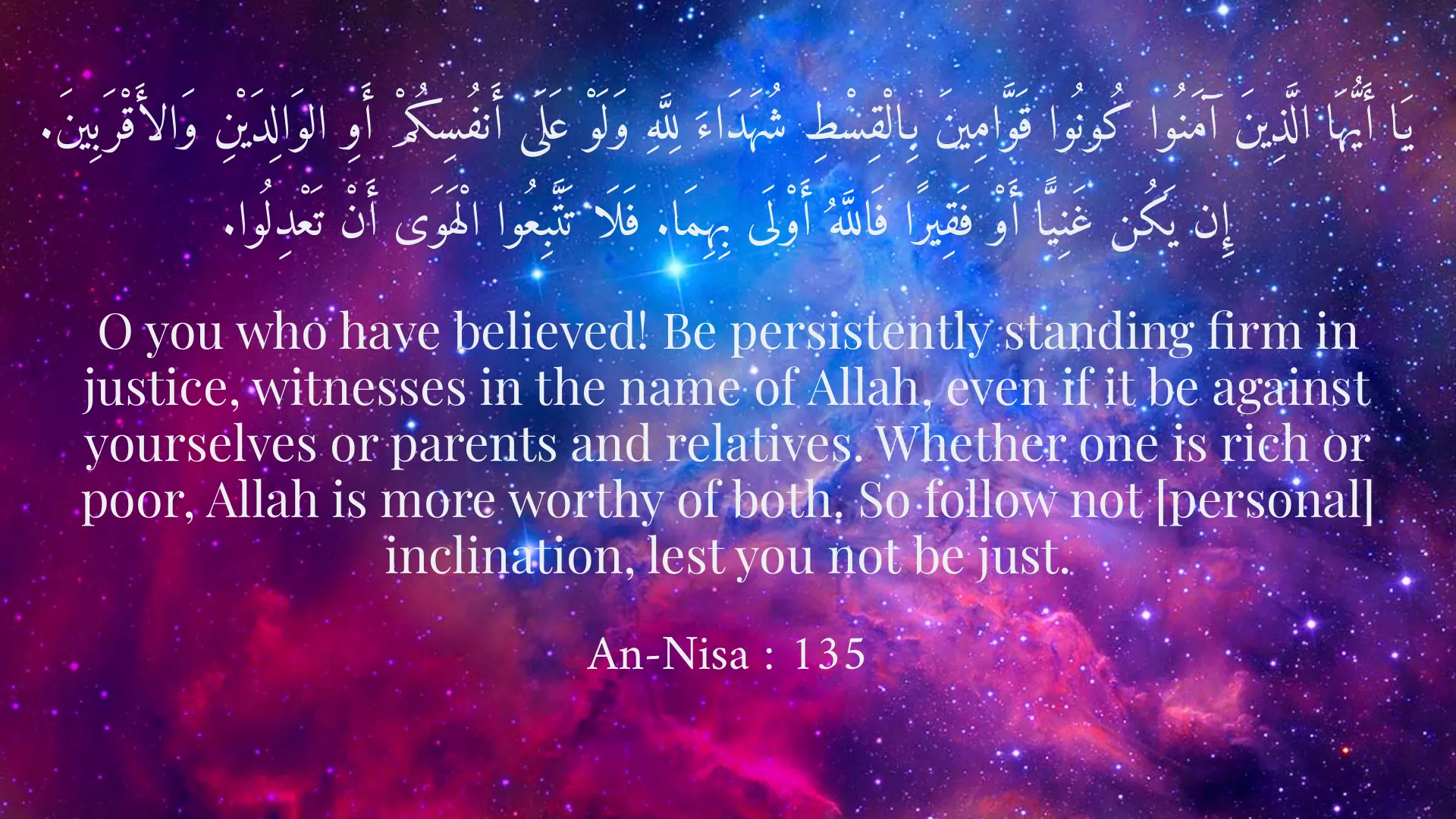
يَا أَيُّهَا الَّذِينَ آمَنُوا كُونُوا قَوَّامِينَ بِالْقِسْطِ شُهَدَاءَ لِلَّهِ وَلَوْ عَلَى أَنفُسِكُمْ أَوِ الوَالِدَيْنِ وَالأَقْرَبِينَ. إِن يَكُن غَنِيًّا أَوْ فَقِيرًا فَاللَّهُ أَوْلَى بِهِمَا. فَلَا تَتَّبِعُوا الْهَوَى أَنْ تَعْدِلُوا.
O you who have believed! Be persistently standing firm in justice, witnesses in the name of Allah, even if it be against yourselves or parents and relatives. Whether one is rich or poor, Allah is more worthy of both. So follow not [personal] inclination, lest you not be just.
An-Nisa : 135
يَا أَيُّهَا الَّذِينَ آمَنُوا كُونُوا قَوَّامِينَ لِلَّهِ شُهَدَاءَ بِالْقِسْطِ وَلَا يَجْرِمَنَّكُمْ شَنَآنُ قَوْمٍ أَلَّا تَعْدِلُوا. اقْسِطُوا هُوَ أَقْرَبُ لِلتَّقْوَىٰ.
O you who have believed, be persistently standing firm in justice, witnesses in the name of Allah, and do not let the hatred of a people prevent you from being just. Be just; it is nearer to righteousness.
Al-Ma'idah : 8
Short Story
Once upon a time, in a village lived a man named Hassan. He always spoke with fairness and justice. One day, among his friends, a topic arose, and some began to judge someone unfairly. Hassan reminded them using Quranic verses to maintain fairness and speak the truth. He said, 'By Allah, it is our duty to be accountable and uphold the truth.' His words led his friends to reflect and give more importance to fairness and truth in future discussions.