Quranic Answer
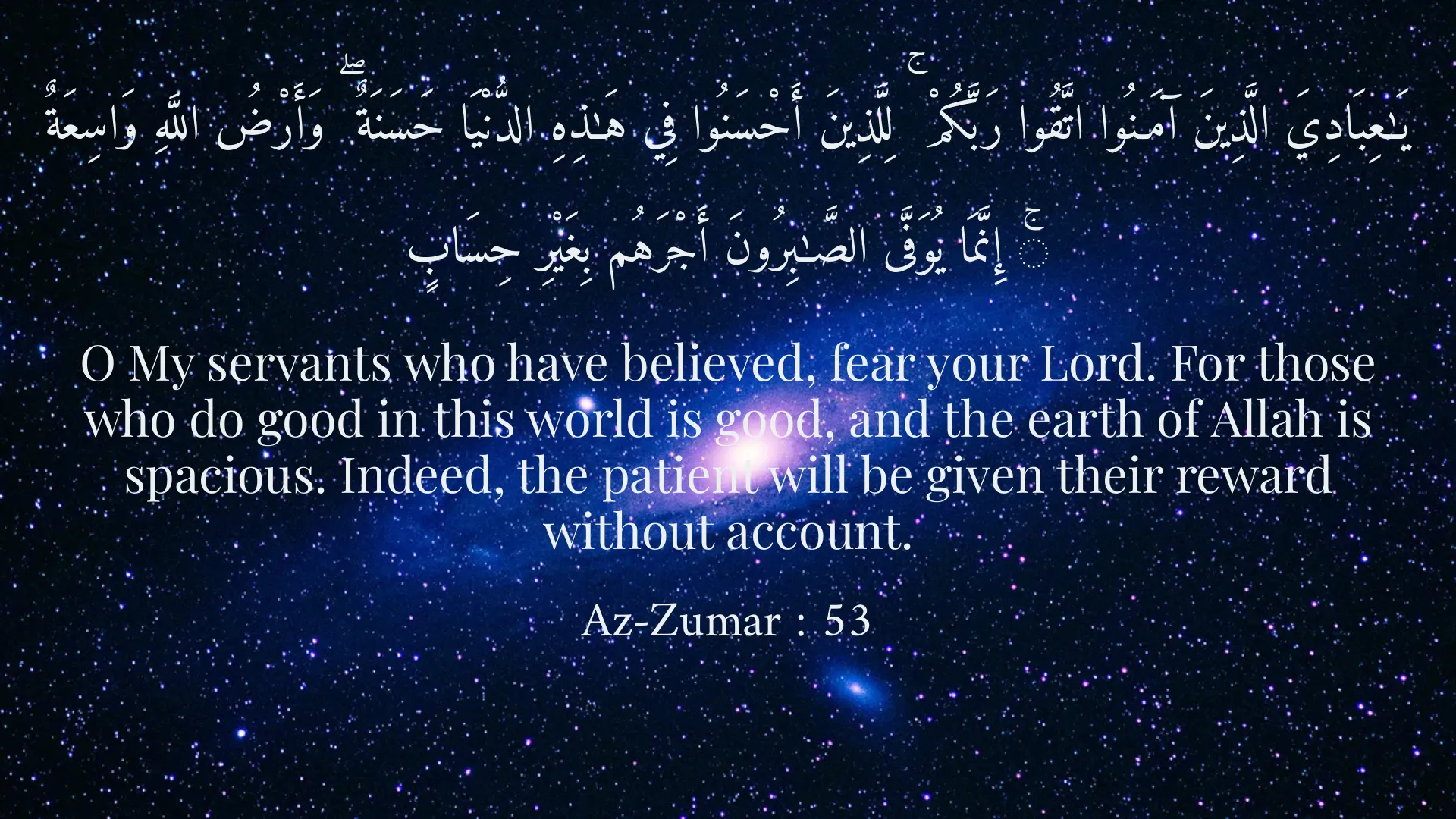
In the Holy Quran, hope and trust in God's mercy emerge as pivotal themes that resonate deeply with believers, serving as a source of strength and guidance during life's challenges. The Quran articulates these concepts through various verses, encouraging individuals to maintain faith and optimism even amidst adversity. Among these verses, Surah Az-Zumar, verse 53 stands out as a profound reminder of the nature of divine mercy. Allah states, 'Say, O My servants who have believed, fear your Lord. For those who do good in this world is good, and the earth of Allah is spacious. Indeed, the patient will be given their reward without account.' This verse emphasizes several crucial aspects: the importance of faith, the call to do good, and the assurance of divine reward for perseverance. It reassures believers that despite the trials they may face, they should never lose hope, as God's mercy transcends all difficulties. The notion of hope is intertwined with the concept of patience in this verse. Patience is often required during tough times, and those who embody this virtue are promised rewards without reckoning. This perspective instills a sense of resilience. Life invariably presents us with trials that can lead to distress and despair; however, the Quranic prescription of maintaining hope illuminates a path out of darkness. Allah's mercy, as depicted in this verse, is not distant or inaccessible; rather, it is a constant presence, waiting to be embraced by those who seek it. Continuing with the theme of hope, we find another striking reminder in Surah Al-Imran, verse 139, where God counsels believers: 'And do not be grieved, and you will be the uppermost if you are believers.' This instruction serves both as a comfort and a directive, urging believers to stay optimistic regardless of the trials they might encounter. The term 'grieved' indicates an emotional burden that can weigh heavily on the heart and mind. Yet, God assures believers that maintaining their faith will elevate them, fostering resilience even amid difficulties. The interplay between hope, trust, and emotional well-being reflects the empowerment that faith offers. In a world often fraught with challenges—whether personal struggles, societal pressures, or global issues—holding onto hope becomes one of the most significant strategies for coping with life's adversities. Hope provides the mental and emotional strength necessary for individuals to navigate through life's unpredictable journey. It motivates individuals to pursue their goals and to remain steadfast in their beliefs, even when the odds appear insurmountable. Moreover, hope is not merely a passive waiting for better times; it is an active engagement with life. By fostering a hopeful outlook, individuals can inspire others, transforming not just their lives but also the lives of those around them. When we embody hope, we share it with our communities, uplifting spirits and offering encouragement. The act of expressing hope can be contagious. In times of collective hardship, such as during economic downturns or health crises, those who radiate hope can bring joy and solace to others, acting as beacons of light in moments of despair. The kind of hope that the Quran speaks of is profound—it encourages believers to engage deeply with their faith, reflect on God's mercy, and apply these teachings practically. This approach can lead to a transformative experience, allowing individuals to shift their mindset from one of despair to one of gratitude and anticipation for better times ahead. By cultivating a hopeful mindset, individuals position themselves to handle challenges with grace and endurance. In addition to fostering perseverance, hope has the potential to bring about significant positive change in numerous facets of life. This change can manifest in various areas, such as improving mental health, strengthening relationships, and enhancing one's sense of purpose. When individuals feel hopeful, they are more likely to take constructive actions toward their goals, build constructive relationships with others, and contribute positively to their communities. This sense of purpose nurtures a fulfilling life, aligning with the Quran's teachings about engaging actively with one's environment and responsibilities. The Quran further emphasizes the bond between hope and trust—trust in God's plan, mercy, and timing. Trusting in God's wisdom allows believers to relinquish their anxieties and submits their fears and concerns to a higher power. This relinquishment fosters a sense of peace, as believers understand that they are not alone in their struggles, and that God’s plan is ultimately for their best interest. It cultivates a sense of security that transcends worldly worries, reminding believers that God is aware of their circumstances and is actively involved in their lives. Ultimately, the cultivation of hope and trust in God's mercy is not merely an abstract theological concept; it is a practical, lived experience that translates into behavior and attitude. It is about waking up each day with a sense of purpose and the expectation of good. It encourages believers to reach out to others in times of need, creating a community rooted in mutual support and understanding. In conclusion, the messages of hope and trust embedded within the verses of the Quran serve as powerful tools for navigating life's adversities. They offer a foundation of resilience, reminding believers that divine mercy is always within reach. As individuals internalize these teachings, they can transform their mindset, encouraging not only personal growth but also contributing positively to the welfare of others. In doing so, hope serves as a remarkable force—a light that illuminates our path and transforms lives, guiding us toward a future filled with possibility and grace.
Related Verses
يَـٰعِبَادِيَ الَّذِينَ آمَـنُوا اتَّقُوا رَبَّكُمْ ۚ لِلَّذِينَ أَحْسَنُوا فِي هَـٰذِهِ الدُّنْيَا حَسَنَةٌ ۖ وَأَرْضُ اللَّهِ وَاسِعَةٌ ۚ إِنَّمَا يُوَفَّى الصَّـٰبِرُونَ أَجْرَهُم بِغَيْرِ حِسَابٍ
O My servants who have believed, fear your Lord. For those who do good in this world is good, and the earth of Allah is spacious. Indeed, the patient will be given their reward without account.
Az-Zumar : 53
وَلَا تَهِنُوا وَلَا تَحْزَنُوا وَأَنتُمُ الأَعْلَوْنَ إِن كُنتُم مُّؤْمِنِينَ
And do not weaken and do not grieve, and you will be the uppermost if you are believers.
Al-Imran : 139
Short Story
One day, a man was lost in the forest at night, shivering in the darkness and cold. Despair surged within him, but he remembered the Quranic verses that state, 'And do not weaken, and do not grieve, for you will be the uppermost if you are believers.' He decided to hold onto his hope and walked sturdily towards the light that shone in the distance. Soon, he reached a village and realized that hope would never part from him.