Quranic Answer
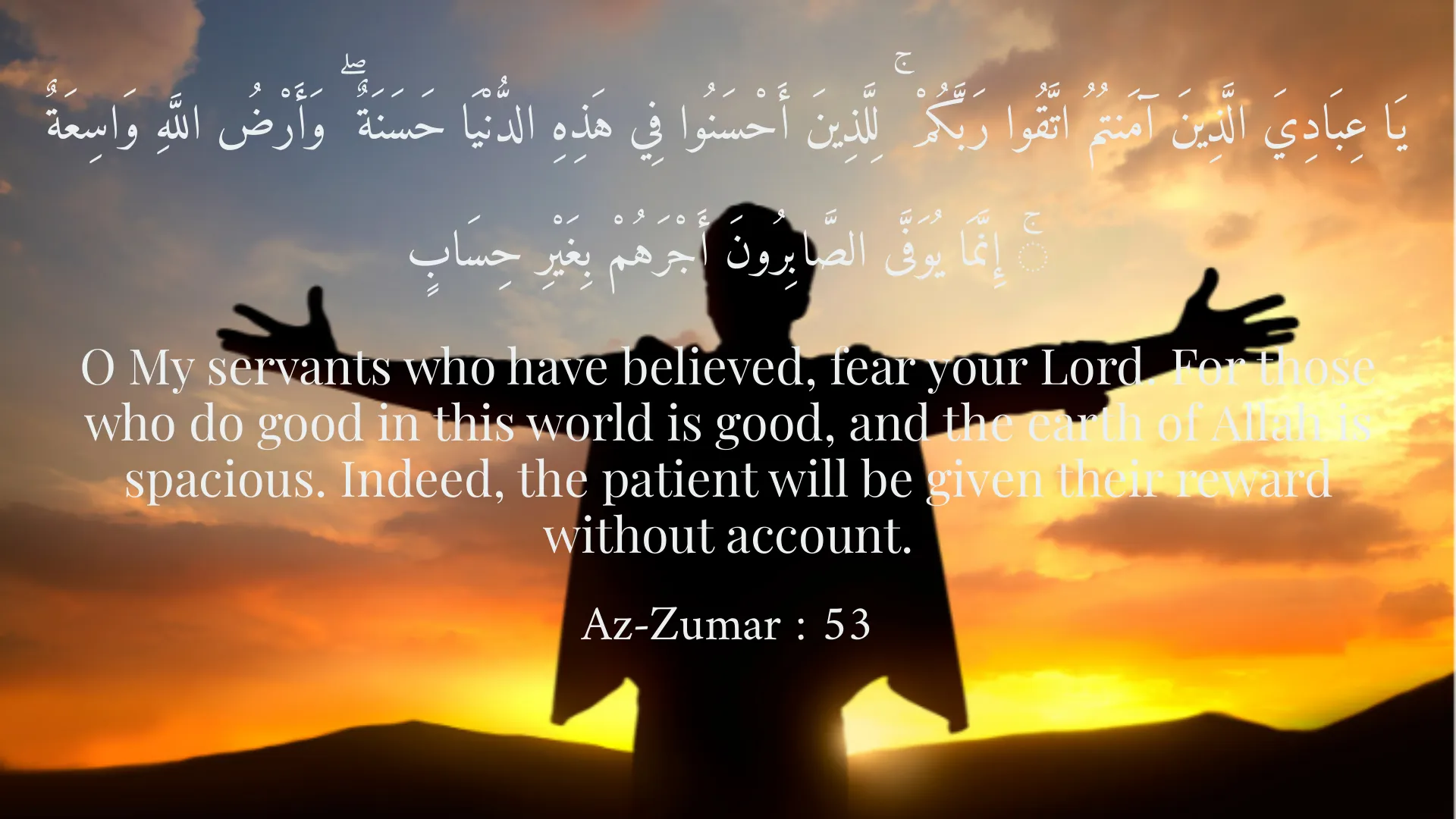
In the Holy Quran, hope and trust in the mercy of Allah are fundamental principles of faith that guide Muslims in their daily lives. Hope in Allah's mercy serves as a vital aspect of a believer’s spiritual journey, allowing them to navigate through the trials and tribulations of life. The importance of hope in divine mercy is particularly highlighted in Surah Az-Zumar, verse 53, where Allah lovingly addresses His believers by saying: "Say, 'O My servants who have believed, fear your Lord. For those who do good in this world is good, and the earth of Allah is spacious. Indeed, the patient will be given their reward without account.'" This verse encapsulates a profound message of encouragement; it reassures believers that even in the face of life's most challenging circumstances, one should not despair but instead maintain hope in Allah's boundless mercy and the promise of a brighter future. To further understand the significance of hope, it is essential to recognize that hope can be a powerful driving force, inspiring individuals to take action and strive for improvement. When believers hold onto the hope that Allah's mercy encompasses them, it ignites within them a sense of purpose and motivation, which encourages them to do good deeds and excel in their faith. It is through acts of goodness that individuals not only earn Allah's mercy but also cultivate inner peace and contentment, regardless of their worldly situation. In Surah At-Talaq, verse 7, Allah reinforces the principle of hope combined with action, stating: "Let a man of wealth spend from his wealth, and he whose provision is restricted - let him spend from what Allah has given him. Allah does not burden a soul beyond that it can bear. Allah will bring about, after hardship, ease." This verse serves as an encouragement for individuals to utilize their resources in a way that benefits others. The underlying message is that regardless of one's financial status, it is the intention to help and give that Allah values, and more importantly, it affirms the promise that after every difficulty, there will be relief. This intrinsic connection between hope and action is essential; maintaining faith in Allah amid hardships leads to tangible solutions and improvements in both the temporal life and the Hereafter. The philosophy surrounding hope in the Quran goes beyond mere optimism; it emphasizes an active engagement in life's struggles while placing trust in Allah's plan. Surah Al-Baqarah, verse 286, reassures believers with the profound statement: "Allah does not burden a soul beyond its capacity." This verse serves as a reminder that every challenge and trial bestowed upon an individual comes with the potential for growth, learning, and eventual success. It teaches that believers should never despair in the face of life's difficulties since their ability to endure is calibrated with divine wisdom and knowledge. From the Quranic perspective, hope is not just a fleeting emotion; it is an integral part of a believer's identity. It invites believers to cultivate a deep-rooted faith that encompasses patience and resilience. Every challenge encountered is an opportunity for personal and spiritual growth, an avenue for practitioners to deepen their trust in Allah. The essence of faith is illuminated through the understanding that despair is not an option for the believers as they recognize the omnipresence and mercy of Allah in their lives. Hope encourages believers to look toward the future positively, fostering a mindset that seeks improvement and growth. In a world often filled with negativity, hopelessness, and adversity, the teachings of the Quran provide solace and comfort. The concept of hope as presented in the Holy Quran cultivates a spirit of perseverance, urging individuals to rise after fallbacks and strive for continuous betterment in all aspects of life. This optimistic outlook is vital for not only personal success but also for building cohesive and compassionate communities. Moreover, hope acts as a balm for the weary soul, rejuvenating the spirit amidst trials. Believers are encouraged to remember past trials that Allah has helped them overcome as a testament to His mercy and grace. This reflection serves to fortify their hope for the future, reminding them that no matter how daunting the present may seem, Allah’s relief is on the horizon, waiting to unfold in His perfect timing. In addition, fostering hope extends beyond oneself; it has the potential to affect relationships and communities positively. When individuals embody hope, they inspire others to do the same. In challenging times, a hopeful attitude can serve as a beacon for those around them, promoting solidarity and collective resilience. It becomes a communal effort to uplift one another, reminding each other of the divine mercy enveloping all lives. In conclusion, the messages of hope and trust in Allah’s mercy articulated in the Holy Quran are not just theological assertions, but principles that can transform lives. By embracing these teachings, individuals can transcend the hardships they face and cultivate a life of purpose, faith, and resilience. Hope is indeed not just a mere sensation; it is an actionable foundation upon which believers can build their lives, ensuring that they navigate through the trials of life with unwavering faith, optimism, and a commitment to doing good. Let us strive to embody these teachings, remain hopeful for a bright future, and work diligently towards the betterment of ourselves and our communities.
Related Verses
يَا عِبَادِيَ الَّذِينَ آمَنتُمُ اتَّقُوا رَبَّكُمْ ۚ لِلَّذِينَ أَحْسَنُوا فِي هَذِهِ الدُّنْيَا حَسَنَةٌ ۖ وَأَرْضُ اللَّهِ وَاسِعَةٌ ۚ إِنَّمَا يُوَفَّى الصَّابِرُونَ أَجْرَهُمْ بِغَيْرِ حِسَابٍ
O My servants who have believed, fear your Lord. For those who do good in this world is good, and the earth of Allah is spacious. Indeed, the patient will be given their reward without account.
Az-Zumar : 53
لْيُنْفِقْ ذُو سَعَةٍ مِّن سَعَتِهِۦ ۖ وَمَن قُدِرَ عَلَيْهِ رِزْقُهُ ۖ فَلْيُنْفِقْ مِمَّا آتَاهُ اللَّهُ ۗ لَا يُكَلِّفُ اللَّهُ نَفْسًا إِلَّا مَا آتَاهَا ۗ سَيَجْعَلُ اللَّهُ بَعْدَ عُسْرٍ يُسْرًا
Let a man of wealth spend from his wealth, and he whose provision is restricted - let him spend from what Allah has given him. Allah does not burden a soul beyond that it can bear. Allah will bring about, after hardship, ease.
At-Talaq : 7
لَا يُكَلِّفُ اللَّهُ نَفْسًا إِلَّا وُسْعَهَا ۚ لَهَا مَا كَسَبَتْ وَعَلَيْهَا مَا اكتسبتْ ۗ رَبَّنَا لَا تُؤَاخِذْنَا إِن نَّسِينَا أَوْ أَخْطَأْنَا ۚ رَبَّنَا وَلَا تَحْمِلْ عَلَيْنَا إِصْرًا كَمَا حَمَلْتَهُ عَلَى الَّذِينَ مِن قَبْلِنَا ۚ رَبَّنَا وَلَا تُحَمِّلْنَا مَا لَا طَاقَةَ لَنَا بِهِۦ ۖ وَاعْفُ عَنَّا وَاغْفِرْ لَنَا وَارْحَمْنَا ۚ أَنتَ مَوْلَانَا فَانصُرْنَا عَلَى الْقَوْمِ الْكَافِرِينَ
Allah does not burden a soul beyond its capacity. It will have [the consequence of] what [good] it has gained, and it will bear [the consequence of] what it has earned. Our Lord, do not impose blame upon us if we have forgotten or made a mistake. Our Lord, and lay not upon us a burden like that which You laid upon those before us. Our Lord, and burden us not with that which we have no ability to bear. And pardon us; and forgive us; and have mercy upon us. You are our protector, so give us victory over the disbelieving people.
Al-Baqarah : 286
Short Story
One day, a man named Hasan was struggling in life. He felt hopeless about his problems and thought there was no way to improve his situation. However, one day he came across a verse in the Quran that gave him hope: 'Allah does not burden a soul beyond its capacity.' Hasan realized that by trusting in Allah's mercy and putting in more effort, he could overcome his challenges. From that day on, he decided to lean more on Allah and work towards a better future. This hope revitalized his life, and he was able to conquer his challenges.