Quranic Answer
Humility in prayer is a vital component of the Islamic faith and worship practices for Muslims around the globe. This inward and outward demeanor during prayer serves as a focal point for believers to build a profound connection with Allah, offering a pathway to attain spiritual growth. Within the pages of the Holy Quran, Allah emphasizes the cardinal principle of humility in worship, reinforcing that genuine faith necessitates earnest devotion, concentration, and submission to His will. Amongst the verses that encapsulate this essence are those found in Surah Al-Mu'mun, where Allah reveals in verses 1 and 2, 'Indeed, the believers have succeeded – they who are during their prayer humbly submissive.' This powerful reminder underscores that true believers are marked by their ability to engage wholeheartedly and with sincerity in their prayers, emphasizing that the act of worship is not merely ritualistic but is deeply rooted in a humble and submissive heart. The significance of humility in prayer extends beyond just the act itself; it shapes the believer’s overall disposition toward life and worship. When engaging in prayer, a Muslim is encouraged to momentarily set aside the distractions and worries of worldly affairs. In Surah Al-Anfal, verse 28, Allah asserts: 'And know that your possessions and your children are but a trial, and that Allah has with Him a great reward.' Here, Allah reminds us that our attachments to material wealth and family ties should remain secondary to our devotion to Him. This message is particularly important in contemporary society, where individuals may often feel overwhelmed by the demands of daily life and the pressure to succeed according to societal standards. To better understand the essence of humility in prayer, let us explore the components that contribute to this vital aspect of worship. The first element is intentionality. Muslims are encouraged to approach their prayer with a clear intention (niyyah) toward seeking Allah’s forgiveness, guidance, and mercy. This inward commitment fosters a conscious awareness of one’s position before Allah - an acknowledgment of human limitations and imperfections. Cultivating this state of mind is crucial, as it helps to eliminate pride and self-importance, which can be major obstacles in achieving sincerity in worship. Furthermore, posture plays an essential role in embodying humility during prayer. The act of bowing (ruku) and prostrating (sujud) serves as powerful physical manifestations of humility. Such movements symbolize the complete submission of the believer to the Divine. Engaging in these acts with devotion and focus allows individuals to transcend the mundane and elevate their spiritual state of existence. By surrendering oneself to God in physicality, the heart and mind are also drawn closer to Him. Another important dimension to consider is the emotional aspect of humility. Believers are encouraged to approach prayer in awe and reverence. This sentiment fosters an understanding of Allah’s greatness and mercy, creating a heart that is receptive to His presence. In the humility of prayer, believers internalize the importance of seeking forgiveness and guidance from Allah, which can only occur when they acknowledge their shortcomings and dependence on divine assistance. Moreover, the environment in which one prays inherently influences one’s ability to embody humility. Striving for a clean and serene space dedicated to worship can significantly enhance focus and sincerity. This atmosphere fosters tranquility, allowing believers to concentrate solely on their prayers and their connection with Allah, free from distractions. It is worth noting that humility in prayer is not confined solely to individual worship; it extends to communal prayer, particularly in congregational settings such as the Friday prayers and during Ramadan. Here, believers collectively stand before Allah, united in submission. This shared experience reinforces humility, as participants collectively acknowledge their dependence on Allah, irrespective of social status, wealth, or personal accomplishments. Such unity fosters a sense of community and belonging, which further enriches the individual's spiritual journey. In the age of technology and digital distractions, maintaining humility in prayer is more critical than ever. With the prevalence of social media and constant connectivity, the challenge to remain focused during prayer has intensified. This necessitates intentional efforts to create environments that minimize distractions, including turning off electronic devices and setting aside time specifically for prayer. Engaging with the Quran and seeking knowledge about prayer and humility can also aid believers in reinforcing their commitment to a humble approach in worship. Additionally, reflecting on the stories of the prophets and their humble supplications can provide valuable insights into the nature of sincere prayers. For example, Prophet Muhammad (peace be upon him) exemplified the principles of humility and submission in his daily life, demonstrating that true devotion involves sincerity, humility, and connection with Allah. Believers are encouraged to model their prayers after the teachings and supplications of the prophets to attain a deeper level of humility and devotion. In conclusion, humility in prayer is a fundamental principle that underpins the Islamic way of life. Through sincere intention, proper posture, emotional reverence, and communal worship, believers can foster a genuine connection with Allah that transcends the material world. As the Quran reiterates, being humbly submissive in prayer leads to spiritual success and profound rewards in both this life and the Hereafter. For Muslims seeking spiritual growth, making humility a cornerstone of their prayer life is essential, ultimately leading them closer to Allah and enriching their overall experience of worship. Hence, the power of humility in prayer should not be underestimated, as it holds the key to achieving true faith and devotion in the life of every believer.
Related Verses
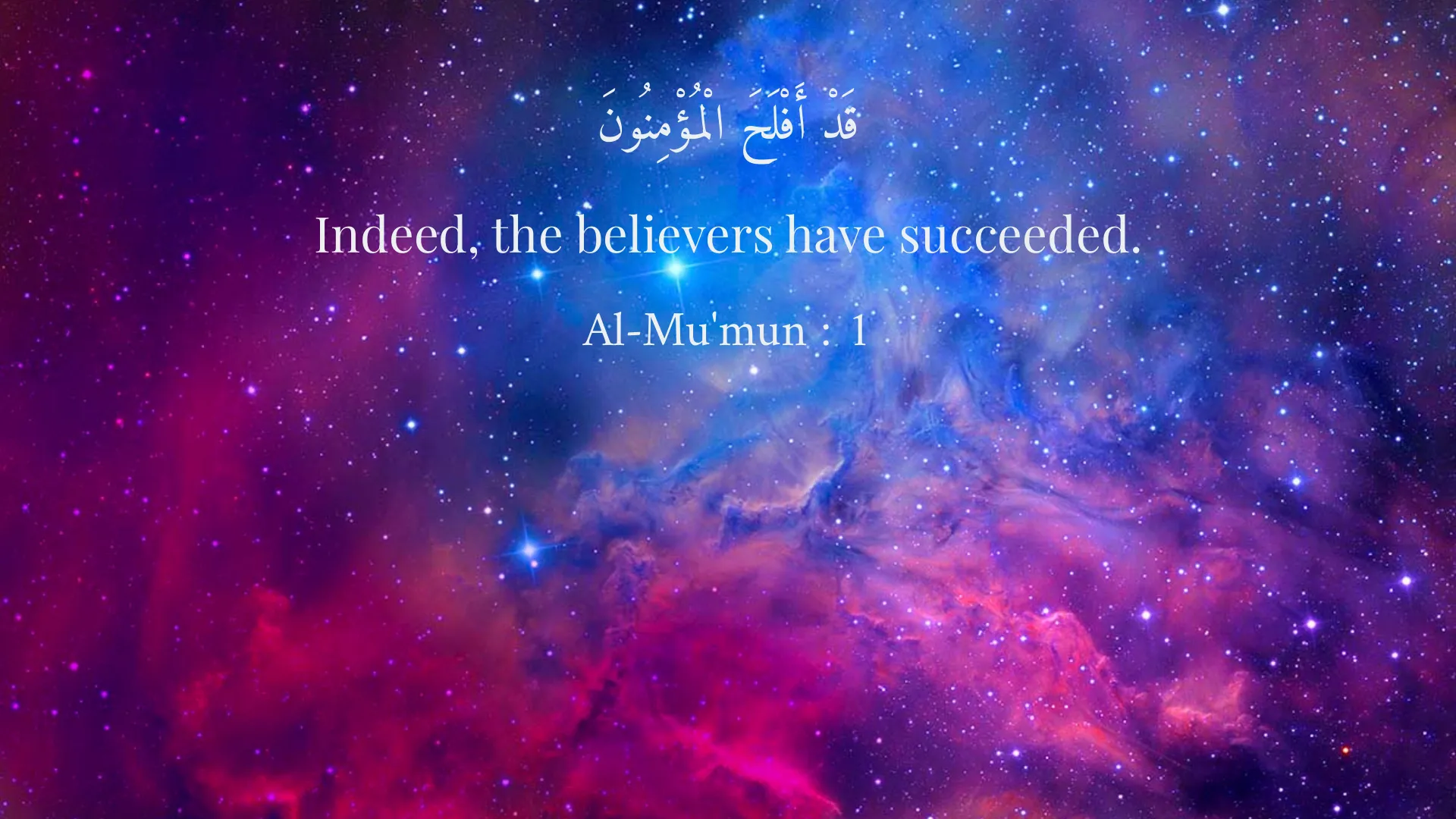
قَدْ أَفْلَحَ الْمُؤْمِنُونَ
Indeed, the believers have succeeded.
Al-Mu'mun : 1
وَ اعْلَمُوا أَنَّمَا أَمْوَالُكُمْ وَأَوْلَادُكُمْ فِتْنَةٌ ۖ وَأَنَّ اللَّهَ عِندَهُ أَجْرٌ عَظِيمٌ
And know that your possessions and your children are but a trial, and that Allah has with Him a great reward.
Al-Anfal : 28
Short Story
One day, a young man named Ehsan was praying and lost in thought. He was always worried about whether he truly felt Allah's name in his heart. When he searched within himself for this feeling, he realized that humility and devotion in prayer were among his most fundamental needs to connect with God. From that day on, every time he stood for prayer, he concentrated with all his being and felt a deeper tranquility within his heart.