Quranic Answer
In the Holy Quran, the concept of worship goes beyond mere rituals and encompasses a profound and sacred interaction between the believer and the Creator. Worship is defined as a sacred and essential act that must be performed with a pure heart and sincere intention, reflecting the deep spirituality inherent in Islamic teachings. These teachings guide Muslims towards a fulfilling and meaningful life, emphasizing the importance of both intention and action in the pursuit of pleasing Allah. In Surah Al-Baqarah, verse 177, Allah emphasizes the significance of righteous intention and good deeds in worship. The verse states: "It is not righteousness that you turn your faces towards the east or the west, but righteous is he who believes in Allah, the Last Day, the Angels, the Book, and the Prophets and gives his wealth, in spite of love for it, to relatives, orphans, the needy, the traveler, those who ask [for help], and for freeing slaves; [and who] establishes prayer and gives zakah; [those who] fulfill their promise when they promise; and [those who] are patient in poverty and hardship and during battle. Those are the ones who have been true, and it is those who are the righteous." This verse highlights that the essence of righteousness is rooted in faith and good deeds, rather than merely performing physical acts of worship. In Islam, worship is not confined to the five daily prayers or fasting during Ramadan; it extends to all actions performed with the right intention. This signifies that every positive action taken with the purpose of pleasing Allah can be considered an act of worship, reinforcing the fundamental belief that worship is a holistic way of life. Further aligning with this notion of sincere worship, Surah Az-Zumar, verse 53 presents an encouraging message from Allah: "O My servants who have believed, fear your Lord. For those who do good in this world is good, and the earth of Allah is spacious. Indeed, the patient will be given their reward without account." This verse emphasizes that faith in the mercy of Allah is foundational to the believer's approach to worship. It underscores the idea that one should not despair of God's mercy, no matter the failings in their life. Instead, believers are encouraged to approach worship and prayer with hope for Allah's grace and mercy, reflecting a central theme in Islam—that faith and seeking forgiveness are accessible to all, regardless of their past actions. It is natural for believers to occasionally feel guilt during worship, particularly when confronting personal shortcomings or past mistakes. However, it is essential to recognize that these feelings should not lead to neglecting worship or weakening one’s faith. Feeling guilty can create a barrier that distances individuals from the act of worship, leading to further feelings of isolation and abandonment. This cycle can be damaging and counterproductive, as guilt may overshadow the believer's ability to connect with Allah and receive His mercy. The pivotal principle that underlines much of Islamic thought is the belief in God's unfathomable mercy and forgiveness. Surah Al-Imran, verse 135, describes those who return to Allah with repentance, saying: "And those who, when they commit an immoral act or wrong themselves by transgression, remember Allah and seek forgiveness for their sins— and who can forgive sins except Allah? —And [who] do not persist in what they have done while they know." This verse illustrates the understanding that all human beings are prone to sin and imperfection, yet it emphasizes Allah's compassion towards His creations. When believers acknowledge their shortcomings and sincerely seek forgiveness, they align themselves with a path that draws them closer to Allah rather than pushing them away. This acknowledgment of human fallibility is liberating; it invites believers to approach worship with humility, recognizing their need for Allah's mercy and forgiveness. Thus, if feelings of guilt arise during worship, believers should remember that God is the All-Forgiving and the Most Merciful. By holding onto the hope of divine forgiveness, they can transform guilt into a catalyst for spiritual growth, prompting them to return to worship with renewed zeal and sincerity. Islam teaches that it is part of human nature to sin, and it reassures believers that Allah is compassionate and merciful towards those who sincerely seek His forgiveness. Therefore, Muslims are reminded to trust in Allah's mercy and focus on cultivating good intentions and performing righteous deeds. Rather than dwelling on past mistakes or allowing guilt to hinder their connection with God, believers are encouraged to strive wholeheartedly in their worship practices. In conclusion, the journey of worship in Islam is a dynamic interplay between intention, action, and the recognition of divine mercy. Believers are called to immerse themselves in acts of worship with a pure heart, guided by the love of Allah and the hope of receiving His grace. By embracing the ideals of repentance, forgiveness, and resilience, Muslims can create a vibrant spiritual life that honors their relationship with Allah. It is through understanding and embodying these principles that worship becomes a transformative experience, allowing believers to draw nearer to God and fulfil their purpose in life. The importance of sincere worship, coupled with the acknowledgment of Allah's mercy, fosters a profound sense of hope and connection, urging believers to engage in their faith actively and continuously in pursuit of righteousness.
Related Verses
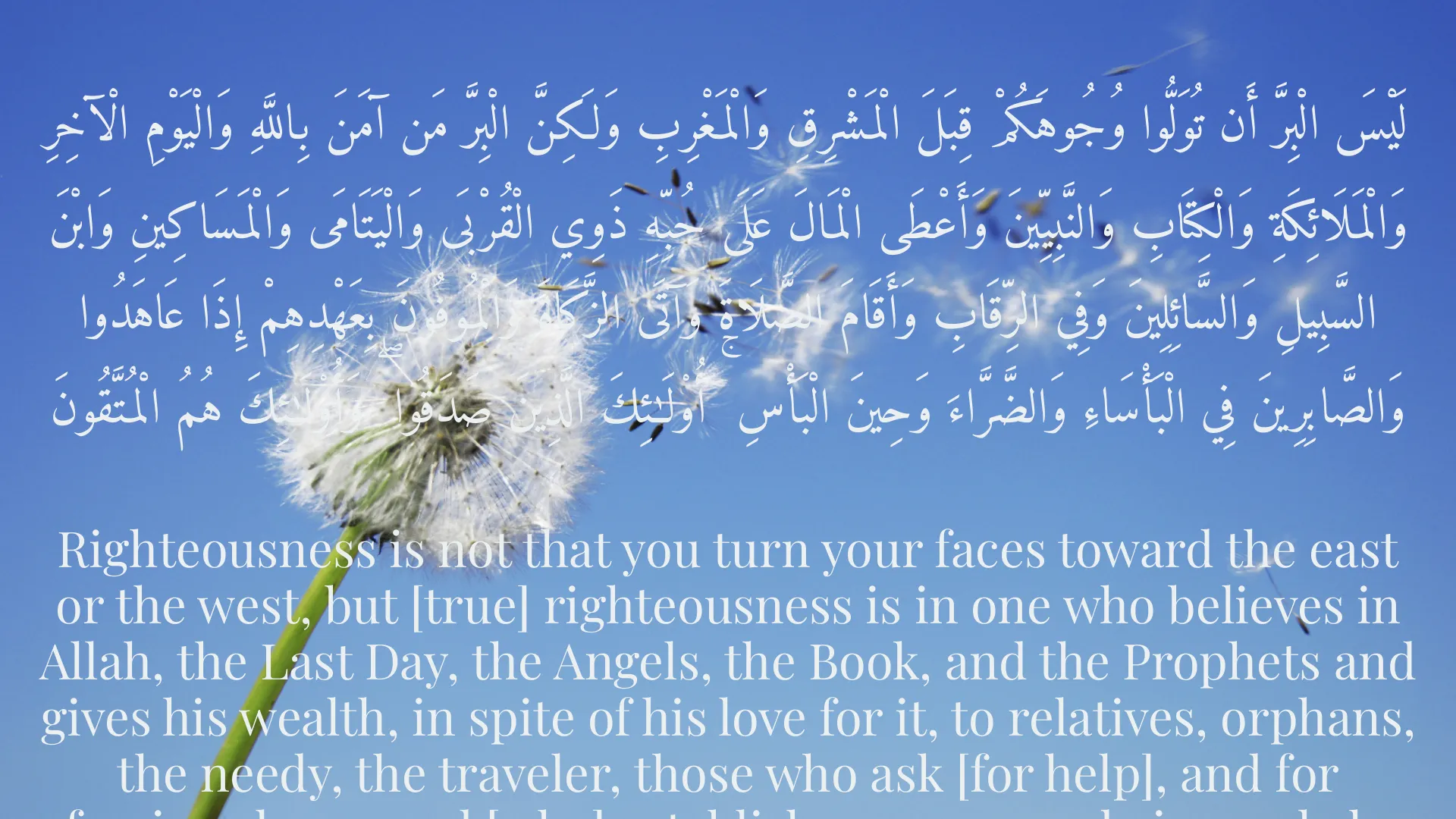
لَيْسَ الْبِرَّ أَن تُوَلُّوا وُجُوهَكُمْ قِبَلَ الْمَشْرِقِ وَالْمَغْرِبِ وَلَكِنَّ الْبِرَّ مَن آمَنَ بِاللَّهِ وَالْيَوْمِ الْآخِرِ وَالْمَلَائِكَةِ وَالْكِتَابِ وَالنَّبِيِّينَ وَأَعْطَى الْمَالَ عَلَى حُبِّهِ ذَوِي الْقُرْبَى وَالْيَتَامَى وَالْمَسَاكِينِ وَابْنَ السَّبِيلِ وَالسَّائِلِينَ وَفِي الرِّقَابِ وَأَقَامَ الصَّلَاةَ وَآتَى الزَّكَاةَ وَالْمُوفُونَ بِعَهْدِهِمْ إِذَا عَاهَدُوا وَالصَّابِرِينَ فِي الْبَأْسَاءِ وَالضَّرَّاءَ وَحِينَ الْبَأْسِ ۚ أُو۟لَـٰئِكَ الَّذِينَ صَدَقُوا ۖ وَأُو۟لَـٰئِكَ هُمُ الْمُتَّقُونَ
Righteousness is not that you turn your faces toward the east or the west, but [true] righteousness is in one who believes in Allah, the Last Day, the Angels, the Book, and the Prophets and gives his wealth, in spite of his love for it, to relatives, orphans, the needy, the traveler, those who ask [for help], and for freeing slaves; and [who] establishes prayer and gives zakah; [those who fulfill their promise when they promise] and [those who are patient in poverty and hardship and during battle]. Those are the ones who have been true, and it is those who are the righteous.
Al-Baqarah : 177
قُلْ يَا عِبَادِيَ الَّذِينَ آمَنْتُمْ اتَّقُوا رَبَّكُمْ ۖ لِلَّذِينَ أَحْسَنُوا فِي هَذِهِ الدُّنْيَا حَسَنةٌ ۖ وَأَرْضُ اللَّهِ وَاسِعَةٌ ۖ إِنَّمَا يُوَفَّى الصَّابِرُونَ أَجْرَهُمْ بِغَيْرِ حِسَابٍ
Say, 'O My servants who have believed, fear your Lord. For those who do good in this world is good, and the earth of Allah is spacious. Indeed, the patient will be given their reward without account.'
Az-Zumar : 53
وَالَّذِينَ إِذَا فَعَلُوا فَاحِشَةً أَوْ ظَلَمُوا أَنفُسَهُمْ ذَكَرُوا اللَّهَ فَاسْتَغْفَرُوا لِذُنُوبِهِمْ ۖ وَمَن يَغْفِرُ الذُّنُوبَ إِلَّا اللَّهُ ۚ وَلَمْ يُصِرُّوا عَلَى مَا فَعَلُوا وَهُمْ يَعْلَمُونَ
And those who, when they commit an immorality or wrong themselves by transgression, remember Allah and seek forgiveness for their sins – and who can forgive sins except Allah? And [who] do not persist in what they have done while they know.
Al-Imran : 135
Short Story
One day, a man named Salim decided to go for worship but felt that his past wrongdoings were preventing him from connecting with God. He recalled the verses of the Quran and understood that Allah is merciful and forgiving. Salim went to the mosque and prayed with all his heart. After praying, he felt a weight lifted off his shoulders. He realized that God wants His servants to come to Him with a pure heart and without worrying about the past.