Quranic Answer
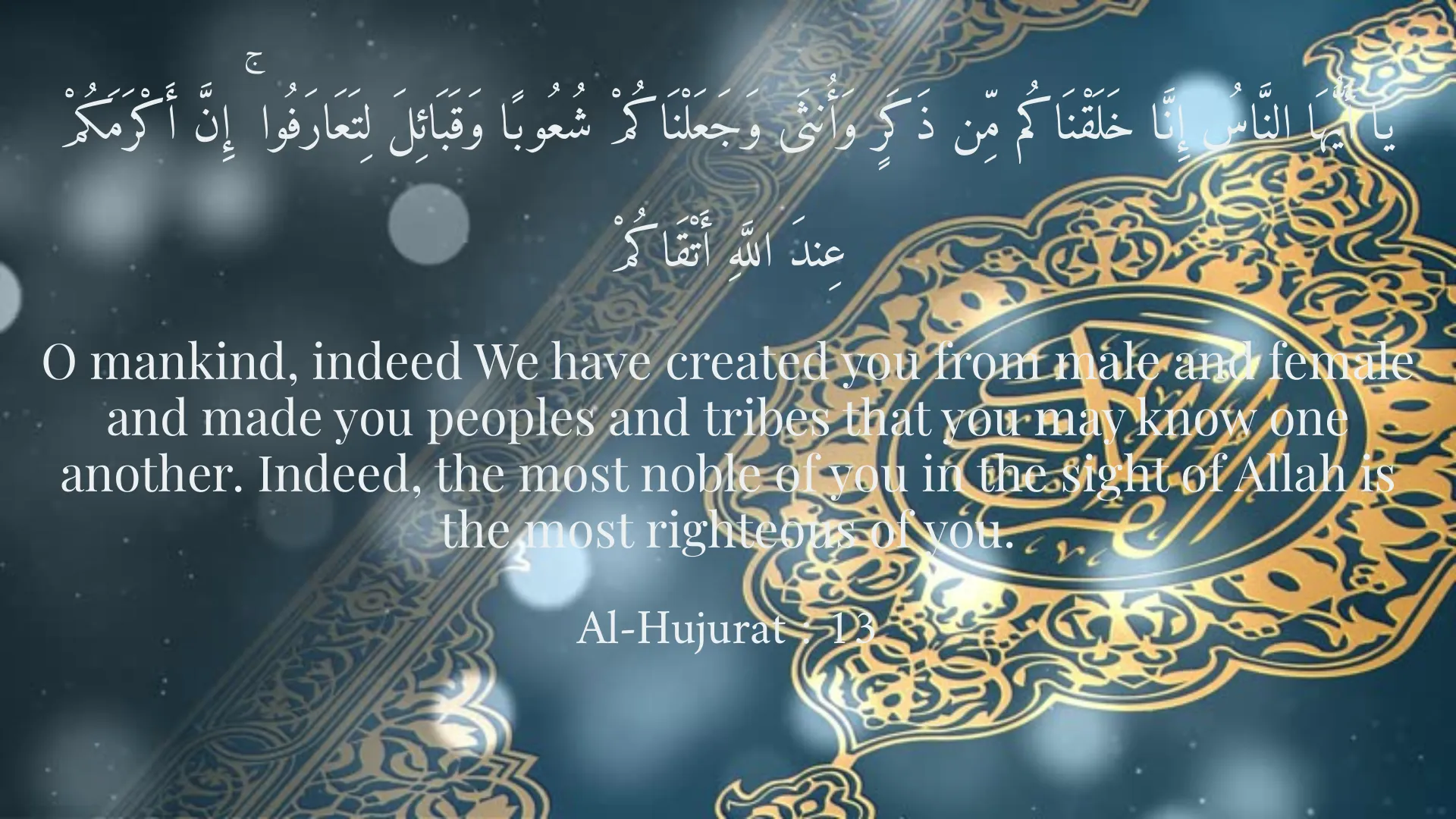
In the Holy Quran, Allah commands humanity to always maintain humility towards one another and to distance themselves from feelings of superiority. This divine exhortation applies universally, transcending the boundaries of time, culture, and social status. It reminds us of our shared existence and common humanity, inviting us to reflect upon our relationships and interactions with one another. Humility, as a moral principle, encourages individuals to recognize their limitations and the equal value of every human being. The essence of this command centers on the understanding that all individuals are created by Allah, hence they deserve respect and dignity regardless of ethnic, tribal, or financial circumstances. One major reason for this divine guidance is the reminder that we are all equal in the creation of Allah. In Surah Al-Hujurat, verse 13, Allah states: "O mankind, indeed We have created you from male and female and made you peoples and tribes that you may know one another. Indeed, the most noble of you in the sight of Allah is the most righteous of you." This verse clearly indicates that superiority in the eyes of Allah is based on piety and righteousness, not on social status or external characteristics. The emphasis on ethical behavior and moral character serves as a crucial reminder that true worth is measured not by worldly possessions or titles, but by one's relationship with their Creator and the righteousness of their deeds. Additionally, the Quran highlights the potential dangers of feelings of superiority. Such sentiments can lead to ignorance, envy, resentment, and even the establishment of social tensions. When individuals feel superior to others, they may disregard the feelings and experiences of those around them, creating divisions within society. This disconnect undermines the fundamental unity that humanity should strive to achieve. As stated in Surah Al-Isra, verse 37: "And do not walk upon the earth with arrogance; indeed, you will never tear the earth apart, and you will never reach the mountains in height." This verse serves as a powerful reminder that human arrogance is futile; we are all subject to the same existential realities and ultimately belong to the same divine creation. Furthermore, indulgence in feelings of superiority can lead to detrimental social consequences. The resultant arrogance often breeds conflict and discord, instilling a culture of competition rather than cooperation. This dynamic can result in individuals prioritizing personal gain over the well-being of the community. In contrast, an attitude of humility fosters empathy and understanding, enabling individuals to support one another and to forge stronger connections. By recognizing our shared humanity, we can cultivate a sense of belonging and solidarity that promotes peace and mutual respect. The Quran further emphasizes that the characteristics of arrogance and pride are among the ugliest behaviors in human interactions. These traits can poison relationships and foster a toxic environment where empathy and kindness are disregarded. It is essential to note that humility does not equate to self-deprecation or lack of confidence; instead, it involves acknowledging one's strengths while remaining aware of the worth of others. This balanced perspective creates a space for healthy interactions and constructive dialogue, enabling individuals to work together harmoniously towards common goals. Thus, understanding and embracing submission to Allah and respect for all are the ethical foundations for a respected life. Respecting others, regardless of their background or beliefs, is intricately linked to our understanding of humility. This mutual respect cultivates a culture where individuals honor each other's differences, recognizing that diversity enriches our collective experience and perspectives. Such respect also lays the groundwork for solving conflicts amicably, fostering a society where dialogue prevails over dissent. Ultimately, to create a respectful and harmonious community, we must honor our differences and treat one another with humility. This journey begins with introspection and self-awareness, encouraging individuals to confront their biases and challenges and to extend grace to others. It is through these acts of kindness and understanding that we can begin to realize the Quranic vision of equity and unity among humankind. In conclusion, the principles of humility and respect as outlined in the Quran are essential for creating a life filled with dignity and honor. They challenge us to reflect on our interactions with those around us, fostering an environment conducive to peace and mutual understanding. As we strive toward this noble goal, let us remember the profound teachings of Allah and work towards embodying the virtues of righteousness, humility, and compassion. In doing so, we honor our Creator and contribute to a world that respects and celebrates the beautiful diversity of humanity.
Related Verses
يَا أَيُّهَا النَّاسُ إِنَّا خَلَقْنَاكُم مِّن ذَكَرٍ وَأُنثَى وَجَعَلْنَاكُمْ شُعُوبًا وَقَبَائِلَ لِتَعَارَفُوا ۚ إِنَّ أَكْرَمَكُمْ عِندَ اللَّهِ أَتْقَاكُمْ
O mankind, indeed We have created you from male and female and made you peoples and tribes that you may know one another. Indeed, the most noble of you in the sight of Allah is the most righteous of you.
Al-Hujurat : 13
وَلَا تَمْشِ فِي الْأَرْضِ مَرَحًا ۚ إِنَّكَ لَن تَخْرِقَ الْأَرْضَ وَلَن تَبْلُغَ الْجِبَالَ طُولًا
And do not walk upon the earth with arrogance; indeed, you will never tear the earth apart, and you will never reach the mountains in height.
Al-Isra : 37
Short Story
Once upon a time in a village, there was a man named Ali who wanted to be the best and the greatest. He always boasted over others and would show himself superior for various reasons. But one day, an old man in the village saw him and said, "My dear, we are all made from the same clay, and our Lord only considers piety as the measure of superiority." Ali pondered upon this and gradually realized that instead of boasting, he should show kindness to others and see himself as their equal. From that day on, he let go of his selfishness and lived alongside everyone with more humility.