Quranic Answer
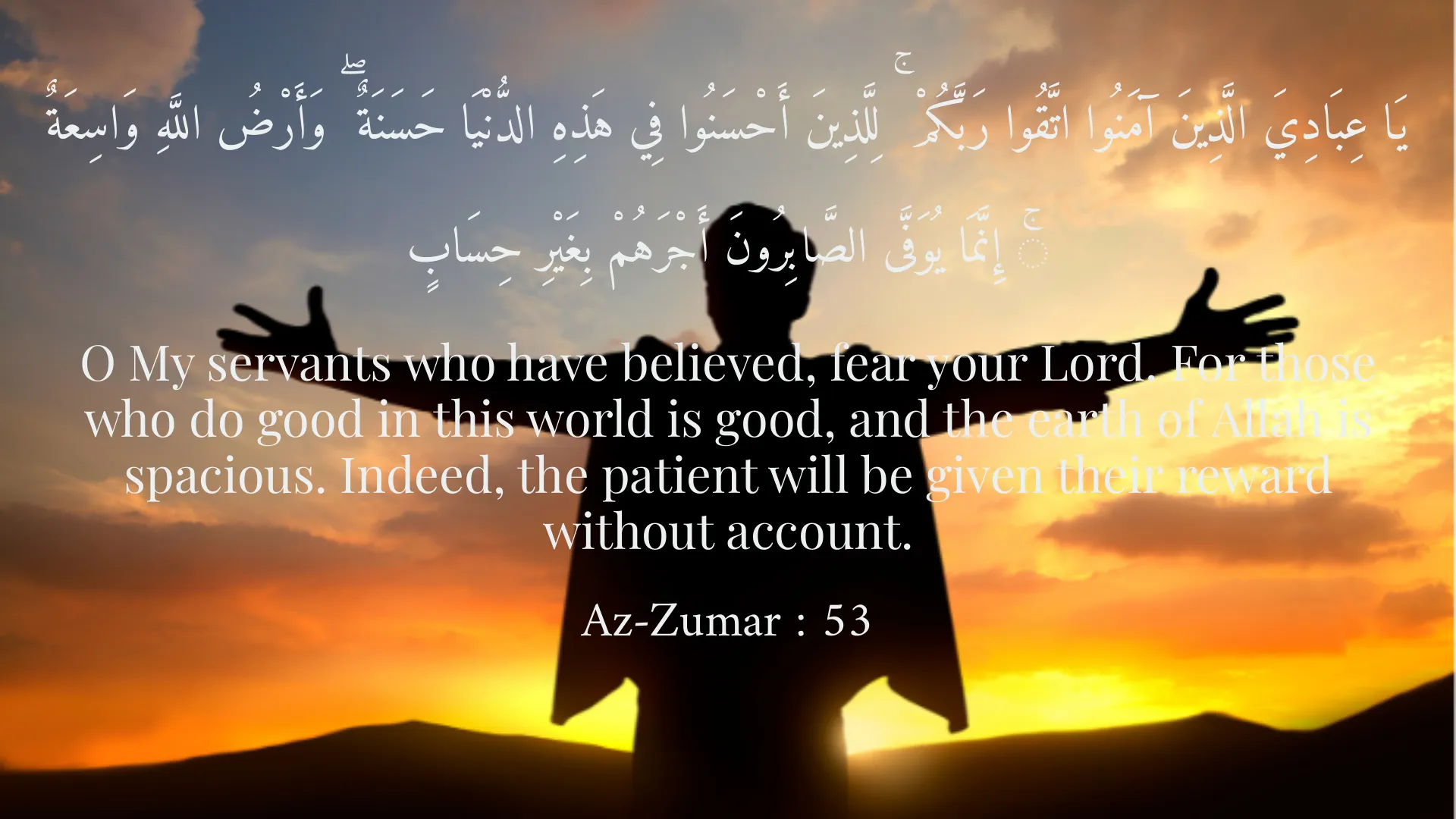
In the Holy Quran, the concept of hope is a central theme that resonates throughout the text, particularly in the way it encourages believers to maintain their faith and trust in Allah, even in the face of adversity. Hope is not merely a feeling but a profound part of the Islamic tenets that shapes one's outlook on life and influences behavior. In many verses, the Quran articulates that losing hope is not an option for the faithful, and instead, they are urged to rely on Allah's infinite mercy and compassion. One of the most significant verses addressing this crucial aspect of hope is found in Surah Az-Zumar, verse 53, which states, 'Say, O My servants who have believed, fear your Lord. For those who do good in this world is good, and the earth of Allah is spacious. Indeed, the patient will be given their reward without account.' This verse serves as a powerful reminder that despair has no role in the life of a believer. It highlights the connection between faith, good deeds, and the expansive mercy of Allah. Those who strive to do good will find solace and reward both in this life and the hereafter. The verse also speaks volumes about the resilience required of believers. Patience, as stated in the same verse, is a virtue that bears fruit in the form of unfettered rewards from Allah. The idea that rewards will come without account signifies that Allah’s generosity knows no bounds; it is limitless and ultimately, tailored to accommodate the needs of His creations. This assurance should uplift the human spirit and instill a sense of hope that is crucial for navigating the challenges of life. Further reinforcing the message of hope, Surah Al-Baqarah, verse 286, offers profound wisdom when it states, 'Allah does not burden a soul beyond that it can bear.' Each individual is uniquely designed with the strength to face their challenges. This verse underlines the idea that our trials are not arbitrary burdens but are, in fact, aligned with our abilities and destinies. In this context, believers are encouraged to trust in their capacity to manage difficulties, thereby avoiding the destructive emotions of despair and hopelessness. The assurance given in this verse highlights a fundamental aspect of Islamic faith: Allah’s justice. The belief that He does not impose upon a soul more than it can bear serves as a lifeline, reminding believers that their struggles are intentional and beneficial in the long run. This perspective enables individuals to shift their focus from the hardships they face to the opportunities for growth and development that these challenges present. The essence of this message is that there is always a way through adversity, allowing believers to cultivate resilience. Moreover, in Surah Al-Imran, verse 139, it states, 'So do not become weak, nor be sad, for you will surely be superior if you are true believers.' This directive encapsulates the spirit of unwavering faith that characterizes the Muslim community. Losing heart or succumbing to sadness is seen as contradictory to having strong faith. This verse serves not only as encouragement but as a call to action for believers to remain steadfast and confident in their faith. The fact that divine assurance accompanies the believer in their trials is a crucial aspect of holding onto hope. It inspires individuals to recognize their potential and strive for superiority through their faith and actions. The claims made by this verse challenge the culturally pervasive narratives of vulnerability and pitiful acceptance of fate. Instead, faith in Allah empowers believers to rise above their circumstances, nurturing the ideal that hope is an active pursuit rather than passive waiting. In examining these verses, it becomes evident that despair has no place in Islam. Each individual is constantly reminded to trust in Allah's promises. This profound faith propels believers away from hopelessness and towards a more proactive stance in life. The Quran emphasizes the need for reflection upon Allah's mercy and compassion, which serves as an anchor to prevent believers from despairing over their situations. Moreover, the teachings of the Quran guide us to acknowledge that life’s journey is fraught with ups and downs. Believers face trials that are meant to test their resilience and commitment to their faith. In this light, hope becomes not just an abstract idea but a daily practice that is reinforced through prayer, community support, and a sincere connection with Allah. The act of relying on Allah is transformative, instilling a sense of tranquility that helps individuals confront their fears and anxiety. The integration of faith with personal development means that believers are not passive in their hope; they engage actively in making choices that foster peace, understanding, and positivity. At times of distress, they are reminded that no problem is beyond their capacity to handle, provided they arm themselves with faith and guidance from the Quran. In conclusion, the Quran provides an enduring source of hope and inspiration for Muslims around the world. Through its verses, believers are urged to maintain hope even amid hardships, emphasizing that despair is not an option. The principles laid out in Surah Az-Zumar, Surah Al-Baqarah, and Surah Al-Imran remind us of Allah's infinite mercy and the importance of patience, faith, and resilience. These teachings continue to bolster individuals spiritually, allowing them to navigate life's complexities with grace and fortitude, ultimately guiding them on a path to success and tranquility. By grounding ourselves in the teachings of the Quran, we can foster a hopeful outlook that empowers us to persevere through challenges and embrace the beauty of life.
Related Verses
يَا عِبَادِيَ الَّذِينَ آمَنُوا اتَّقُوا رَبَّكُمْ ۚ لِلَّذِينَ أَحْسَنُوا فِي هَذِهِ الدُّنْيَا حَسَنَةٌ ۖ وَأَرْضُ اللَّهِ وَاسِعَةٌ ۚ إِنَّمَا يُوَفَّى الصَّابِرُونَ أَجْرَهُمْ بِغَيْرِ حِسَابٍ
O My servants who have believed, fear your Lord. For those who do good in this world is good, and the earth of Allah is spacious. Indeed, the patient will be given their reward without account.
Az-Zumar : 53
لَا يُكَلِّفُ اللَّهُ نَفْسًا إِلَّا وُسْعَهَا ۚ لَهَا مَا كَسَبَتْ وَعَلَيْهَا مَا اكْتَسَبَتْ ۗ رَبَّنَا لَا تُؤَاخِذْنَا إِن نَّسِينَا أَوْ أَخْطَأْنَا ۚ رَبَّنَا وَلَا تَحْمِلْ عَلَيْنَا إِصْرًا كَمَا حَمَلْتَهُ عَلَى الَّذِينَ مِن قَبْلِنَا ۚ رَبَّنَا وَلَا تُحَمِّلْنَا مَا لَا طَاقَةَ لَنَا بِهِ ۚ وَاعْفُ عَنَّا وَاغْفِرْ لَنَا وَارْحَمْنَا ۚ أَنتَ مَوْلَانَا فَانصُرْنَا عَلَى الْقَوْمِ الْكَافِرِينَ
Allah does not burden a soul beyond that it can bear. For it is what [good] it has gained, and against it is what [evil] it has earned. Our Lord, do not impose blame upon us if we have forgotten or made a mistake. Our Lord, and lay not upon us a burden like that which You laid upon those before us. Our Lord, and burden us not with that which we have no ability to bear. And pardon us; and forgive us; and have mercy upon us. You are our protector, so give us victory over the disbelieving people.
Al-Baqarah : 286
وَلَا تَهِنُوا وَلَا تَحْزَنُوا وَأَنتُمُ الْأَعْلَوْنَ إِن كُنتُم مُّؤْمِنِينَ
And do not weaken and do not grieve, and you will be superior if you are believers.
Al-Imran : 139
Short Story
One day, a man named Ahmed was contemplating his future. He was facing significant challenges and felt overwhelmed with despair. However, upon reading verses from the Quran, he found a verse that brought him peace. He realized that he should never lose hope in God's mercy and that challenges were a part of life. With this thought, Ahmed decided to continue his efforts and look towards the future with faith and hope.