Quranic Answer
In the modern era, the significance of love, empathy, and positive interactions among individuals has become more paramount than ever. The Holy Quran, Islam's divine scripture, offers profound teachings that guide believers in developing a harmonious community. Within its pages, one finds numerous verses that highlight the importance of compassion, mutual respect, and understanding among individuals. A critical exploration of the Quran reveals a continuous emphasis on not only acknowledging the importance of love but also on refraining from mockery or ridicule of fellow beings. In Surah Al-Hujurat, verse 11, Allah addresses the believers with significant counsel, advising against the act of mocking or ridiculing one another. This guidance sheds light on several foundational principles that maintain the ethical fabric of society. When Allah advises believers against ridicule, it speaks to the heart of human dignity. Every individual possesses a unique spirit, and mockery can deeply wound this essence, leading to feelings of inadequacy, alienation, and unrest. Such actions are detrimental, as they negate the bonds of love and unity that the Quran calls upon believers to strengthen. Furthermore, when mockery becomes a part of social interactions, it fosters division and enmity within the community. This is where the essence of brotherhood, a foundational tenet in Islam, is compromised. Just as laughter and joy can bring people together, ridicule serves only to alienate and destroy the sense of community that is vital for any society. Engaging in mockery not only harms the targeted individual but can also propagate an atmosphere of hostility and suspicion. Instead of promoting love and understanding, it creates barriers and rifts that can lead to broader social discontent. The Quran extends this exploration of human interactions beyond the idea of mere ridicule. In Surah Adh-Dhariyat, verse 19, Allah's reminder to humanity about personal responsibility is a profound lesson. He states that each individual is accountable for their actions, urging believers to refrain from blaming others for their shortcomings and failings. This principle is crucial in cultivating a community that is built on kindness, instead of judgment and criticism. It's a reminder that while individuals may falter, the response should not be condemnation, but rather a spirit of assistance and guidance. Mocking the sins of others can be viewed as a violation of this ethical injunction. Such behavior is not only incorrect but also profoundly unethical and ineffective. By ridiculing someone for their mistakes, we not only intensify their feelings of shame but also strip them of the opportunity to learn, grow, and transform into a better version of themselves. Instead of responding with harsh judgment, Islam advocates for repentance and forgiveness, which are pillars of the faith. These principles encourage believers to create an atmosphere conducive to personal growth and moral enhancement, allowing individuals the space to redefine themselves after making mistakes. Furthermore, one of Islam's most cherished values is that of forgiveness. Each believer must recognize the importance of offering forgiveness, both to themselves and to others. This becomes particularly poignant when we understand that everyone is susceptible to imperfections. No human being is infallible; we all have our shortcomings and faults. Recognizing this shared vulnerability should evoke empathy rather than contempt for others' missteps. Prophet Muhammad (peace be upon him) articulated this sentiment beautifully in a hadith where he states, 'Whoever humiliates his brother for his sin should never boast, for he does not know if Allah has forgiven that sin from him.' This profound statement underscores the dangerous terrain of pride and judgment that comes when individuals mock others for their misdeeds. It reminds believers that, ultimately, Allah's mercy and forgiveness are not only for the individual but also extended to those who embrace humility in the face of their shortcomings. This hadith is a wake-up call to all believers about the importance of maintaining a humble heart and recognizing the potential for change in ourselves and others. Instead of casting ridicule, it is our responsibility to uplift and guide those who may have strayed from the righteous path. This perspective urges believers to continuously strive towards self-improvement while being compassionate toward the journeys of others. In reflecting on these Quranic teachings and the prophetic guidance, one finds a clear framework illustrating the significance of love, understanding, and guidance as fundamental components of a well-functioning community. This collective vision fosters a society built on mutual respect, love, and a sincere desire to see one another succeed. In conclusion, the spiritual and ethical lessons found within the Holy Quran advocate for an environment founded on love rather than ridicule, understanding rather than judgment, and guidance rather than contempt. As we navigate through our lives, let us embrace these teachings by refraining from mockery and uplift those around us, helping cultivate a community where everyone feels valued and supported, ultimately reflecting the beauty and mercy of Islam in our social interactions.
Related Verses
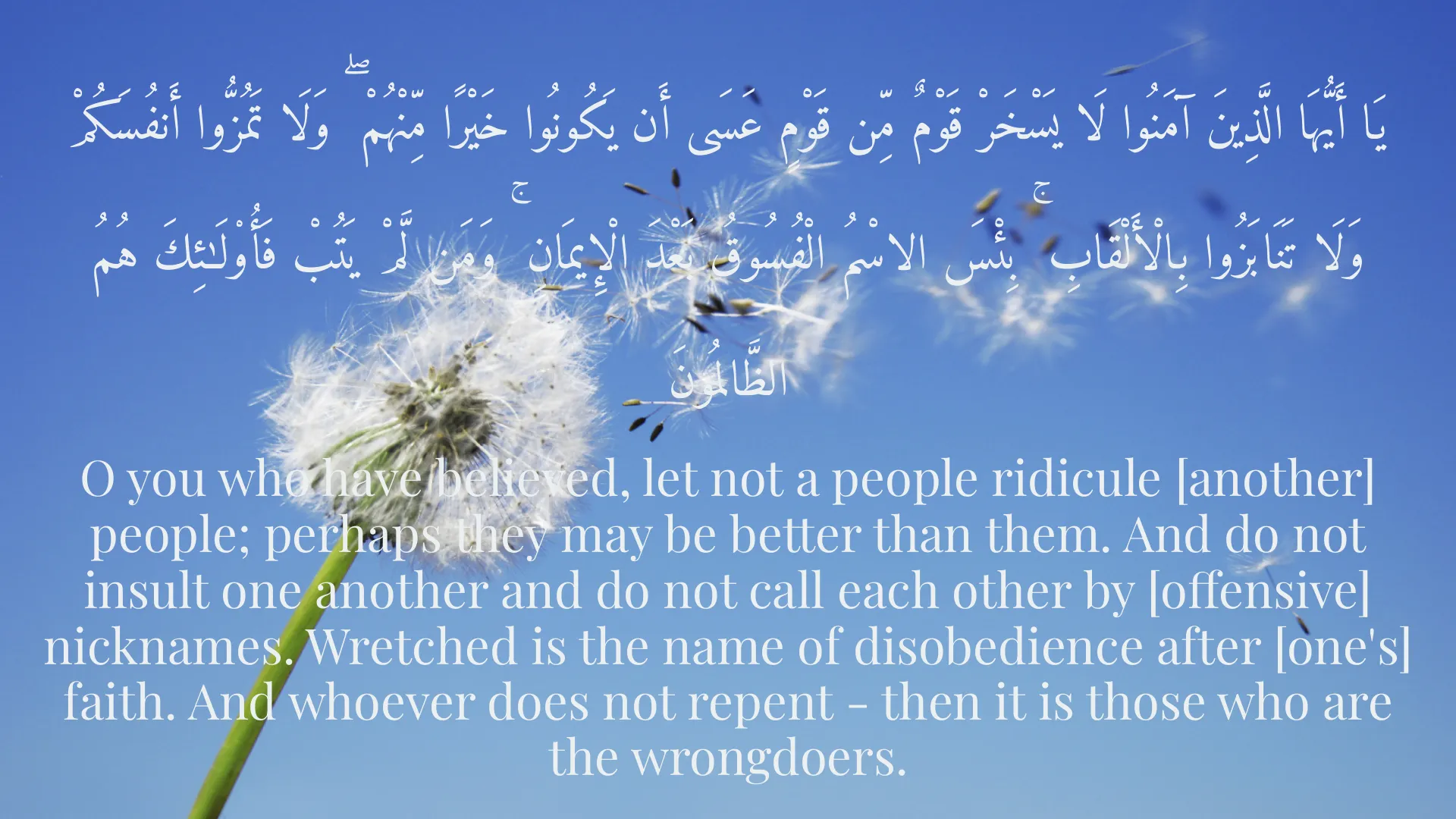
يَا أَيُّهَا الَّذِينَ آمَنُوا لَا يَسْخَرْ قَوْمٌ مِّن قَوْمٍ عَسَى أَن يَكُونُوا خَيْرًا مِّنْهُمْ ۖ وَلَا تَمُزُّوا أَنفُسَكُمْ وَلَا تَنَابَزُوا بِالْأَلْقَابِ ۚ بِئْسَ الاسْمُ الْفُسُوقُ بَعْدَ الْإِيمَانِ ۚ وَمَن لَّمْ يَتُبْ فَأُو۟لَـٰئِكَ هُمُ الظَّالمُونَ
O you who have believed, let not a people ridicule [another] people; perhaps they may be better than them. And do not insult one another and do not call each other by [offensive] nicknames. Wretched is the name of disobedience after [one's] faith. And whoever does not repent - then it is those who are the wrongdoers.
Al-Hujurat : 11
وَفِي أَمْوَالِهِمْ حَقٌّ مَّعْلُومٌ لِّسَّائِلِ وَالْمَحْرُومِ
And in their wealth was a known right for the beggar and the deprived.
Adh-Dhariyat : 19
Short Story
One day, a man named Hassan sat on a tree, gazing at the lives of others. He noticed that one of his neighbors was always striving to beautify himself and improve his life. Hassan asked himself: "Why should I mock him?" and recalled the Quranic verses reminding not to speak of others' mistakes. He decided to help that neighbor instead of condemning him, aiming for a better life. This is a principle we should always uphold in our lives.