Quranic Answer
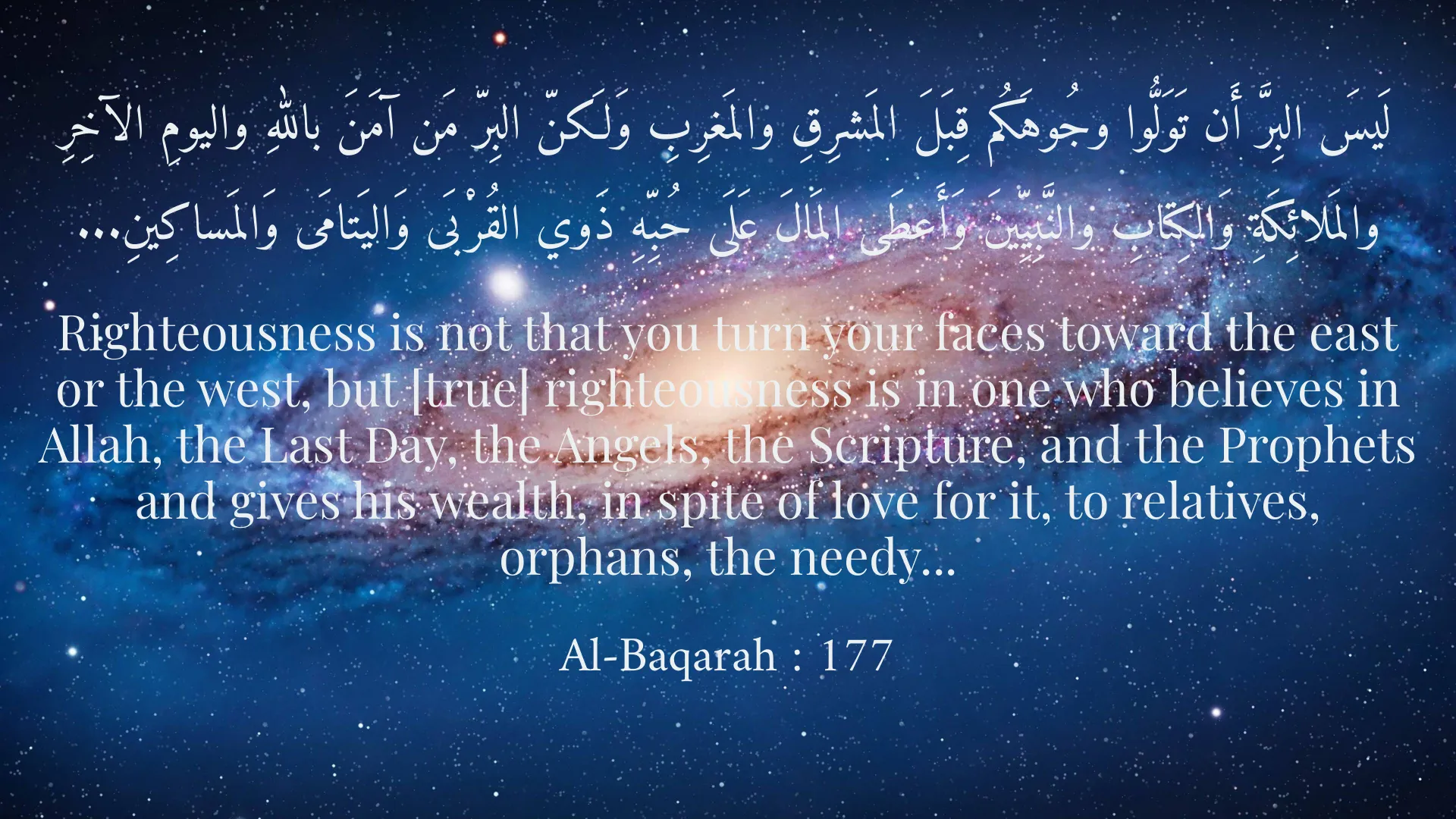
Being kind to others is one of the fundamental principles of human ethics and behavior that is emphasized in the Holy Quran. The Quran, which is considered the literal word of God by Muslims, lays down a moral framework that guides its followers in various aspects of life. One of the most significant teachings found in this sacred text is the emphasis on benevolence and kindness towards others. This principle is not only foundational in Islam but is also universally recognized as a cornerstone of ethical behavior across various cultures and religions. The Quran, through its verses, instructs believers in multiple instances to treat one another with kindness, compassion, and justice, urging them to rise above self-interest and personal gain. A powerful example of this is found in Surah Al-Baqarah, verse 177, which states: "Righteousness is not that you turn your faces toward the east or the west, but [true] righteousness is in one who believes in Allah, the Last Day, the Angels, the Scripture, and the Prophets and gives his wealth, in spite of love for it, to relatives, orphans, the needy..." This verse illustrates that kindness and charity extend beyond mere rituals or physical gestures of faith. The essence of righteousness lies in the actions taken to help those who are less fortunate or in need. It emphasizes that true faith is manifest in one's willingness to give and support others, even when it requires personal sacrifice. Moreover, in another verse from Surah Ya-Sin, verse 47, Allah says: "And when it is said to them, 'Spend from what Allah has provided you,' those who disbelieve say to those who believe, 'Should we feed one whom, if Allah had willed, He would have fed?'..." This serves as a reminder that wealth and provisions are blessings from Allah, and withholding them from those in need is not in alignment with true belief. Instead, believers are encouraged to share their resources, recognizing that generosity is not only a sign of compassion but also an act of worship in its own right. The act of giving reinforces the bond within a community and cultivates a culture of love, respect, and understanding among its members. Kindness is not a one-time act; it is an ongoing process that requires sincerity and commitment. Practicing kindness leads to a virtuous cycle in which compassionate behavior fosters more kindness throughout society. When individuals engage in acts of goodwill, it creates an atmosphere where others are inspired to follow suit. This ripple effect contributes to a harmonious society, where the needs of the vulnerable are addressed, and individuals feel a sense of belonging and acceptance. In contemporary society, where materialism and individualism often overshadow communal values, the Quran's teachings on kindness are more important than ever. Modern life can lead to an environment of competition and ruthlessness, where people prioritize their own needs over those of others. However, the Quran teaches that the act of caring for others is not only vital for the recipients of that kindness but is also beneficial for the giver. Engaging in charitable actions enhances one's sense of purpose and fulfillment, bridging the gap between isolated individuals and fostering a sense of community. More than just ethical conduct, kindness in Islam has profound spiritual significance. It is perceived as an extension of divine love. The Quran implies that kindness is not merely a social obligation but a reflection of one's relationship with Allah. Acts of kindness serve as a way to embody divine attributes and a means to draw oneself closer to God. The love extended to others is a form of love from Allah and will never go without reward; as such, a person's kindness to fellow beings amplifies their spiritual journey. Furthermore, there are numerous hadiths (sayings of the Prophet Muhammad) that underscore the importance of kindness. The Prophet (peace be upon him) stated, “The merciful are shown mercy by the Merciful. Be merciful on the earth, and you will be shown mercy from above.” This narration encapsulates the essence of kindness, revealing that it not only nurtures human relationships but also brings forth divine grace and favor from Allah. The act of being merciful is interconnected with how one is treated both in this life and the hereafter. In conclusion, being kind to others is not only a moral and religious practice but also has a positive impact on one's own life. The Quran profoundly emphasizes that kindness is integral to faith and piety. By practicing kindness, individuals contribute to fostering a spirit of togetherness, compassion, and mutual respect within their communities. In our fast-paced, materialistic world, the teachings of the Quran serve as a critical reminder of the importance of being kind, which not only benefits society as a whole but elevates one’s soul and draws one closer to Allah. Ultimately, the pursuit of kindness is a lifelong endeavor that enriches both the giver and the receiver, leading to a more harmonious and loving society.
Related Verses
لَيسَ البِرَّ أَن تَوَلُّوا وجُوهَكُم قِبَلَ المَشرِقِ والمَغرِبِ وَلَكنّ البِرّ مَن آمَنَ باللهِ واليومِ الآخِرِ والمَلائِكَةِ وَالكِتابِ والنَّبِيِّينَ وَأَعطَى المَالَ عَلَى حُبِّهِ ذَوي القُرْبَى وَاليَتامَى وَالمَساكِينِ...
Righteousness is not that you turn your faces toward the east or the west, but [true] righteousness is in one who believes in Allah, the Last Day, the Angels, the Scripture, and the Prophets and gives his wealth, in spite of love for it, to relatives, orphans, the needy...
Al-Baqarah : 177
وَإِذَا قِيلَ لَهُمْ أَنفِقُوا مِمَّا رَزَقَكُمُ اللهُ قَالَ الَّذِينَ كَفَرُوا لِلَّذِينَ آمَنُوا أَنُطْعِمُ مَنْ لَوْ يَشَاءُ اللهُ أَطْعَمَهُ...
And when it is said to them, 'Spend from what Allah has provided you,' those who disbelieve say to those who believe, 'Should we feed one whom, if Allah had willed, He would have fed?'...
Ya-Sin : 47
Short Story
On a beautiful day, a man named Amir was walking down the street when he noticed an orphan child sitting in a corner, hungry. He recalled the verses of the Quran and the importance of being kind to others. Amir decided to give some of his bread to the child. When the child received the bread, his eyes were filled with gratitude, and Amir felt a deep sense of peace and happiness in his heart. He realized that being kind to others not only helps them but also brings him joy.