Quranic Answer
Title: The Power of Language in the Holy Quran: A Call for Respect and Responsibility Introduction In the religious text of the Holy Quran, language and the words we choose hold a position of paramount significance. The implications of our discourse resonate not merely on a personal level but extend to the broader fabric of society itself. The verses of the Quran provide profound insights into the importance of our language and how it can shape our interactions, character, and even our spiritual standing before Allah. This article aims to dissect these implications as highlighted in specific verses such as Surah Al-Hujurat, Surah Al-Isra, and Surah Luqman, inviting readers to reflect on the responsibilities that come with our ability to communicate. The Weight of Our Words Surah Al-Hujurat, verse 11, clearly encapsulates the consequences of disrespectful language: "O you who have believed, let not a people ridicule [another] people; perhaps they may be better than them. And do not insult one another and do not call each other by [offensive] nicknames." This profound reminder serves to underscore the power embedded in language. Words can uplift or damage the dignity of others. Ridicule, insults, and offensive nicknames may seem like trivial interactions, but this verse warns us of the potential harm they can inflict. In the age of rapid communication, the ease with which words can be spread calls for heightened responsibility on the part of those who engage in discourse. The anonymity provided by digital mediums often emboldens individuals to express themselves in ways they wouldn’t dare in person. However, the Quran reminds us that regardless of the medium, words have consequences—they can break hearts, challenge reputations, and sever relationships. The Divine Accountability Language, as a reflection of our character, places us under the scrutiny of divine accountability. Allah's expectation of our linguistic choices serves as both a guideline and a reprimand from the Holy Quran. Using profanity or disrespectful language tarnishes not only our moral character but also diminishes our standing in the eyes of Allah. Ultimately, the Quran emphasizes that careless words can lead individuals away from their moral compass. Our speech must, therefore, align with our faith, ensuring that we honor our commitments to ourselves, to others, and to Allah. As stated in Surah Al-Isra, verse 53: "And tell My servants to say that which is best. Indeed, Satan induces separation among them." This verse articulates that the words we employ should be those that build up rather than tear down. It signifies an awareness of how our language can either foster community or incite division. The use of slander or derogatory terms can be tools of manipulation at best and causes of enmity at worst. The Influence of the Tongue In a world increasingly fraught with conflict, division, and misunderstanding, one may ponder how the act of speaking can either bridge divides or deepen them. Surah Luqman, verse 19 highlights this very complexity. Allah states: "And be moderate in your pace and when you speak, be of good manners." This verse champions not just the content of our speech but also its delivery. To speak with moderation and courtesy has a ripple effect that can encourage kindness and unity among communities. However, the Quran also warns about the perils of reckless speech. The tongue, often called "the little member" that boasts great power, can steer conversations toward petty arguments, ethnic strife, and malicious gossip, particularly if not guided by principles of respect. This leads us to an essential truth: moderation and respect in speech act as deterrents against the temptations of using language for malicious purposes. Upholding Character Through Speech Refraining from profanity and harsh words aligns with the development of better character, fostering an environment conducive to harmony and empathy among individuals. The benefits of adhering to the principles laid out in the Quran are twofold—on a personal level, they cultivate discernment, humility, and integrity. Socially, they serve to maintain a peaceful coexistence in community settings, allowing diverse groups to collaborate while building mutual respect. Allah's pleasure is closely tied to our actions and motivations. By choosing to linguistically elevate rather than diminish, we not only align ourselves with divine expectations but also experience personal growth. Practicing patience and kindness in our verbal interactions contributes to a heart attuned to compassion and understanding—two indispensable qualities that should be at the forefront of societal interaction. The Benefits of Respectful Communication Ultimately, the Quran’s teachings on language offer timeless wisdom that transcends cultural and temporal boundaries. Committing to language of compassion encourages constructive dialogue, facilitates reconciliation, and helps to nurture relationships based on trust and mutual respect. In realizing our potential as articulate and mindful communicators, we uphold the academic and ethical standards of engagement necessary for modern society. This commitment to respectful dialogue is not merely an individual endeavor; it is a collective responsibility that reinforces the bonds of community. Conclusion In summary, the guidance provided in the Quran regarding the importance of language invites believers to consider their words carefully. Through the teachings of Surah Al-Hujurat, Surah Al-Isra, and Surah Luqman, we observe a clear call to action: to speak in ways that reflect our highest values and to build a world characterized by compassion, respect, and understanding. Let us embrace the power of our words, harnessing them as instruments of good that foster peace and unity in our communities and are favorable in the sight of Allah.
Related Verses
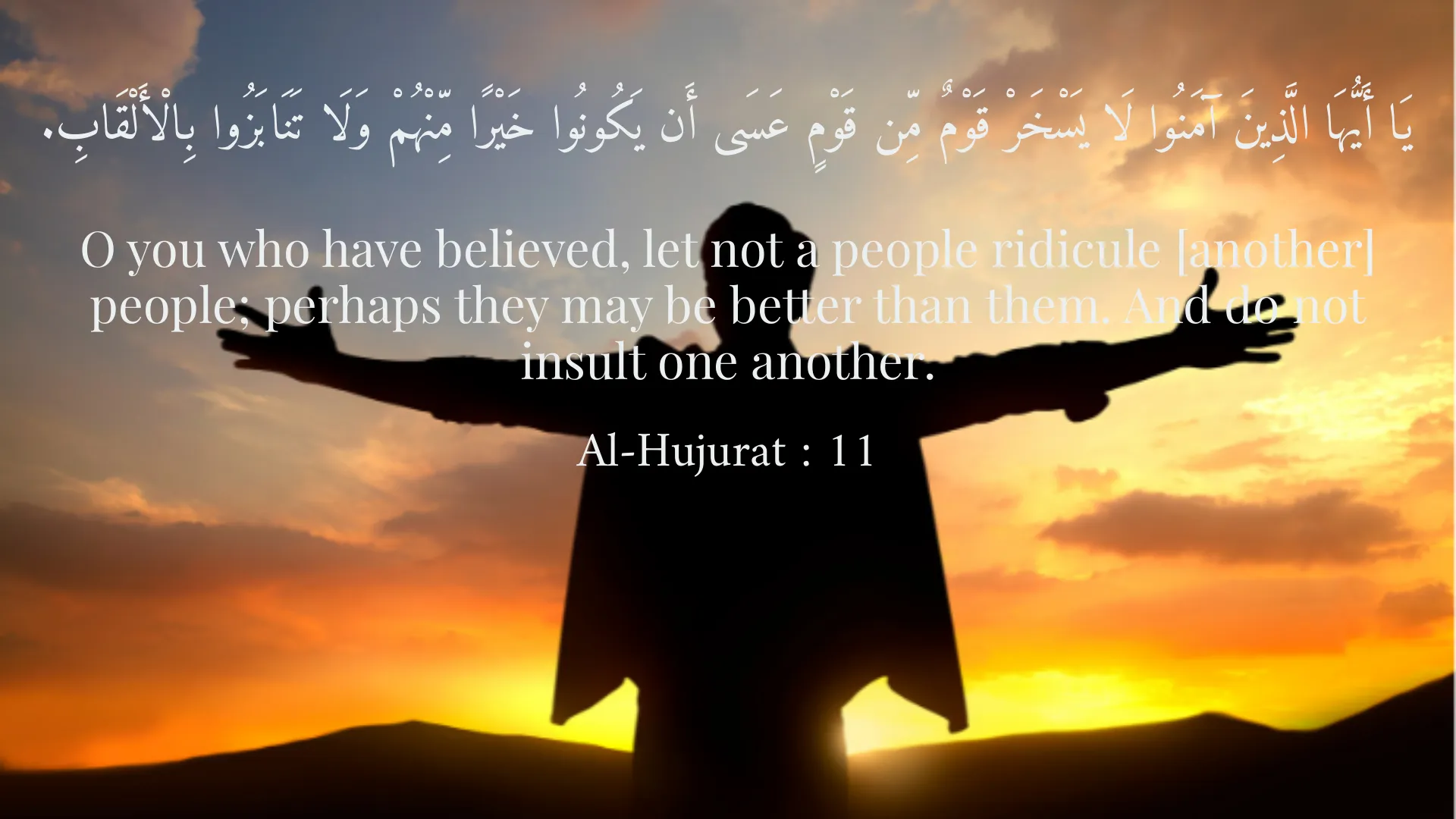
يَا أَيُّهَا الَّذِينَ آمَنُوا لَا يَسْخَرْ قَوْمٌ مِّن قَوْمٍ عَسَى أَن يَكُونُوا خَيْرًا مِّنْهُمْ وَلَا تَنَابَزُوا بِالْأَلْقَابِ.
O you who have believed, let not a people ridicule [another] people; perhaps they may be better than them. And do not insult one another.
Al-Hujurat : 11
وَقُل لِعِبَادِي يَقُولُوا الَّتِي هِيَ أَحْسَنُ ۚ إِنَّ الشَّيَاطِينَ يَنزَغُونَ بَيْنَهُمْ.
And tell My servants to say that which is best. Indeed, Satan induces separation among them.
Al-Isra : 53
وَاخْفِضْ مِن جَنَاحِكَ لِلْمُؤْمِنِينَ.
And be moderate in your pace and when you speak, be of good manners.
Luqman : 19
Short Story
Once upon a time, there was a wise man sitting in a corner of the market watching people's transactions. The sound of insults and disrespect among them saddened him. He decided to tell people that the tongue is a tool that can either bring them closer or drive them apart. He stood among the people and, with a message of respect and love, asked them to manage their words and refrain from using foul language. Over time, the atmosphere of the market improved, and love grew in their hearts.